20 minutes ago
Staying in the dialogue tests the EU what is expected to happen after the government is formed?
Periskopi(a year ago)
(a year ago)Eighteen months without a high-level meeting, the dialogue between Kosovo and Serbia has remained in the deadlock, Periscopi broadcast. With both countries involved in domestic challenges, the final agreement seems distant. Analysts argue that the international community should push for mutual recognition among themselves, not just normalisation of relations, and [...]
With both countries involved in domestic challenges, the final agreement seems distant.
Analysts argue that the international community should push for mutual recognition among themselves, not just normalisation of relations, and have a plan B if the dialogue fails.
Peter Sorensen's first visit to Pristina, as the European Union's envoy for Kosovo-Serbia dialogue, came at a moment when this process does not seem to be on someone's agenda.
In Kosovo, attention remains on post-election issues, while Serbia faces protests and internal unrest.
Despite that, the message of the European emissary was clear: dialogue must continue.
“Dialolog is to make sure there are appointments. Whether it means compromise or not is for the parties to determine it. The dialogue is about this and we have been doing it since 2011”, Sorensen said on 17 March in Pristina.
14 years ago, the first round of negotiations between Kosovo and Serbia, mediated by the European Union. Over the years, they have developed more rapidly, times slower. There have been dozens of agreements and pledges, but many have not been implemented.
The leaders, meanwhile, have changed to Brussels, Pristina and Belgrade, but, likewise, the Narratetist has changed. If mutual recognition was once talked about as a key goal, it is now only about normalising relations between the two countries.
Sorensen, after meeting Kosovo's state leaders, stressed the need to continue the dialogue, but said he wants to hear both sides before deciding on future steps.
The goal is to continue the process and move forward. I have discussions here in Pristina, but I also have to go to Belgrade. After I have these conversations, I will sit down and see where we are”, Sorensen said.
The two sides don't seem anywhere close. High-level talks between them have not been held since September 2023.
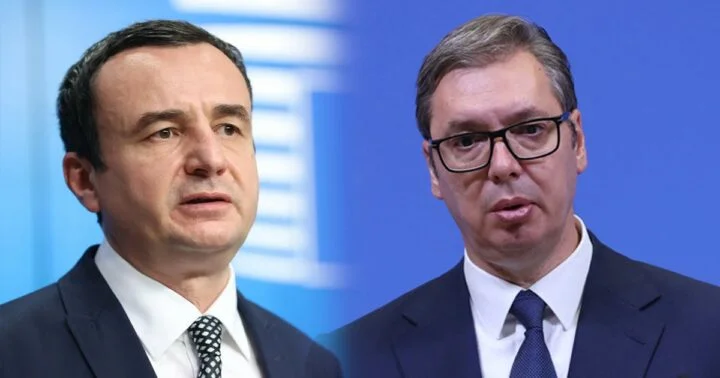
On 14th that month, Kosovo Prime Minister Albin Kurti, and Serbia's president, Aleksandar Vuciq, have met in Brussels, with the mediation of then European leaders Josep Borrell and Miroslav Lajcak.
Ten days after that meeting, there has been an armed attack on Banjska, where armed Serb groups have killed a Kosovo police officer.
The EU's subsequent efforts to bring the two leaders down together at the table have largely failed because of the conditions each side has put forward, which the other has rejected.
After meeting with Sorensen, both Kurti and Kosovo President Vjosa Osmani have had a series of requests for him -- from removing EU punitive measures against Kosovo to handing over the group that has attacked Banjska to Kosovo authorities.
For dialogue observers, the ball, in fact, is in the EU field. They say it is time for this bloc to focus on a specific goal, which is mutual recognition between the two countries, as, according to them, this is the heart of the problem and this should be addressed directly.
Leon Hartwell, high associate at LSE IDEAS ) London School of Economics speaks more about the Free Europe Free Radio Expo program:
The “is really important for mutual recognition to be brought to the fore of this dialogue, because the idea of normalisation is very undefined. If you don't have a clear purpose, you don't even try to achieve anything specific”.
And I think Sorensen has to set this goal forward so that he can move the parties in a certain direction and solve this conflict once and for all, Hartwell says.
Vuciq insists Serbia will never recognise Kosovo's independence. Its focus is the establishment of the Association of Serb majority municipalities in Kosovo, which I often point to as a condition for continuing dialogue with the other side.
For this association, there has been an agreement since 2013, but that Kosovo has, despite international pressure, never implemented it, for fear that such a mechanism, with broad competencies, could affect the functioning of the state.
Kosovo has long received a draft EU draft for the statute of this association, but it also appears to be off the table already.
President Osmani said this week that the draft, as such, would not receive green light from the country's Constitutional Court.
I, personally, believe it is not in accordance with the Constitution of the Republic of Kosovo, neither is it in line with the values and norms of the European Union and the standards of the Council of Europe, nor with the 2015 Constitutional Court decision, Osmani said.
An association with broad competencies would come at the risk of creating a Republika Srpska in Kosovo, Hartwell says, referring to the Serbian entity in Bosnia and Herzegovina, which has legislative powers.
There is a strong perception that association would help advance dialogue, but I am very skeptical about it. A possible option for Kosovo would be to present a relaxed version of Association and, in some way, apply it, only to silence critics”.
However, I stress that implementing association with strong executive competencies would become quite problematic for Kosovo”, Hartwell says.
Kurt Bassuener, of the Council for Democratic Policy in Berlin, says Bosnia and Herzegovina, due to its internal organisation, has remained open issues for decades. It does not rule out the possibility that even the conflict between Kosovo and Serbia will remain that way, so it suggests that all sides return to the stated initial goal -- mutual recognition.
No one talks about mutual recognition anymore. All talk of normalisation and this is not in Kosovo's interest, and I would say it is not even in the interest of a democratic Serbia”, Bassuener says.
In the course of rapid geopolitical changes, he says the Western Balkans in general is a region where the EU has great potential to influence the stabilisation of the situation, and the Kosovo and Serbia issue, according to him, is essential to this stability.
“I hope there's a re-evaluation of policies from the European Union. I still don't see any evidence of this in either the EU institutions or member states, even though it takes longer to turn the ship in the opposite direction”.
It's understandable that they're focused on how to help Ukrainians, if Americans withdraw, how to defend themselves legitimately... These are priorities, but the Western Balkans is the only country in the world where the EU can be really crucial”, Bassuener says.
Analysts believe the EU still has leverages towards Kosovo and Serbia to push towards an agreement, even though conditioning their European integration with normalisation of relations has so far yielded no results.
Hartwell says the West should have a clear plan B if dialogue fails.
“One of the solutions may be for the five states that have not yet recognised Kosovo to recognise it. Because, in that case, Serbia cannot say that the issue of recognising Kosovo is still in the air. It would have to deal with a Kosovo recognised by all EU member states. And, if you really want to join the EU, Serbia will have to work within this framework”, Hartwell says.
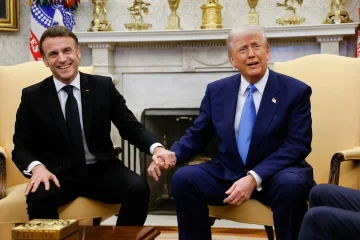
However, some have speculated that with President Donald Trump at the White House, Serbia has more room for action, due to its closer ties between political and economic, both close to Trump.
Therefore, analysts say Kosovo's focus should be on preserving two-party support in Washington.
According to Hartwell, the country should be positioned as a reliable partner, especially in security and economic issues, as well as boost co-operation with the US in the field of energy and defence.
In recent years, the Government of Kosovo, led by Albin Kurti, has faced occasional criticism from American officials, due to some actions in the north of the country, which they have described as uncoordinated and with bad influence on the Serb community.
The last known contact, which Kosovo has had with the White House, has been a letter President Trump has sent to President Osmani on the 17th anniversary of Kosovo's independence in February.
In that letter, Trump has pledged expanding ties with Kosovo and has not mentioned any dialogue for normalising relations between Pristina and Belgrade.
Free Europe's question in the EU has not been answered if they plan to call a meeting between leaders of the two countries soon. Also, it is not clear that they would respond to the invitation.
With Kosovo still without a new government, after the February elections, and with continuing protests in Serbia, the only thing moving safely forward is the calendar.