5 minutes ago
Republika Srpska adopts new constitution draft state within Bosnia and Herzegovina state
Periskopi(a year ago)
(a year ago)Republika Srpska's Parliamentary Assembly has recently adopted a draft of the new constitution, which aims to declare Bosnia and Herzegovina's Serb entity state. With the new Constitution, among other things, the leaders of Republika Srpska aim to define this entity as the state of the Serbian people, to grant the right [...]
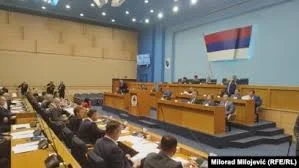
Republika Srpska's Parliamentary Assembly has recently adopted a draft of the new constitution, which aims to declare Bosnia and Herzegovina's Serb entity state.
With the new Constitution, among other things, the leaders of Republika Srpska aim to define this entity as the state of the Serbian people, grant the right to self-rule, create its own army and abolish the Council of Peoples and vice-presidents from two other constituent peoples.
This constitution is contrary to the Constitution of Bosnia and Herzegovina, and therefore to the Dayton Agreement.
Since the Dayton Peace Accord, which was signed in 1995 and ended the war in Bosnia, the country consists of the Bosniak-Croat Federation and the Serb-dominated Republika Srpska under a weak central government.
Until Republika Srpska can pass laws on domestic issues, state-level laws and institutions remain above all, according to the Constitution of Bosnia and Herzegovina.
The draft, which was approved by 50 votes per and eight against Thursday in Banjaluka, will now be passed into a 30-day public debate, after which the Parliamentary Commission for Constitutional Affairs will draft a proposal that will then be debated at the National Assembly.
This is another movement to separate the Republika Srpska from Bosnia and leaders of this entity, as last week the Assembly passed laws banning the work of Bosnia's state-run institutions on the territory of this entity.
Although the Bosnian Constitutional Court suspended law enforcement, Republika Srpska has insisted the laws would be implemented.
The actions of Republika Srpska leaders have been rejected by the opposition in this entity and condemned by the international community.