22 minutes ago
Weber to Kurt: Reform promised, completed dealing with dialogue, Belgrade, Serbs in the north
Periskopi(a year ago)
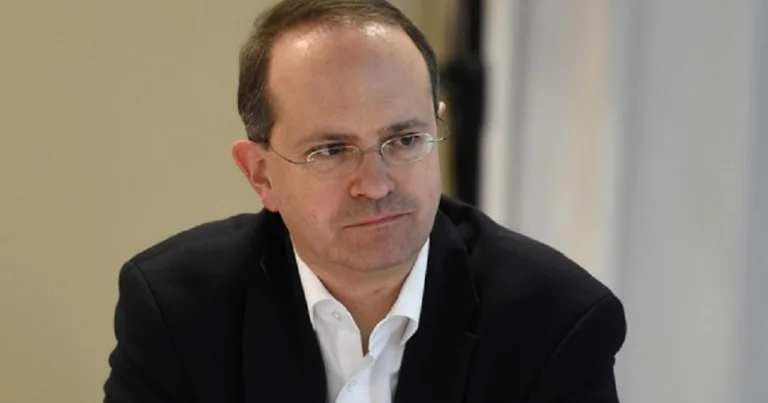
(a year ago)German analyst and political development connoisseur Bodo Weber has spoken of the outcome coming out of the February 9th elections, and of the votes Albin Kurti's Vetevendosje Movement has received, he has shown possible reasons for Kurt's decline of about 10%, compared to past elections. “Unlike the original plan to be [...]
He has shown possible reasons for Kurt's decline of about 10%, compared to past elections.
“Unlike the original plan to focus on internal reforms, Kurti Government ended up focusing on political dialogue, the conflict with Belgrade and the meeting with Kosovo Serbs, north”, Weber has said.
In addition, Weber has spoken of the Kurti Government's approach to allies and actions undertaken in the north of the country, saying that the way Kurti acted in the north for the removal of parallel Serbian institutions has broken Kosovo's report with the West and has also led Kosovo Serbs, including liberal voices, who had little hope for a government dialogue with Kosovo Serbs. Weber recalls that this was promised by Kurt at the beginning of the mandate.
When discussing this loss of voting by LVV, Weber also mentions the fact that Kurt's internal results are mixed, positive and negative, and associated with an undemocratic performance and radical political rhetoric.
As for possible coalitions, Weber says final results should be seen, since diaspora votes can change the outcome in favour of Kurti.
German analyst cites some modes of how a simple majority can be achieved in the Parliament, however, says the fact that the election of the new president is very close is imposing a more stable coalition.
“However it is difficult to see how Prime Minister Kurti's stance on forming the majority coalition without any opposition party” can materialise, German analyst for Express has indicated.
Whatever the bottom line, Kosovo's political stability will initially depend on the international context and the performance of Western factors”, Bodo Weber adds further.
At the end of the interview, asked what the right way for Kosovo is to take into account the new geopolitical situation, Weber says that whatever politics do in Pristina, especially after dramatic geopolitical changes on January 20th “its future will unfortunately not depend primarily on domestic actors, but also on those outside”.
Bodo Weber expects the EU and United Kingdom to take the dialogue between Kosovo and Serbia more seriously, since Kosovo will face the new US administration and most likely with an effort to seriously restore dialogue.
According to preliminary results and while there are still votes to be counted, LVV ranks first with 340 thousand 690 votes, or 40.87 %, PDK second with 183 thousand 661 votes or 22.03 %, LDK with 146 thousand 815 votes or 17.61 % ranks third, AAK- NISMA 4th with 62 thousand 172 votes or 7.46 %.