20 minutes ago
Kremlin denies NATO demanding NATO withdraw troops from eastern wing
Periskopi(a year ago)
(a year ago)Kremlin has denied reports that Russian officials have urged the United States to seek NATO troops' withdrawal from nearby states or bordering Russia. These statements, made by Kremlin spokesman Dmitry Peskov, come after a senior Romanian presidential adviser appeared to have said Russian officials had done so [...]
Kremlin has denied reports that Russian officials have urged the United States to seek NATO troops' withdrawal from nearby states or bordering Russia.
These statements, made by Kremlin spokesman Dmitry Peskov, come after a senior Romanian presidential adviser appeared to have said Russian officials had made this request during high-level talks in Riyadh between delegations from Moscow and Washington.
Romanian official Cristian Diaconescu, who spoke of a television in Romania, later withdrew from his statements, clarifying that such a request had been made in the past in 2021, prior to the launch of Ukraine's Russian occupation in February 2022.
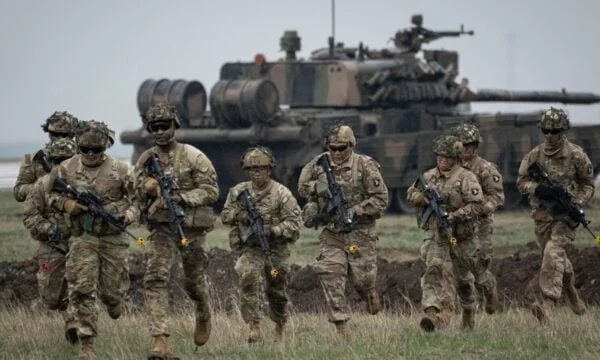
Russia has been expressing anger, public and private, over the presence of NATO troops in states such as the three Baltic states and Poland. It has also complained about NATO air defence systems in Poland and Romania. Expanding NATO from birth to 1997 and then two stretches of expansion in 2000 from many to the Kremlin are seen as a hostile act and this is partly used as an excuse for the invasion of Ukraine.
With the US president's administration, Donald Trump, signaling a new radical approach to European reports, he has reiterated complaints that NATO members are not spending enough money in the alliance CHA has turned off the alarm in Europe that the White House of Trump can accept Russian demands.
Earlier this month, US Defence Secretary Pete Hegseth shocked the 32-member alliance when he openly ruled out Ukraine's membership in NATO and ruled out the possibility of unifying American troops in any peacekeeping effort in Ukraine. He also said that NATO would not come to the aid of any European state, if involved in that effort, and if attacked by Russia.
Speaking in an interview for Antena 3 CNN on February 19th, two days after US and Russian delegations met in Riyadh, Diaconescu seemed to suggest Moscow had filed a new request for NATO withdrawal.
Their “expectations [of Russians] are that, at one point, the US would have European partners within NATO withdrawn from NATO security guarantees of 1997”, he said.
In subsequent statements to the Romanian media, Diasconescu withdrew from this statement, saying he was referring to preliminary demands. Americans and Europeans do not accept Russian demands, he said, “as then, nor now”.
Specificly questioned by journalists regarding Romanian statements, Peskov denied this assessment on February 21st.
“No, it's not true, it doesn't match reality”, he said. Our position is that advancing military infrastructure towards our borders is disturbing to us. Everybody knows that attitude, it's not secret”
Poland's president, whose state has been one of Ukraine's most vocal supporters and who has stepped up the delocation of NATO troops along the alliance's eastern wing, said on February 18th that he has accepted assurances from the US that there will be no reduction of American troops.
There is no concern that the US will reduce the level of presence in our country, that the US will in any way withdraw from responsibilities or co-responsibilities for the security of this part of Europe”, Andreze Duda told reporters in Warsaw after meeting with Trump's special emissar, Keith Kellogg.
NATO reinforced its eastern forces after the launch of Ukraine's Russian occupation, seeking to calm members aside those who fell under Soviet control during the Cold War.
In total, there are eight NATO war groups -- “ -- an extended presence -- ” deployed east of Europe and in three Baltic states, with nearly 30,000 troops, according to the alliance's latest data.
Putin's “Objectives remain the same: to subdue Ukraine and also divide Europe and the US”, Oana Lungescu, former NATO spokeswoman, told the Romanian Radio Free Europe Service. So there is less reason to speculate or panic, but to see what the interests of Europe are, and obviously, what are the interests of Romania”. / REL/