a minute ago
The Hague Tribunal Surveyer: Serbia to behave differently when Kosovo will sue for genocide
Periskopi(a year ago)
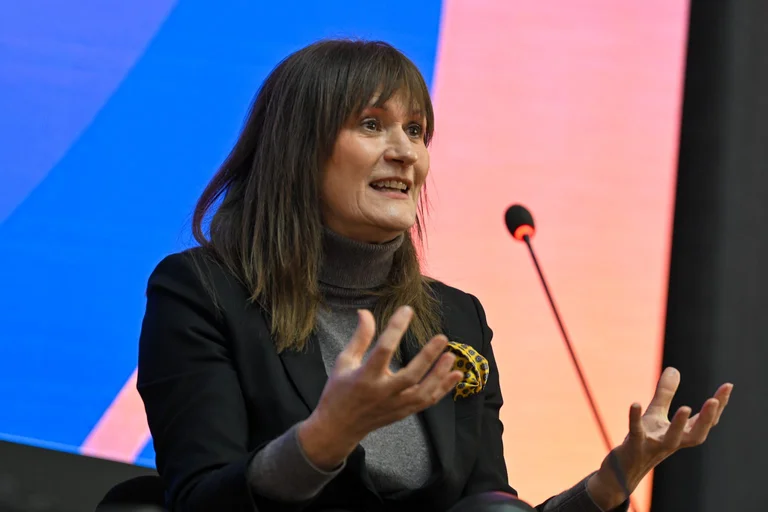
(a year ago)Serbia will change its approach to the political arena after the indictment for genocide, it has declared Nevenka Tromp, researcher of The Hague Tribunal for war crimes in the former Yugoslavia. Even though Kosovo is not a member of the United Nations, Tromp stressed that it can sue Serbia through another state. She did these [...]
Even though Kosovo is not a member of the United Nations, Tromp stressed that it can sue Serbia through another state. She made these statements during an international conference organised by the Institute of Crimes for the war in Kosovo.
The genocide indictments are reviewed by the International Court of Justice (GJND), which rules on disputes between states.
Bosnia and Herzegovina and Croatia lost their cases against Serbia for genocide. However, the JND found that Serbia had violated the Convention on Prevention and Punishment of Genocide Crime in Srebrenica, but did not declare it guilty of committing genocide.
Tromp, author of Slobodan Milosevic's book “, stressed that Kosovo must learn from these two cases and sue Serbia for genocide.
Kosovo, although not a member of the United Nations, can file a lawsuit through a UN member state. It is not just about winning the case, but about establishing a mechanism that would force Serbia to behave differently in the political arena and the Berlin Process. Without such pressure, Serbia will continue to act as an ordinary state, though there has been no mechanism to stop it after the military withdrawal from Kosovo”, it said, the KP reported.
Tromp also stressed that court archives are valuable sources for the record and writing of history.
A fundamental question is how can criminal judgments contribute to history writing? Judgment archives are rich sources of evidence, documents, audio records and verbal testimony from witnesses. Most of these data are accessible to the public, but access to them remains challenging”, she said.
Kosovo Deputy Speaker Saranda Bogujevci stressed that the country's institutions should have been empowered to address war crimes.
“We are far from addressing justice for crimes committed in Kosovo. We cannot only connect this to EULEX, but also with the necessity of Kosovo's institutions being more empowered at the time, both in the police, prosecutor or court. Why not have a specific war crimes court?”, she said.
The director of the Kosovar Centre for the rehabilitation of Torture Survivors (QKRMT), Feride Rushiti, spoke of victims of sexual violence during the recent war in Kosovo and the challenges they face on the path to justice.
Sexual acts are invisible crimes, but one of the worst and cheapest weapons used as war strategies, not only in Kosovo, but also in Ukraine and other countries affected by conflicts. Unfortunately, the body of women and men becomes battlefield without their consent. These crimes are difficult to document, and victims face difficulties in talking about”, she said.
During the 1998-1999 war, more than 13 thousand civilians were killed in Kosovo, more than 20,000 women and men were violated, while over 60,000 people disappeared. Of them, about 1,600 continue to be found. More than 800,000 people moved from their settlements.