20 minutes ago
Easily rough with JD Vance: Germany does not accept people who interfere with our strong democracy
Periskopi(a year ago)
(a year ago)German Chancellor Olaf Scholz has been strongly opposed to his stand against the right extreme and said his country will not accept people who “change into our democracy”, a day after US Vice President JD Vance rebuked European leaders for their approach to democracy. The German leader spoke only eight days [...]
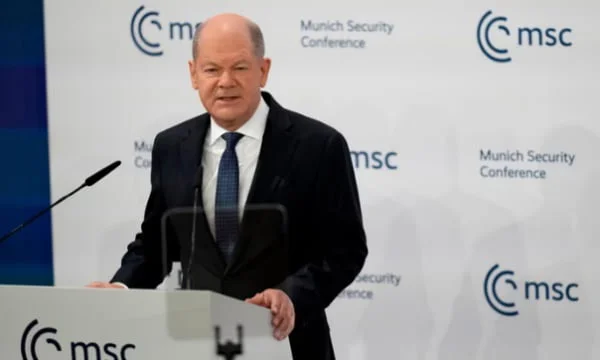
German Chancellor Olaf Scholz has been strongly opposed to his stand against the right extreme and said his country will not accept people who “change into our democracy”, a day after US Vice President JD Vance rebuked European leaders for their approach to democracy.
The German leader spoke only eight days before the crucial elections in Germany, with polls showing the far-right Alternative party for Germany is currently in second place.
Vance said Friday at the Safety Conference in Munich that he fears freedom of speech is being averted across the continent, the AP writes.
“German is a very strong democracy and as a strong democracy, we have absolutely clear that extreme right should be out of political control and out of political decision-making processes and that there will be no co-operation with them”, Scholz said.
“We really reject any ideas of co-operation between parties, other parties and these extreme right-wing parties”.
The day before, Vance said that many Americans saw in Europe “of interest hidden behind the ugly words of the Soviet era of mismanagement and deninforms, which simply dislike the idea that someone with an alternative view could express another opinion or, God forbid, vote in another way, or worse, win the” elections.
Scholz, responding, said the “free language in Europe means that you're not attacking others in ways that are against the legislation and laws we have in our country”.
He was alluding to rules in Germany that limit hate language, the AP reports.
Comments came as European leaders have tried to understand a new hard line from Washington on issues including democracy and the future of Ukraine, as the Trump administration continues to overturn transatlantic conventions that have been in force since World War II.