7 hours ago
<x)
Periskopi(6 months ago)
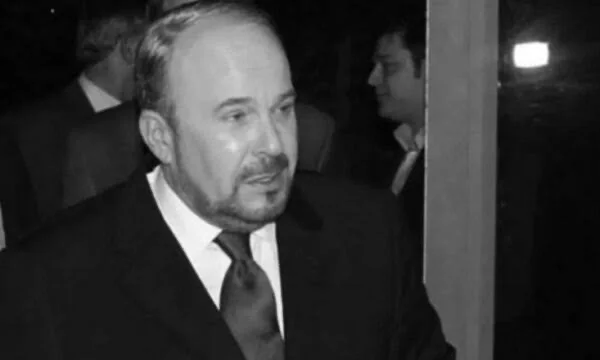
(6 months ago)The Guardian” has dedicated an article to former Prime Minister Fatos Nano, while only a few weeks have passed from his life. Renowned analyst Gabriel Partos starts his writing by mentioning Nano as one of the two most important political figures at a time of turmoil, while Berisha considers the enemy [...]
Renowned analyst Gabriel Partos starts his writing by mentioning Nano as one of the two most important political figures at a time of unrest, while Berisha considers his sworn enemy.
“May be in government or prison, Fatos Nano was one of two figures, along with his sworn rival, Sali Berisha, who dominated Albania in the 15 turbulent years that began with the breakup of communist party rule in 1990. It was characteristic of the political turmoil of this period that, although appointed prime minister on four different occasions, Nano served for only a total of four years at that post”, so starts his article in the “The Guardian”.
Among other things, it sums up the entire political life, the man who, according to him, brought economic stability and peaceful political life to Albania.
“Nano, who died of chronic pulmonary obstructural disease at the age of 73, owed his political influence to his non-negotiable position as leader of Albania's Socialist Party (SPA) by 2005.
As prime minister in 1991, Nano played an important role in running when this was possible of the chaotic but largely peaceful transition of Albania from a stable, hardline regime with a commanded economy broken down into a pluralistic society and a new market economy.
The initial political beneficiary of this transformation was the opposition, led by Berisha's Democratic Party of Albania (PDSH), which won a landslide victory in the first truly free elections in March 1992.
Berisha was elected president by the new parliament. Nano, who in 1991 had already begun to turn the communist-era Labour Party (PPSH) into the Social Democrats, soon found himself in prison following his conviction on corruption charges.
Nano's second chance to change the course of Albanian politics for the better came in March 1997, when the nationwide decline of fraudulent pyramid investment schemes led to a uprising against Berisha's increasingly authoritarian rule. This time the riots became much more violent than in 1991-92, while rebel groups and criminal gangs seized hundreds of thousands of weapons from army depots.
In the early elections of June 1997, the Socialists inflicted a crushing defeat on the Democrats, leading to Berisha's resignation. Nano returned as prime minister and shifted the balance of power from Berisha's de facto presidential rule to a parliamentary government system.
During eight years of P rule The SSH that began in 1997, the economy gradually stabilised, political life calmed down and social conflicts eased. However, the electorate was increasingly disappointed by the selfish rule, arrogance and uncontrolled corruption of the SPH governments. This resulted in the surprise victory of the Democrats in the July 2005 elections, enabling Berisha to return to power from political setbacks.
Nano's last major contribution was to enable the quiet transfer of power to the DPA and to resign from the SPH leadership. His successor, Edi Rama, would build the current prime minister DPA in a powerful winning election machine.
Fatos Nano, Albania's prime minister, the second from the left, and Pandeli Majko, defence minister, reviewing an honour guard with Albanian commandos heading to Iraq in 2003.
Nano was born in Tirana, Albania's capital. His father, Thanos, would later serve as head of the state broadcaster, Albanian Radio Television; his mother, Maria (name of daughter Shuteriqi) was a government official. Fatos was educated in the Sami Frashire elite high school and graduated from the University of Tirana in 1974.
After working as an economist at the Elbasan steel factory, Nano joined the Marxist-Linist Studies Institute, the ideological PLA group. He became protected by the director, Nexmije Hoxha, the widow of communist dictator Enver Hoxha, who had ruled Albania from 1944 to his death in 1985. Hoxha's increasingly insulating policies had led to Albania's poverty in the 1980s. Economic woes and the success of pro-democracy movements in other Central and Eastern European countries sparked student protests in Albania in late 1990.
Nano was taken out of the dark to be named as the government's secretary-general in December 1990. Later, his establishment was meteorical: deputy prime minister until January 1991; and, after the collapse of the giant statue of Hoxha in central Tirana on February 20th, he was appointed prime minister by Hoxha's successor, President Ramiz Alia.
Nano was only 38 years old at the time of his appointment. His promotion was intended to design the image of a generation change and political transformation by the regime. The tactics worked and he was appointed prime minister for the second time after the PLA won with a deep explosion in the first multiparty elections of that March.
However, The PPSH had enjoyed a major advantage in terms of resources and publicity to the new opposition. The unfair elections triggered street protests and a general strike, which led to Nano's resignation in June. Within days, the convention PPSH voted to renamed the party as P SSH and elected Nano as its leader.
Following the DPA's victory in the 1992 elections, Nano was arrested in 1993, and in 1994 he was sentenced to 12 years in prison for embezzlement of state funds while he was prime minister. He denied all charges and became a martyr of the Socialists. He kept running P SSH from prison: his then-wife, Regina, acted as a mediator between him and his three deputies.
During the uprising against Berisha's rule in 1997, Nano was released and then led the Socialists to their election victory. Unlike Berisha, he was not a avenger and had no attempt to use courts to punish the leaders of the Democrats.
His third appointment as prime minister was interrupted after a year by anti-government riots following the assassination of Azem Hajdari, a politician DPA, 1998. The Democrats blamed the government, but a later trial showed that Hajdari's murder had more to do with rivalry among gangs involved in arms smuggling.
Nano fled Tirana briefly and, to reduce tensions, handed the prime minister first over to one of his young men, Pandeli Majkos, and then to another, Ilir Meta, holding the government's overall control. However, as Meta began to affirm, Nano returned to the prime minister's post in July 2002 to serve his last term in that post.
The connection with power was less important for Nano than the taste of the material benefits that came with being in government and the auspices it offered. He had a relaxed style: Journalists (including me) occasionally enjoyed friendly conversation and were offered one or two glasses of malt whiskey.
Nano's comfortable lifestyle, the government's complacency and the massing of Meta, which had established a rival Socialist party, led to the SPSH's defeat in the 2005 elections.
Nano's resignation from the party leadership ended his political career. An attempt to elect head of state from parliament in 2007 failed in the face of opposition not only from Berisha's Democrats but also from many P lawmakers. Rama's SSH, who feared Nano could emerge as a potential rival to their new leader.
Afterward, Nano and his second wife, Joanna, who had been married in 2002, led a quiet life, sharing time between homes in Vienna and Tirana.
He left Joanna and two children, Sokoli and Edlire, with his first marriage, which ended in divorce, and an adopted son, Clyde. Fatos Thanos Nano, a politician born on September 16, 1952; died on October 31, 2025“, writes the Guardian“. / TCh/