7 hours ago
German Parliament Approves Budget for 2026
Periskopi(6 months ago)
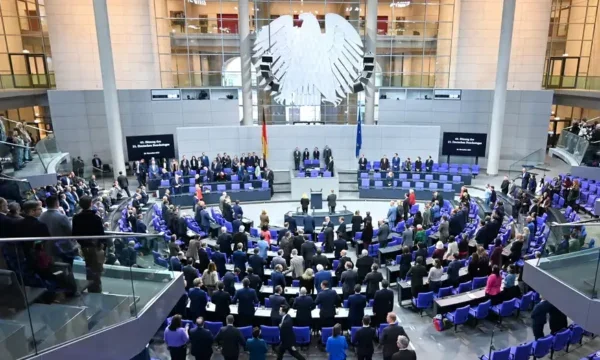
(6 months ago)Germany approved the budget for next year. Less funding for development assistance is envisioned. The draft was approved with the votes of the ruling coalition, CDU conservatives/ CSU and Social Democrats. The 524.5 billion-euro expenditures are envisioned in the basic budget. To these, special funds for infrastructure and climate neutrality are added, as well as for [the] Forces.
The 524.5 billion-euro expenditures are envisioned in the basic budget. These are added to the cost of special funds for the infrastructure and climate neutrality, as well as for the German Armed Forces, which will be financed by borrowing.
Thus Germany's new debt will reach more than 180 billion euros next year. This is the second highest debt in the history of the Federal Republic of Germany.
The budget was approved by the votes of the ruling coalition parties, CDU/ CSU and SPD, while opposition parties voted against it.
Federal Finance Minister Lars Klingbeil, (SPD), said that “this budget also provides for a record”.
Higher budget for work, social affairs
Much of the budget -- around 197 billion euros -- will go to the labour and social affairs sector, especially for pensions.
The defence ministry, which will receive about 108 billion euros, ranks second in terms of the budget. This is Germany's highest defence budget since the Cold War. Much of the money will go towards military equipment and ammunition.
The budget for the Ministry of Co-operation for Development (BMZ) will be reduced to 10.06 billion euros -- that is the smallest amount in Germany's overall budget in the past 15 years.
Ukraine will receive aid worth 11.5 billion euros in 2026.
The budget with the highest investments will be that of the Transport Ministry. For major investments on the road, bridges and railways will be provided 14 billion euros from the regular budget, as well as 21 billion euros from the special infrastructure fund. / DW/ Periscopi/