6 hours ago
How world changes can bring new recognition to Kosovo
Periskopi(6 months ago)
(6 months ago)On the global scene, Kosovo still seeks to affirm its country. Even after nearly 18 years of independence, many member states of the Islamic world do not recognize it, while its diplomacy seems often fragmented and unclear. This year, President Vjosa Osmani, who bears responsibility for foreign policy, confirmed [...]
On the global scene, Kosovo still seeks to affirm its country. Even after nearly 18 years of independence, many member states of the Islamic world do not recognize it, while its diplomacy seems often fragmented and unclear.
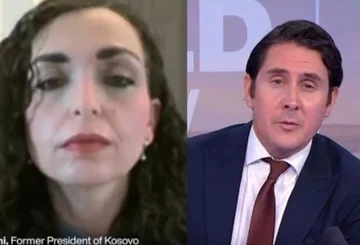
This year, President Vjosa Osmani, who holds responsibility for foreign policy, confirmed the recognition of Kosovo by three states: Kenya in March, Sudan in April and Syria in October.
The last time Kosovo had secured three recognitions in one year was 2015: from the Cook Islands, Antigua and Barbuda, and Niue. During this decade, until this year, the country received only six new recognitions.
Albin Kurti's government, which led over the past four years, to the governing programme for 2021-2025 wrote that the Republic of Kosovo will strengthen its international subjectivity. This applies to both efforts for recognition and bilateral diplomatic relations, membership in international organisations, economic co-operation, cultural exchanges, and the entire spectrum of bilatheral and multilateral co-operation”.
And, almost at the end of the mandate, in December 2024, Kurt tried to relate criticism of the lack of new recognitions, arguing they were not part of campaign promises.
I know we've been criticized for not having new recognitions, but you have to understand one thing either visa liberalisation or new recognitions we've not promised in the campaign. We said employment and justice in the campaign. So you have to measure us compared to our vows we have given in the 2021 campaign and in the government programme more than”, Kurti said at the time.
Free Radio Europe requested information about their lobbi activities, priorities and opportunities for any new recognition, but received no response.
On the MPJD site, 120 countries recognise Kosovo from around the world, but the relatively low number of majority Muslim states stands out. Given that Kosovo itself is a predominantly Muslim country, expectations would be that support from these states would be broader.
However, its independence declared in 2008 has been recognised by just over half of the 57 member states of the Organisation of Islamic Co-operation. Prior to the recognitions of Sudan and Syria this year, the last Muslim majority country to recognise Kosovo was Bangladesh in 2017.
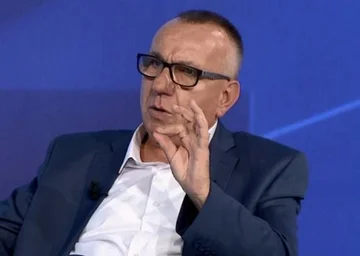
Former Kosovo Ambassador to Italy Albert Prenkaj says that Kosovo's strong identification as a US project, in a period when Washington has had tense relations with many Islamic countries, has often come down against the regional interests of these states. According to him, the religious factor has not weighed at all.
Every time we've presented the Islamic element, we've presented it as something special, as secular Islam, but which Islamic countries do not accept because they have the deepest Islam in society. It's not to us... but every time we've shown up like this, we haven't been seen as serious”, says Prenkaj about the Free Europe Radio Expo programme.
Researchers Butrint Berisha, who has practiced international relations at Tartu University in Estonia, says an important role has been played by the historical factor. According to him, Serbia has inherited the former Yugoslavia's broad ties with Arab, African and Asian countries, which continue to exploit today to prevent Kosovo's advancement of relations with the Islamic world.
Moreover, Belgrade has also been engaged in a Kosovo recognition campaign, which, according to Serbian officials, has brought some results, although they have never been confirmed by Kosovo authorities.
Berisha also emphasises that many states, besides external influence, have their own challenges, making them more cautious about recognising Kosovo.
I think it's the best illustration. On the ground we are dealing with an invasion of the Western Sahara by Morocco [but the UN considers an unresolved problem]. Therefore, states like this one that have problems controlling their territory in the country are much more reluctant to recognise Kosovo. This applies not only to the states of the Islamic world, but also to the global level at a general time”, Berisha says of Expose.
Kosovo's recognition from Syria came after the change of the regime and increased US influence in the region.
Both experts note that Kosovo should benefit from these global changes to advance its interests. They suggest Lebanon may be the next majority Muslim country for lobby, as there is now a functional government and is increasingly in focus of the US. Also, Azerbaijan, following the US-brokered agreement with Armenia, is seen as a realistic goal of new recognition.
Free Europe radio contacted both countries' foreign ministries via email to ask if they are considering the possibility of recognising Kosovo, but received no response.
Former diplomat Prenkaj says Kosovo, especially in recent years, has not followed a sustainable strategy to appear as a reliable actor on the international stage. The lack of co-ordination between the Presidency, Government and MPJD, but also with the main US allies, Great Britain and Turkey, has weakened the campaign for new recognitions, according to him.
It's ad hoc policy. I've said before that Kosovo, over a period already, has no foreign policy, since it has also lost co-ordination with the friendly states”, according to him.
In 2008, when Kosovo declared independence, then Prime Minister Hashim Thaci promised recognition from 193 states, which were translated into all member states of the United Nations organisation plus another state. However, Kosovo still remains far from that goal.
The country is not recognised by either two Western Balkan states, Serbia and Bosnia and Herzegovina, as well as by five European Union states: Greece, Spain, Romania, Slovakia and Cyprus.
In institutional terms, Kosovo has managed to join organisations like the World Bank, the International Monetary Fund, the European Bank for Reconstruction and Development, but has failed to enter the U NESTO, Interpol, Council of Europe, UN and others.
Experts agree that Kosovo must build a multi-planned and sustainable strategy for international recognition. In addition to traditional diplomacy, Berisha also recommends the exploitation of economic partnerships and non-state actors, such as NGOs and celibates.
I try to defend the argument that there is a lot of space in the states beyond the reach of Kosovo even in cases where recognition is not possible to advance economic reports with these countries. Of course, the Muslim world but other countries in Africa, Asia, Latin America. The more partnerships there will be, there will be more opportunities for people as well, even for business”, Berisha says.
Both Prenkaj and Berisha emphasise that new recognition remains essential for Kosovo, as they show the stability of the state and its role as a factor of stability in the region.
Berisha acknowledges that the debate between foreign policy and domestic policy is inevitable, but to illustrate the weight of recognition, he also brings the example of Palestinian territory, recognised by more countries than Kosovo, but that continues to be unstable because of the conflict with Israel. According to him, even in such cases, the number of recognitions preserves its importance as symbolic and diplomatic instrument, despite complicated reality on the ground.
In this context, Berisha recalls that Kosovo's own statehood process has been historically built on the idea of international recognitions.
“I think that the Kosovo state project, not only the independence declared in February 2008, but since the 1990s, has been based on international recognition. So, it's one thing that Kosovo has been looking for since the 1990s and there's no reason to have a change in access or in thinking”, he says.
In a world where alliances change rapidly and diplomatic competition is on the rise, experts stress that the new Government of Kosovo will have to build a co-ordinated strategy with allies, also having the capacity to adapt and act quickly whenever new opportunities open up, such as the case with Syria, following the regime's change. In diplomacy, time is as important as vision. / REL//Periscopi/