18 minutes ago
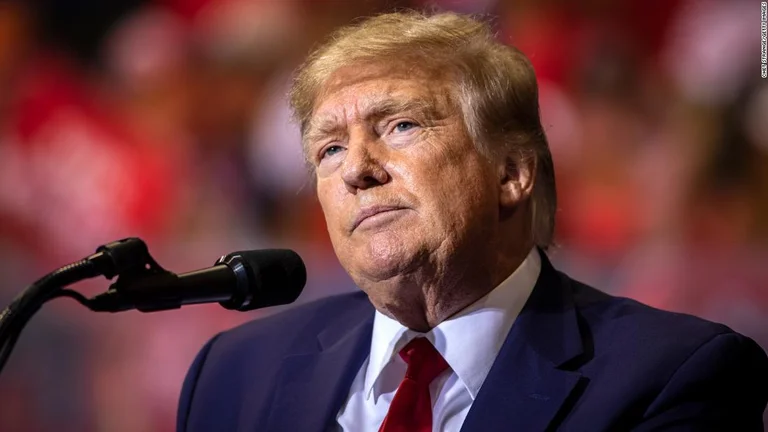
What will Trump first do when he becomes president?
Periskopi(a year ago)
(a year ago)More tariffs, slowing immigration along the Mexican border, leaving the Paris Agreement and a host of pardons. Is this what the US and the world can expect in the first few days of Donald Trump 2.0? Donald Trump's first days in office will be symbolically important, while his actions are [...]
Donald Trump's first days in office will be symbolically important, while his actions will likely be a mixed sack of domestic and international politics. He would like to show voters that he is demonstrating the power of America abroad.
Using Presidential Executive Orders
To make things move fast, Trump will depend on executive presidential orders, which are directives issued directly by the president. These orders bypass Congress and may cover a host of issues such as national security, foreign policy and other issues. A number considered to be ready for signing on January 20th.
In a TV interview at the “Meet the Press” on December 8th, Trump confirmed that it will sign “too much “executive orders on Day 1 ʹrelated to economy, energy and most importantly the border with Mexico. However, executive orders do not have a sweeping power and can only be used to run executive branch actions, says Dan Mallinson, an associate professor of public policy and administration at Penn State Harrisburg in Pennsylvania.
These competencies can be broad, including his promise of closing the border, he told DW. “But other orders simply initiate the slow process of establishing federal regulations, which could take the years”.
Migration and Mass Exiles
Since arriving at the political scene in the country, Trump has been fixed on the border with Mexico and people who cross it to enter the United States. In his first term, he wanted to complete a wall between the two countries.
Four years later, the ban on irregular migration ensuring the country's borders was one of the main issues that prompted Trump to be re-elected to the post. He's likely to restore policy “stay in Mexico”, which requires asylum seekers to wait in Mexico until their demands are processed. For those already in the country illegally, Trump has called for the largest mass deportation in the country's history, focusing first on criminals before addressing other undocumented immigrants.
Despite this plan, any executive order to accelerate the expulsions would require time and support from local and state agencies. He would also face legal challenges. In addition to combating irregular migration, Trump will likely slow down legal migration again, including doing work permits, green cards and narrow visa-taking, as well as their expensiveness. This may affect skilled workers and future university students.
Trump confirmed in the “Meet the Press” that completing citizenship rights for children born in this country is a priority of day 1, if possible, through executive actions. We'll end this because it's ridiculous,” he said. This may be difficult, since the principle that anyone born on American soil is an American citizen is anchored in the Constitution.
Targets for Imports
Trade is another area that gets much attention from Trump. Recently, he suggested a total fee of 10% for any commodity entering the US. Mexico, Canada and China, the country's biggest trade partners, would be hit at even higher rates.
“is not yet clear to what extent this will happen or whether the tariff threat is being used to push some countries towards trade negotiations”, Mallinson said. However, based on his records, he thinks Trump will present at least some new tariffs.
While the president has the authority to set tariffs for specific categories of imports, setting overall tariffs for all goods is more complex. Such an act would cause chaos and would be rejected in court.
Moreover, tariffs may increase domestic problems. “The appointment for inflation helped Trump win again, but it could quickly lose support if its economic policy increases prices or undermines the economy”, Mallinson said.
Paris Agreement on Climate
The environment is less important for American voters than the economy or migration. But Trump has this matter in order. During his first term as president, he withdrew the US from the Paris Agreement, which aims to reduce emissions of greenhouse gases to fight climate change. Joe Biden cancelled Trump's decision and joined the treaty on his first day in office.
Now Trump has promised to expand the production of crude oil. While he focuses on fracking and fossil fuels, it shouldn't be surprising if he again withdraws from the Clima deal as one of his first official acts. Trump has shown disregard for the production of renewable wind energy and electric vehicles. This scepticism could lead to other executive orders to undo environmental protection and slow the pace of renewable energy projects.
Forgiveness of Punishments
Presidential pardon, a tool that gives the president authority to forgive people convicted of federal crime or to end a prison sentence, may also enter into use on the first day. Trump has made it clear that he can forgive most of the hundreds of people convicted of attacking the US Capitol building on January 6, 2021.
I'll probably do it very quickly,” he confirmed at the “Meet the Press”, saying he would be a priority of the first day. But if Trump is going to try to forgive himself for any federal crime is an open question.
After all, only Trump's team knows what is planned for its first days in office. But it will have to act soon after mid-term elections in two years can end the republican majority in the Senate or House of Representatives.
“Presidents come into office with a sense of mandate and rapidly reduced political capital,” concluded Mallinson. “He cannot run again in 2028, so whatever he wants to achieve must happen in a mandate.” / DW