19 minutes ago
US envoy visiting Israel to discuss ceasefire with Hamas
Periskopi(a year ago)
(a year ago)US Middle East envoy Steve Whitoff arrived in Israel on Wednesday for talks that will focus on implementing the ceasefire between Israel and Hamas in Gaz, as well as negotiations on the next phase of the deal. Before the visit, Witkoff underlined the need for full implementation of the agreement, which was granted [...]
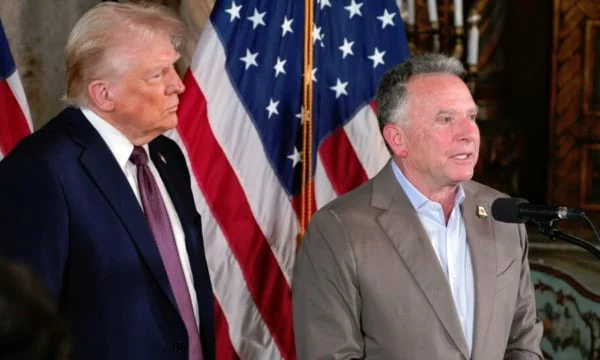
US Middle East envoy Steve Whitoff arrived in Israel on Wednesday for talks that will focus on implementing the ceasefire between Israel and Hamas in Gaz, as well as negotiations on the next phase of the deal.
Prior to the visit, Witkoff underlined the need for full implementation of the agreement, which ended the 15-month fighting and led to the release, so far, the seven hostages held by Hamas and the 300 Palestinian prisoners held by Israel.
Other releases of hostages and prisoners are expected in the coming days.
Witkoff's visit takes place prior to Israel Prime Minister Benjamin Netanyahu's planned visit to Washington. US President Donald Trump invited Netanyah for talks on February 4th.
The first phase of the ceasefire is projected to last 42 days, a quarter of which has already passed. It envisions the release of 33 hostages from Gaza, as well as the continuation of negotiations about details of the second phase of the agreement, including the release of other hostages and the end of the war with the withdrawal of Israeli forces.
These negotiations are expected to begin next week.
Palestinians in Gaza have been allowed to return to some areas, which had long been blocked by Israeli forces, including in the northern part of Gaza, where the United Nations said on Tuesday that more than 375,000 people had returned this week.
About 1 million Gaza residents have fled this area at the beginning of the war, and displaced people are now returning to an area destroyed by Israeli Army operations against Hamas.
Under the ceasefire agreement, the United Nations will also facilitate the entry of humanitarian aid to Gaza. The UN humanitarian office announced on Tuesday that the amount of aid being sent to Gaza has been significantly expanded “, including in areas where aid workers had failed to penetrate earlier.
“Land assessments indicate a large level of destruction of water and sewer infrastructure, especially in the northern part of Gaza, which shows a critical need to increase their efforts to rehabilitate and clean up their basic human needs”, the agency said.
The reconstruction of Gaza is part of the final phase of the ceasefire agreement, while it remains unclear who will govern the territory, which has been ruled by Hamas since 2007.
During a call Tuesday with Egypt's Foreign Minister Badr Abdelatty, US Secretary of State Marco Rubio underlined the need to work together “for planning the post-conflict phase to ensure that Hamas never rules Gaza again, or is no longer able to threaten Israel” again, the U.S. State Department statement said.
The United States, Egypt and Qatar were the main mediators in negotiations in recent months that secured the ceasefire agreement.
In recent days, President Trump's repeated suggestions to forcibly remove a large number of Palestinians from Gaza and send them to Egypt and Jordan have been criticised.
Palestinians and Arab states, including Egypt and Jordan, rejected Trump's idea of accepting Palestinians, amid concerns that their shift would become permanent.
The Gaza War began on October 7th 2023, following Hamas' terrorist attack on Israel, which killed 1,200 people and the kidnapping of 250 hostages.
Israel's counteroffensiveness in Gaza has caused the death of at least 47,300 people, most of whom women and children, according to health officials. Israeli Army says that figure includes 17,000 militants killed. / VOA