10 hours ago
Study: The new blood test could predict the return of breast cancer
Periskopi(2 years ago)
(2 years ago)A new blood test “ultra-sensive” can predict whether breast cancer will return years before the disease appears on scans, researchers say. He picked up traces of a tumor's DNA before a complete return and was found to be 100% accurate in predicting which patients would see [...]
He picked up traces of a tumor's DNA before a complete return and was found to be 100% accurate in predicting which patients would see their cancer back.
It is hoped that the test may allow treatment to start earlier and improve survival rates.
Research into the United Kingdom has been called the most exciting “” by experts, but it is still in its early stages.
breast cancer is the most common form of disease worldwide, with 2.26 million women diagnosed in 2020 and 685,000 deaths in the same year, according to Gulf Cancer in the United Kingdom.
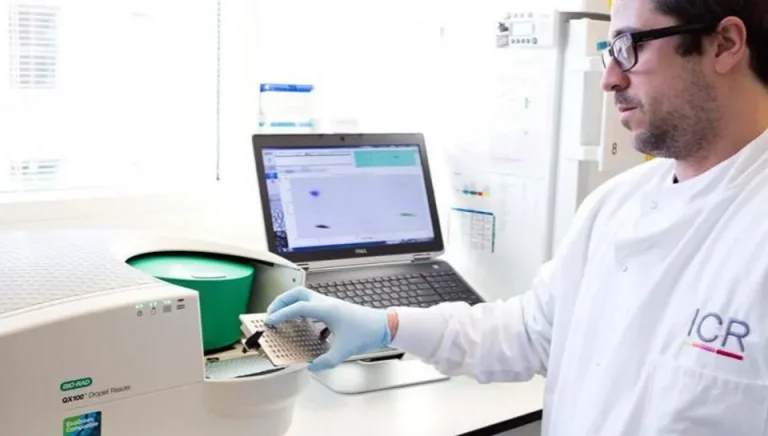
A team of researchers from the Cancer Research Institute (ICR) in London conducted the test on 78 patients with different types of early breast cancer.
The liquid biopsia” required 1800 mutations in patient blood, which are released by cancer cells.
These surrounding tumors were found in 11 women, all of whom saw the return of their cancer. No other woman saw the cancer return.
On average, blood tests revealed cancer 15 months before symptoms or disease appeared on scans, according to results presented at the conference of the American Clinical Oncology Society in Chicago on Sunday.
The earliest discovery was 41 months before a scan confirmed the diagnosis.
Chief researcher Dr Isaac Garcia-Murillas from the ICR said: “breast cancer cells may remain in the body after surgery and other treatments, but there may be so few of these cells that they cannot be discovered in the following” scans.
He added that cells could cause patients to return many years after their initial treatment.
Dr Garcia-Murillas said the study sets the stage for better monitoring after treatment and potentially life-long treatment.
Researchers tested blood samples at the diagnosis point, then again after surgery and chemotherapy.
Very exciting.
These tests were later repeated every three months for next year and every six months for the next five years.
Dr Simon Vincent, director of research, support and influence at the Southeast Cancer Now, who partly financed the study, said: “Early discovery is one of our biggest weapons against breast cancer, and these initial findings suggest that new tests may be able to detect signs of breast cancer repetition over a year before symptoms appear are very exciting. ”
Although acknowledging that the research was still in its early stages, he said that catching breast cancer repeat earlier means that treatment is far more likely to destroy cancer and prevent its spread in other parts of the body and become irreparable.
Dr. Vincent continued: “With about 11,000 people dying each year in the United Kingdom from secondary breast cancer, findings like these are urgently needed so that we can stop people from losing their lives from this devastating”.
It is unclear when the test can become widely available.
The news follows a series of developments in cancer research last week.
It comes after home saliva tests were found to be better in identifying men with higher risk of prostate cancer than standard blood tests.
And on Friday it was announced that thousands of NHS cancer patients in England are expected to have access to evidence of a new kind of treatment using personal vaccines to combat their disease.
But on Monday a charity against cancer said the number of skin cancer cases in the United Kingdom was expected to reach record levels.