31 minutes ago
Hoti: World Bank report exposes power propaganda of economic growth
Periskopi(2 years ago)
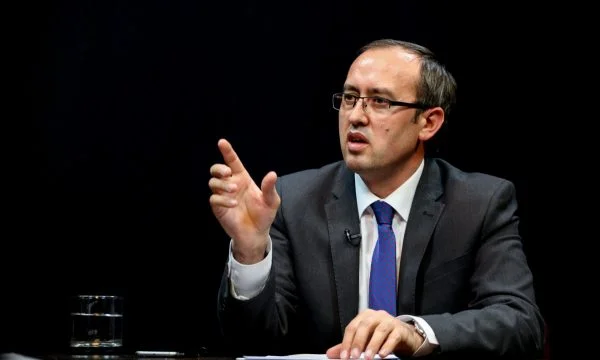
(2 years ago)Democratic League of Kosovo MP Avdullah Hoti has said that the Kosovo government is doing propaganda when talking about economic development, because according to him, the World Bank report has exposed it. “Economic development in Kosovo ) The World Bank report exposes propaganda”, Hoti wrote until he published several cases he says [...]
Democratic League of Kosovo MP Avdullah Hoti has said that the Kosovo government is doing propaganda when talking about economic development, because according to him, the World Bank report has exposed it.
“Economic development in Kosovo ) The World Bank report exposes propaganda”, Hoti wrote as he published several cases he says exposed to the BB.
Here are some cases in the report exposing power propaganda:
1. The working population has been reduced because of migration. The further increase in migration will further reduce labour bid and increase labour costs for businesses. Meanwhile, power says more people are returning to Kosovo than they are leaving.
2. Kosovo's Interior Product rose 3.1 per cent to 2023 as a result of the decline in the price of goods in international markets, remittances from the diaspora and increased credit from the bank. So the government has no contribution to this growth, which, however, is too low to provide developing convergence and income between Kosovo and the EU average.
3. More than half of foreign investments are in construction. This does not contribute to the growth of production base in the country.
4. The increase in official employment statistics has largely been the result of lowering informality, rather than creating new jobs.
There are many other issues I'll talk about in the coming days.
However, we remember that the World Bank has projected economic growth of 3.2 percent this year and 3.5 percent in 2025 in the six countries of the Western Balkans on Thursday.
The rise in 2023 dropped by 2.6 percent from 3.4 percent in 2022, largely as a result of consumption and trade, reflecting the weak economy in the European Union, which is an important trade partner for the Western Balkans.
In its annual report for Kosovo, Albania, Bosnia and Herzegovina, Montenegro, Northern Macedonia and Serbia, the World Bank raised growth forecasts for 2024 per cent compared to preliminary reports, given the optimism that the region has surpassed the crises from the pandemic of COVID-19.