2 minutes ago
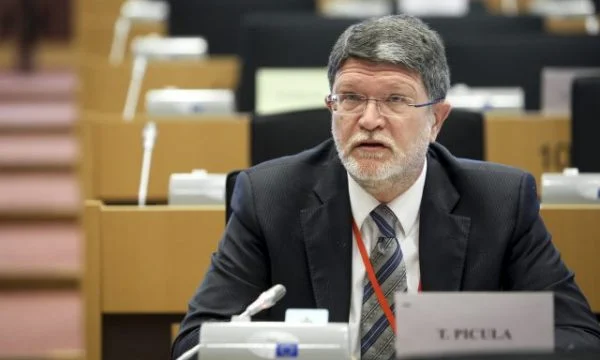
Stigning on European road, Picaula tells Serbia the problem she has with Kosovo
Periskopi(2 years ago)
(2 years ago)The European Parliament's rapporteur for Serbia, Tonino Picaula, said he may be able to help Serbia get out of the status stagnation on the European road, but he said it requires a high degree of compliance with EU foreign security policies. Commenting on the refusal of some members of [...]
Commenting on the refusal of several EU members to provide “green framework” for opening negotiations for group 3 in membership negotiations with Serbia, Picula told Nova television that respecting key parameters in membership negotiations is important for EU candidate countries, such as Serbia.
Whatever the specific group's content, there is always political assessments on negotiations with the candidate country how well it is linked to key negotiation parameters. In Serbia's European integration process, there are serious objections to the general disrespect of key parameters with EU foreign and security policy”, said Picaula, the Euro-Deputes of Croatia's Social Democrat Party.
Asked if you know why Croatia is among EU members opposing the opening of negotiations for group 3 in the negotiations with Serbia, Picaula said that “does not know the details”, but stressed that a month ago many countries “cited insufficient results in governance rights, media freedom and dialogue with Kosovo”.
At that time, seven countries rejected Hungary's proposal (for opening negotiations for group 3), and the main reasons cited were noncompliance with EU foreign policy and sanctions against Russia, Serbia's somewhat unclear geopolitical commitment and, of course, problems in rule of law and relations with Pristina. I don't think anything has changed in a month,” he said.
In terms of the possibility of the EU opening the 3rd claster in negotiations with Serbia by the end of the year, Picaula said that “koha is leaving” because intergovernmental conference, “if it has at all”, should be between December 16th and 20th.
He said it would be good that Serbia handed over to members of the European Union an informal document with a list of steps intended to take in the short term, to encourage the decision to open negotiations for group 3, but added that “is hard to assess how much implementation is possible in the short term and how much it can affect the mood of those that “negotiate with Serbia”.
Among the steps Serbia proclaimed in “non-paper” for early December are reviewing the election list in line with recommendations from the O Office The SEU for Democratic Institutions and Human Rights (ODIHR), the start of the procedure for selecting a new Council of Electronic Media Regulatory Administration (REM), setting visas for third countries in line with EU visa policy and fully functioning of the gas intercomputer with Bulgaria, reported RTS, referring to diplomatic sources in Brussels.
Picula said the moment in the EU enlargement policy, which arose following Russia's attack on Ukraine in 2022, is “much more credit to geopolitical circumstances than the credit of candidate countries”.
“However, it is wrong to consider that geopolitical circumstances only do not require high respect with EU foreign and security policy. Because the EU is not only a common market, but also a community of democratic values and a community of risk sharing that threatens the Union. If a country does not comply with that complex, then certainly there are consequences for the speed of negotiations”, he stressed.
He announced he would shoot in Serbia as rapporteur The EP in January or February 2025 and will meet not only with government representatives but also with the opposition, local communities, trade unions, media, the non-governmental sector, both the business and academic community.
Klaster 3 (Involved Competition and Growth) includes eight chapters, five of which opened before presenting the group's concept: Economic and Monetary Policy (Chapter 17), Enterprise and Industrial Policy (20), Science and Research (25), Education and Culture (26) and Customs Union (29). Three chapters await opening: Information Society and Media (10), Tax Policy (16) and Social Policy and Employment (19).