3 minutes ago
Steinbaum: Kosovo opens new page in US relations
Periskopi(2 years ago)
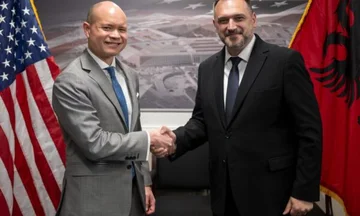
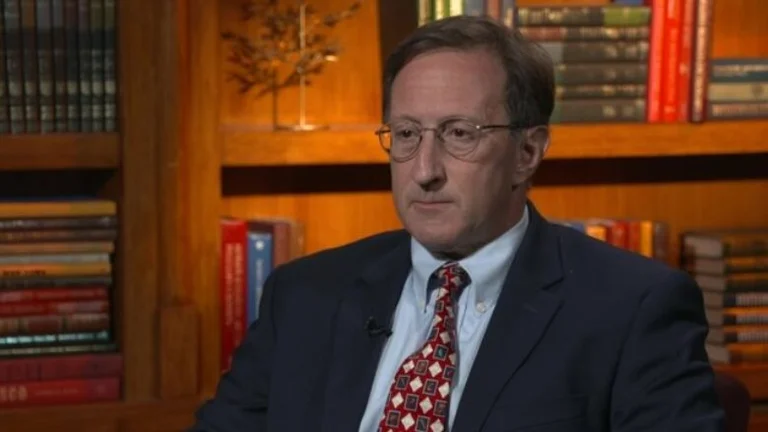
(2 years ago)Jason Steinbaum, former congressional staff chief Eliot Engel, has spoken of elections being held in America and Kosovo's reports with the new US administration. Steinbaum has declared that he strongly supports candidate Kamala Harris, who he said tried to unite people and tried to say [...]
Jason Steinbaum, former congressional staff chief Eliot Engel, has spoken of elections being held in America and Kosovo's reports with the new US administration.
Steinbaum has declared that he strongly supports candidate Kamala Harris, who said he tried to unite people and tried to say he has a America, not two Americas.
He has also spoken of Kosovo and its position regarding the future US president, adding that Kosovo has been forgotten in some ways, and according to him should think about how to restore strong relations with the US.
The U.S. is in the election. The eyes of the world have turned beyond the Atlantic and there is almost for the first time a scepticism about what can happen. Where do they get the presidential election America today?
Steinbaum: Yes, the United States is starting to vote. We do this every four years. In the United States. The presidents are elected every four years. We did it four years ago, in 2020 and four earlier, in 2016. You know what happened in 2020. We had a violent rebellion at the Capitol, which was prompted by the former president. We hope this will not happen again. Our democratic institutions in this country are almost 250 years old. We will celebrate the 250th anniversary of the United States' creation in 2026. So it's very important for many Americans to keep these institutions of democracy and other countries in the world see in the United States as a light of freedom, a light of democracy, that we can set the standard. And it will be an example to see and an example to follow. So it's very important for American citizens and very important for people who want freedom worldwide to do so properly this time. But it is also a good example for our country the values of democracy, the functioning of society.
Can these choices in any way deepen the divide and gap in American society, now?
SteinbaumSee, I wouldn't necessarily say that elections themselves deepen the gap. But the gap is actually very deep, and separation is vast in the United States. And it's pretty unfortunate. We've lost a sense of common values here, values of democracy, rule of law, and of choosing our leaders and accepting our leaders so this is the key we have to go back to. The choices and divisions you see in the elections are just examples of that division that has grown and increased significantly during former President Trump's presidency. And she remains today. I hope a result of this choice can change that.
You have hope that the outcome of these elections will not bring back a division within American society, despite who comes to power?
Steinbaum: We'll have to see about that. That's just what I'm saying. To be clear, I'm a Democrat. I worked at Capitol Hill for many years for Congressman Eliot Engle, whom many Kosovars know. So I strongly support Kamala Harris. She was a team and tried to unite people and tried to say she had a America, not two Americas. I believe Donald Trump was a dealer in the United States, and he was one of those who sought to separate people who agreed with him and those who did not. And this is not really based on politics in many cases. It is based on loyalty to him. So we have to go back to questioning rule of law, what policies are good for the United States? What is in the interests of the United States? How can we stay with our allies and our friends worldwide?
What can the Balkans and Europe expect, from elections in the United States, any candidate that wins, Harris or Trump? What will life be like for Europe after that?
Steinbaum: Well, let's talk about some different visions about Europe. As you know, former President Trump wasn't a strong supporter of NATO. In fact, he challenged many NATO nations that if they do not spend the amount of money that NATO says should spend, 2% of the Bruto (PBB) domestic production, then he could, as the United States leader, not act in their defence. I believe Kamala Harris and President Biden before her and President Obama we believe in this treaty. We believe in the North Atlantic Treaty and the guarantee of NATO's Article five, which says an attack on one is an attack on all. And one thing you've seen since 2021, when Joe Biden became president is the number of countries in Europe that have exceeded 2% of their GDP for defence spending and gone too far. Now it's about 21 countries.
This is mainly due to the invasion of Ukraine from Russia. But this tendency is continuing and continuing in that direction. Furthermore, it is very important that we see these states, our friends in Europe and our partners in Europe as countries that share our values. Yes, they are economic competitors and yes, we do not have the same system and we will not always agree on everything. But at the core level, we agree on values based on rule of law, the rights of our people and democracy. And these are the countries we have to stay with. We should not try to introduce ourselves to autocrats from around the world like Vladimir Putin and Xi in China and others like that. We must be close to our friends and our allies Steinbaum and stay together. We're much stronger together.
What can I expect in the Western Balkans? For a long time, it's been out of orbit and it's been mostly a security issue. Is the Balkans part of any presidential candidate's policies and strategies?
Steinbaum: So the Balkans have fallen slightly from the list of top priorities of the United States and I believe this is mainly because of the war in Ukraine. So with this huge power conflict between the United States and Russia for the future of Ukraine, the Balkans have become second-hand issues to the interests of the United States, and this has damaged Kosovo in many ways, because Serbia is now seen as a kind of price in that great power conflict. So Kosovo is forgotten in some ways. And I think she should think about what this means for herself and how to restore good, strong relations with the United States and the West. But, on the other hand, the United States must also look at our policies towards this region and wonder what has worked and what has not. Because we have obviously been following a policy for over a decade that hasn't brought a solution and we have to do a deep assessment of what has worked and what hasn't worked.
You mentioned Kosovo. There is great interest in Kosovo who will be the next president? It was a letter from Vice President Kamala Harris to the Albanian community in the United States, and the previous administration Trump also had direct involvement in Kosovo. What can wait, according to you, Kosovo?
Steinbaum: Well, I suppose the Harris administration will follow a policy similar to the previous administration. We don't know who the top officials will be in a Harris administration yet.
That means, Mr. Steinbaum, that again, we will see both Kosovo and the Balkans are probably a second priority for the American administration, if of course it is the Harris administration?
Steinbaum: Could be. It could be because what we've seen in the United States is that our priority in Europe has been in Ukraine. But with the replacement of officials and the arrival of a new administration, this is always the time when new officials and new administrations in a period of passage during which they will consider what has worked and what has not worked. So this is actually a very interesting time. And because there is so much rotation in personnel, with Lajcak leaving in early January, I believe, with elections coming to Kosovo, elections in the United States and the arrival of new people, there is a possibility now. There is an opportunity to examine our policies carefully. Because we have to deal with something that will benefit the entire region and promote sovereignty and territorial integrity in Kosovo. This will help move Serbia forward on the path to democracy and rule of law instead of continuing with its attractive policies that have led it back. So it means that, as far as we have seen, the US administration and the past years, has probably been more engaged in orientation or in bringing Serbia closer to the West, but it has also added some more pressure to say on Kosovo to fulfil its obligations.
Is this a similar situation we will see in the near future with the Kamala Harris administration?
Steinbaum: Yeah. I think she'll probably follow some of the same policies we've seen. But again, we do not know yet because they will bring new people and they will carefully consider what has worked and what has not worked. So we have to give them opportunities. And we have to let these people come, have those discussions inside. But at the same time, now is the time for leaders in Kosovo to start thinking about their approach and say, well, what have we done? What has worked, what has not worked, and how we can improve relations with the United States and our allies and partners in Europe.
So, are you telling me that Kosovo has no good relations with the United States now or has it not so far?
Steinbaum: Our overall relationship between states is strong. There are some relationships between leaders that are tense and this has been discussed in the media for a while now. That's why it's important that leaders from both sides examine what they're doing and say, how can we change that dynamic? Is there anything we can do to change? Is there anything we can do in the United States to change? And I have some ideas about it. And we have written a recent report on how to move forward with this issue of Association, according to the Kosovo Constitution, which can lift pressure from the parties. And that's what we should try to do.
Are you optimistic that Kurt government will work closely with the Harris administration?
Steinbaum: As for who will lead the government in Kosovo, of course, this is a question for the people of Kosovo. I don't have an opinion on this or the parties that can run Kosovo. This is in the hands of your people. Whoever he is, I hope he will seek to turn a new page, as we say in the United States, and try to improve that relationship, turn it into very strong, very, very strong ties that we have always had and support them in our values, support them in the values of democracy. Here where Kosovo has been strong and to support them in the values of rule of law, where both countries are, where traditionally the two countries are strong. / RTV21/