 3 hours ago
QKUK IVF department still awaiting operating equipment
Periskopi(3 years ago)
(3 years ago)Zana from Pristina [the true identity of which is known for editorialism] says she wants to undergo the method of assisted medical fertility (IVF), but this procedure is not yet offered in state medical institutions. The Ministry of Health has promised that by the end of the year this service will be offered to citizens. [...]
Because of the lack of law, this procedure is offered only in private health institutions licensed. Farming with the IVF costs thousands of euros, and only married couples in Kosovo can undergo this approach.
“At the end of the year I was interested in the method of assisted medical fertilization in Kosovo and have not been able to perform this service due to very high payments at private hospitals”, Zana says.
It shows that this procedure is also offered abroad, but the sum is too high for it.
“Kosto behaves from 4,000 euros to higher. This value is unaffordable, only through loans, and it has seemed to me to be a reckless expense, given the salaries that are in Kosovo”, Zana says.
She hopes that in a future, the state will offer this procedure free to those who want to become parents:
“I hope the state of Kosovo can first legally allow single girls to become mothers, unable to find a partner and for women who cannot bear children, the state offers this service [to]. IVF] rather than be forced to go to neighboring states or even further from”.
What is IVF?
IVF is a fertility method that is subject to people who cannot have children naturally.
Through this procedure, the medical team removes eggs from a woman's ovaries and then fertilizes them with sperm in the laboratory. Fertilized embryo is given several days to grow, and then it is placed in the woman's womb. The process usually lasts four to six weeks.
But even this method is not 100 percent successful.
Waiting for IVF devices
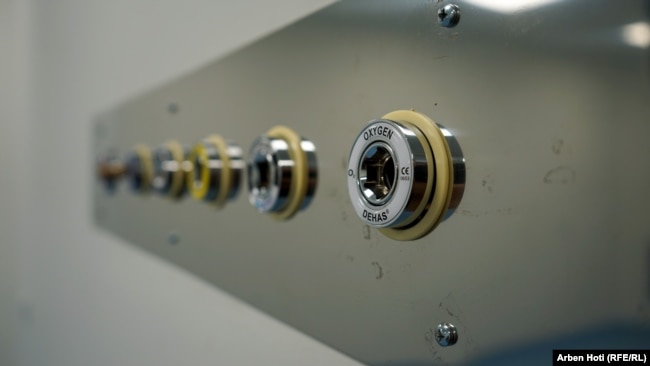
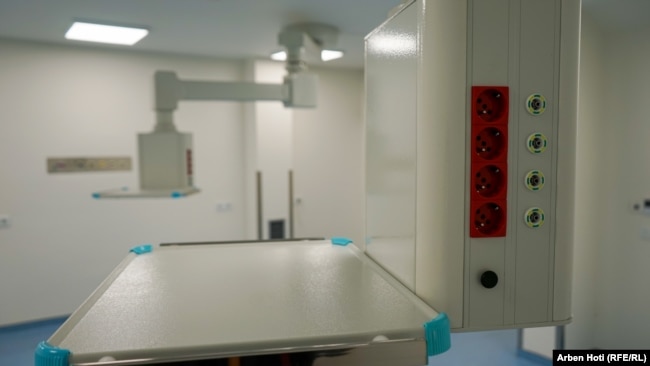
Kosovo aims to have a special department for IVF at the University Clinical Centre (QKUK). For the equipment needed for this department, the Health Ministry has earmarked 1.5m euros.
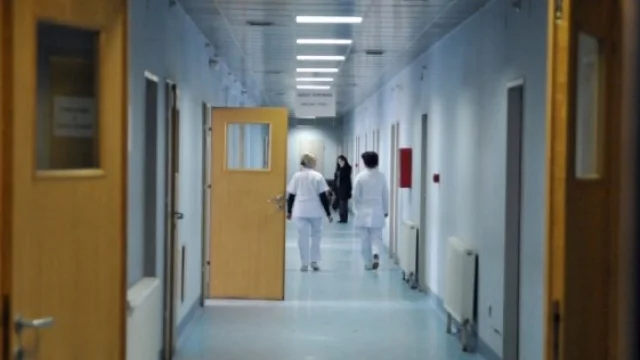
In the Gynecology Clinic, which will be the IVF department, they are waiting for equipment for this medical method. Works on infrastructure for the new department have only been carried out.
Gynecology Director Zef Ndejaj says that when preparations are carried out and equipment arrives, clinic personnel are ready for work.
As far as professional staff, training and everything else is concerned, we are willing to start work immediately as soon as we have the equipment. As far as we know, as far as equipment issues are concerned, the process is in tenderation and when the procedures are complete, we believe we will start work”, he says.
Construction of the IVF department had started three years earlier, and then KKUK leaders had pledged that this service would be launched in 2021.
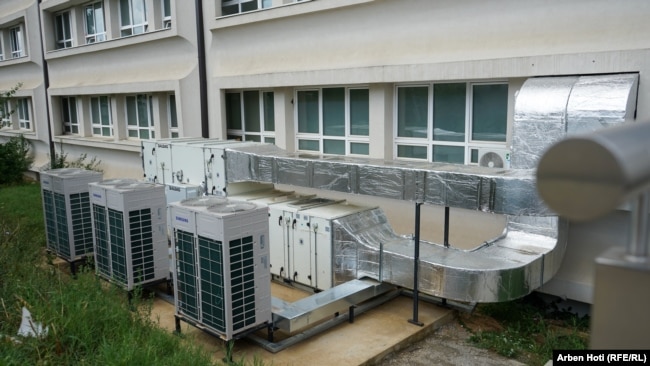
But, Health Minister Arben Vitita says that by the end of this year, all works are expected to be completed and citizens could receive the necessary services in this department.
The procedures are going according to plan. Of course, these are procurement procedures and we can neither postpone them nor make them faster or slower because they are procedures that have their course. At the moment, things are going according to plan and if there are delays they will be out of procurement, but we have taken all measures not to delay”, Vitita says.
Opposition to the New Health Law
Private health institutions currently conduct the IVF method based on the Law on Health and on an MSH administrative directive.
But the law and this administrative directive do not allow single women to undergo the IVF method.
The Kosovo government has sent the Parliament for approval the new Law on Health, allowing an unmarried woman to bear children through the IVF method.
But MPs have not approved it.
Article 15 of the law says that the right to use the IVF method is to have adulthood in married or extramarital communities, which, according to general health, is capable of working and parenting.
According to the law, IVF's right to use is to have unmarried women, over 18, who are in good health and social condition and capable of fertilization and parental care “.
This part of the legislation has been rejected by some MPs. Among them is Parliamentary Commission for Human Rights Chairman Duda Balje.
Balje tells Radio Free Europe that Kosovo is not ready to offer such services to single women.
“None of the MPs are against [the memo] IVF for couples. The IVF is being done in Kosovo at private clinics, but we have a controversial point of women making IVF themselves, without men. We think we're not ready for that yet for some reason. Personally, I think that if a woman gives birth to a child without a parent, she gives birth to an orphan child and this is also contrary to children's rights. [If the child does not have both parents] I think it's a problem”, Balje says.
But, the ombudsman, Naim Qeyle, thinks quite differently. He says it is contrary to human rights if an unmarried woman is forbidden to have children through the IVF.
According to him, the question of the IVF method should be regulated by law, not just through administrative guidelines.
I consider any restriction and violation of this right to be a violation of human rights. So I have to be legally allowed and regulated by”, says Celay.
Minister Vitita says the executive will not stop until the law is passed, which he calls very important.
The year expects the Health Law to be adopted in the Assembly during the fall session.
According to a report published by the World Health Organisation (OBSH) in April of this year, one in six persons in the world faces sterility problems.
According to this, 16 percent of the world's population faces this problem. / REL











