11 minutes ago
CNN: West is giving Serbia only carrots and never sticks
Periskopi(3 years ago)
(3 years ago)The West's “to Serbia has all been carrots and no sticks”. So said a CNN report dedicated to the war in Ukraine and the Western countries' approach to Serbia. Periscope brings some of this scripture into Albanian: Traditionally one of Moscow's closest allies in Europe, Belgrade has tried [...]
The West's “to Serbia has all been carrots and no sticks”.
So said a CNN report dedicated to the war in Ukraine and the Western countries' approach to Serbia.
Periscope brings some of this scripture into Albanian:
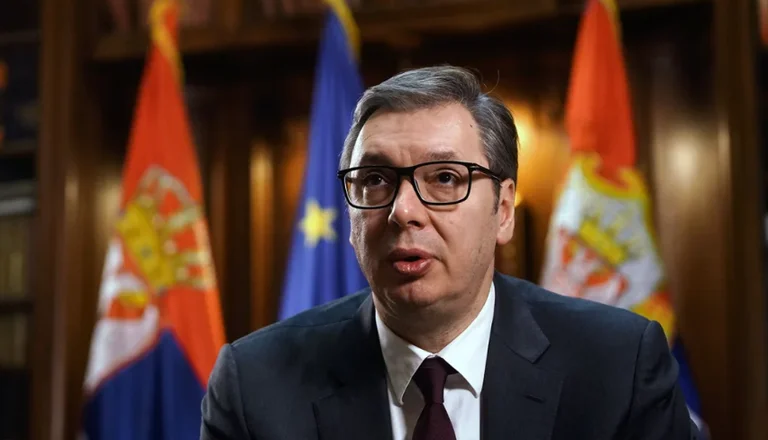
Traditionally one of Moscow's closest allies in Europe, Belgrade has long tried to breach the border between its historic ties with Russia and a possible future of closer European integration. Western diplomats have sought to draw Serbian President Aleksandar Vucic from the orbit of his Russian counterpart, President Vladimir Putin, pledging a faster path towards EU membership, while warning simultaneously of isolation if they break the goal.
But, 18 months later, some experts say the current approach to Serbia has been all carrots and no sticks, and as a result it is not reaching both of its goals.
Serbia has refused to participate in all rounds of EU sanctions against Putin. And Serbia has continued to pursue its own interests in the region by failing to assume responsibility and inciting conflicts abroad to turn attention away from discontent in the country, confident that they will not be reproved in the West.
Russian horse of Troy
Western governments have long treated Serbia as the necessary Balkan voice, sometimes at the expense of more periphery players, some observers say.
“The West believes Serbia is the state (key) in the Balkans. Serbia is the state that if they bring what that means will be easier”, says Jasmin Mujanovic, a political scientist, describing Westerners' approach to problems in the Balkans.
“It seems that they believe they are bringing Serbia closer to the EU and NATO and closer to Western logic by driving it away from Russia... But I would say that this is reflected on the ground”, declared Alicia Kearns, the British MP who also heads the British Parliament Foreign Policy Commission.
Vucic has long maintained a comfortable relationship with his Russian counterpart, Putin. Speaking after a meeting of the National Security Council in February, Vucic argued his decision not to sanction Russia because it was the only “country that had not imposed sanctions against us in the 1990s”.
Kosovo and Law Rule
The effects of the West's impunity towards Belgrade feel stronger in Kosovo, which has been dependent on Western support since its declaration of independence. While more than 100 countries recognise its sovereignty, Serbia does not recognise it, viewing it as a breakaway state. Efforts to normalise relations between the two countries under US and EU supervision have been filled and sometimes violent.
The fiercest fight came after the mayoral elections in Kosovo's four northern municipalities in May. These choices often go smoothly: About 90% of the population in this region are ethnic Serbs, and thus, under ordinary circumstances, they choose ethnic Serbs for mayors.
But these were not common circumstances. In November, mayors from the Belgrade-backed Serbian List party, which dominated four municipalities, resigned simultaneously. They were attended by police officers, administrative personnel and ethnic Serb judges in the region.