a minute ago
German Language Learning, Flights for Disasters
Periskopi(3 years ago)
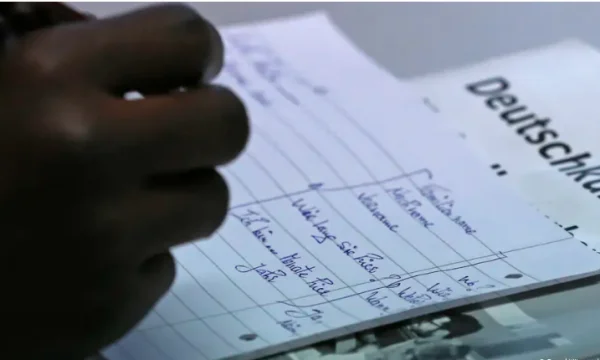
(3 years ago)For many people, especially those in the Western Balkans, German-language recognition is ticket to the job market there, writes DW. For millions of people around the world, English has become a type of “lingua franca”, the language they use to communicate with people outside their native language. In the Globalized World [...]
For millions of people around the world, English has become a type of “lingua franca”, the language they use to communicate with people outside their native language. In the globalized and digitized world of numerous communication channels and closely combined economies globally, English language recognition is self-aware, above all in the business world and young people. In this language they can communicate worldwide, no matter where they are or where they are traveling.
It is not surprising, therefore, that even in the Western Balkan countries (BP), English is everywhere the first foreign language taught in schools. But immediately after that in Kosovo, Bosnia and Herzegovina (B-H), Croatia or Serbia and other BP countries, it is German that many people learn. That confirms in an interview for DW and Benjamin Hexhiq, federal minister's education adviser at B-
H and chairman of the International Association of German Language Professors IDV.
Speaking of the situation in Bosnia and Herzegovina, he says “has had efforts to introduce Russian, Turkish, Arabic and even Chinese as second language. But all these were small projects about which only a few students gathered. In most cases, English is the first foreign language, while second German. And for those who study third, in some high school, then it's French. ”
Language and Migration
There are several reasons why young people learn German, says Hexhiq, but most importantly, economics: the German “juha is dominant among young people and those who want to study and work somewhere in a German - speaking area. This is especially true of Southeast Europe, but also for some other countries, such as India or sub-Saharan Africa. They learn a lot of German there, because it's kind of a ticket out of misery and a better world. ”
Statistics show that 50,000 to 60,000 young people leave only B-H each year, many in Germany, Austria or Switzerland. This is the size of a small town in B-H every year. The problems are serious, Hedzic warns: The arrival of young people from Croatia, Serbia and Bosnia and Herzegovina is very big. We are glad that German is being taught, but we would like to see that learning the language is not in just one direction. We would like it to be like a cultural exchange, that we can live better in the Balkans and not come to Germany to live better. I would like young people who come here and gain competence, and then return to their countries, to have mobility and cultural exchange, because we can build a better world. ”
Cultural Links
However, it is not always just the economic motive behind the desire to learn German. In Croatia, Serbia or Bosnia and Herzegovina, since the time of Austria-Hungary, there have been numerous family ties with Germany or Austria. German culture is perceived as important and interesting, and this was further strengthened during the 1990s wars. At the time, about 800,000 people left B-H alone, most of them in German-speaking countries. Many have returned to their homeland and have brought with them German, says Hexhiq: “has many family ties and friendships, people need to communicate in German, and they are not just economic and business reasons. “
Learning a language is always about knowing the culture that appears in that language. And here, on a global scale, German is under great pressure from English, which dominates contemporary culture pop music, movies or video games. And we should not overlook the fact that there is a world language with such a large number of speakers as, for example, Chinese or Spanish ʹ that by comparison, the German language is actually small. In all these languages, culture certainly does.
But in the Western Balkans area, German is still perceived as a major and important language. “Although today it is difficult to determine cultural circles and discern where the impact comes from. But in the Western Balkan countries, the presence of German or Austrian culture is evident in daily life”, Hexhiq says and adds: “It is difficult to state clearly that cil is the main cause, but German has entered B-H as part of culture. It is undeniable that the country is oriented towards Europe, towards the West and to the German-speaking area. That's clear even in the media, it's shown by the way you dress, the chains of purchase... This influence is great. ”
language authenticity
Until the 1980 ' s, in the Western Balkans area, but elsewhere in the world, the method of grammatical language translation was prevalent: grammatical and lexic rules were learned by heart, practices consisted mainly of practicing translation. Although it made it possible to read and write in a foreign language, its active use was often very limited.
This has changed, meanwhile, Hexhiq explains: “Today, teachers use different audio-visual media and an educational approach. They talk to students, trying to draw them close to the authenticity of the language. It's hard to master your tongue if you don't have contact, if you don't speak it. The media is very important. We have more and more students learning German by watching serials or listening to music. Learning focuses on talking with students in German. ”
The DW language learning program helps teachers in this. This, Hexhiq points out, is especially important when it comes to small languages: “is very useful for the DW, in the language lesson, to have content in Bosnian. This is very important for such a small language. ”
In addition, says Hexhiq, the slow reading programme is very successful. In some lands, it is used not only to learn the language but also to practice the symultan translation. These content are very welcome for those who want to learn the language,” points out Benjamin Hexhiq, chairman of the International Association of German Language Professors IDV.