17 minutes ago
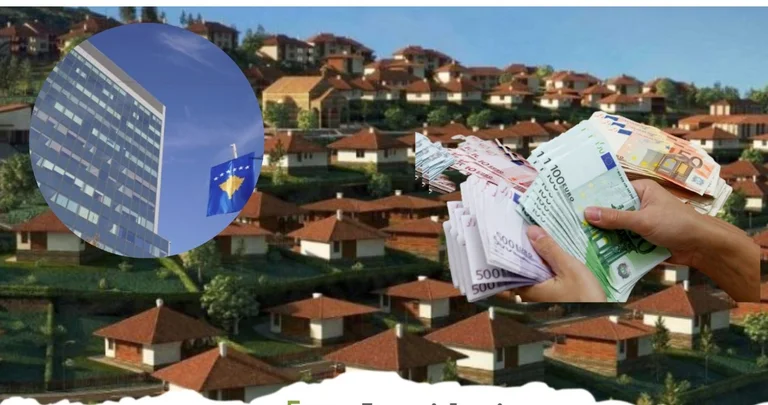
Construction of homes for returnees, the state started construction without having information on beneficiaries and their residential status
Periskopi(3 years ago)
(3 years ago)The Republic of Kosovo has consistently faced the deportation of its citizens, especially in recent decades. The government has drafted policies to enable these citizens to return to their homeland. The Ministry for Return and Community is the main institution that develops and manages programmes and mechanisms to help integration and sustainable return [...]
The National Audition Office has audited housing construction contracts for the period 2017-2022, worth over 8.2m euros. The audience found a lot of violations, writes Periscope.
Initially, the ministry during this period had signed two housing construction contracts, where it had planned and contracted to build out 150 houses with each contract. These contracts were three years old each, and with the first contract 157 houses and 26 houses with the second contract (for the period of 2.4 years). The audit included assessment of needs, determining the projected value of the contract, achieving the economy during contracting and building houses, and efficiency in meeting these contracts.
The auditing conclusion is that the Ministry for Communities and Return was not economic in contracting housing construction. The shortcomings were evident from the phase of the assessment and reasonableness of the needs and research of market prices. The ministry had started procurement procedures without having enough information for beneficiaries and their residential status. Such practice was repeated in the second contract despite problems encountered in the first contract. The ministry has contracted housing construction for 832,033 euros more expensive than market prices, only compared at least to the prices of Kosovo Tax Administration.
Failure to comply with planned construction and contracted and realised positions
According to the ZKA, the ministry had built houses outside the plan defined in the main project by also building houses that apparently have other specifications. The audience has considered that such construction without getting the approval from the designers risks not building houses according to standards and potentially not being proper quality.
“There were considerable differences between contracted positions for building houses and positions that were currently used during the construction of houses. This disagreement shows the lack of effective project management and control mechanisms and also questions the accuracy of the Ministry's initial planning”.
A slow completion of the second contract by the Ministry
The audit shows that the ministry's progress in meeting the second housing construction contract was considerably slower than planned. It was planned for 150 homes to be built within three years, while in 29 months (2.4 years) only 26 houses were built. According to the audience, this slow construction rate shows potential inefficiency in project management, resource distribution, or other operational aspects. The first contract was planned to build 150 houses, while 157 sos were built within three years.
Ministry had failed to build houses at economic prices
The audience considers that the ministry was not economic in building homes for returnees because it had not made proper assessment of the needs, both in terms of needed positions and in the number of houses to be built. Furthermore, the ministry has not conducted adequate market prices research and has failed to determine the projected value of the contract properly.
Out of a total of 244 positions contracted for each contract, the ministry has used only 92 positions or 33.2% during the execution of the first contract and 91.8% of the second contract (by March 2023, with only seven months remaining until the contract is completed. This inefficient use of contracted positions raises concerns about financial resources management.
The ministry had contracted housing construction for 4.4m euros for the first contract and 3.8m euros for the second contract. However, if the Ministry had only included positions that were actually exploited, it could have contracted them for 2.4m euros and 2.1m euros. Moreover, unusable positions were markedly lower, despite their serving the same purpose (e.g. Isolation materials, doors and windows.
The ministry had contracted 41 types of doors, while only four of them were used during construction, whose prices are almost 31 times higher than the price of other door positions. The lowest contracted price for the doors was 6.5 euros/m2, while the highest-priced door was 198.5 euros/crash.
And for the window, 35 species have been contracted but only two have been used, which also have nearly 10 times the lowest price of one type of contracted windows. The lowest contracted price for the window was 10,01 euros/incirculated, while the highest price window supplied was 98.5 euros/scroll”, the audience found.
According to the audience, the ministry has failed to plan adequate amounts for construction. For example, approximately half of the amounts of several contracted positions (dependent from 23% to 52%) have been used for construction of only 17 homes. This is evidently lower than the planned 150 houses that will be built using these amounts. Insufficient processing of amount leads to inefficient use of resources and potentially inflated costs.
Ministry was not efficient in building homes for returnees
As a result of the above-mentioned issues, auditing concludes that the Ministry's overall efficiency in building homes for returnees has not been achieved because optimial results have not been achieved. The combination of construction out of plans under key projects, incompatibles in positions, payments for unfinished jobs, and slow progress in meeting the second contract are among the key findings that have contributed
Ministry had not met the first public procurement targets
The ZKA has written that the ministry has not done literal analysis of the projected value of the contract, resulting in the elimination of competition. The projected “Vlera was higher than the contract value of 25% in the first contract and 16% in the second contract. Mangagi also had contract management because there are no dynamic plans for each house and changes in positions are not registered. Neither were tender deadlines respected, as specified with the public procurement guide, incorrect value of the tender security was applied, and no measures were taken to ensure that the consortiums are valid even after the loss of the status of some of their members in the Kosovo Business Register Agency”.
Based on the above-identified issues related to building homes for returnees, the audience has called for immediate improvement so it has given 13 recommendations found in chapter 5 of this draft report.
The response of the parties involved in auditing the Ministry for Communities and Return has been reconciled to the findings and conclusions of auditing, and has pledged that I will address all recommendations provided. /Periscopi/