15 hours ago
Are the carcinogenic sweets?

Periskopi(3 years ago)
(3 years ago)Assetam, acesulfami K, and similar ones are surpassing industrial sugar on the food component list. But are those really the best choices? O BSH classified as “likely carcinogenic”. Togword “pa sugar” is currently the most popular food industry marketing. For decades, sugar has been the king of [...]
Assetam, acesulfami K, and similar ones are surpassing industrial sugar on the food component list. But are those really the best choices? O BSH classified as “likely carcinogenic”.
Togword “pa sugar” is currently the most popular food industry marketing. For decades, sugar has been the king of taste, but now it is challenged by sweetsmen. If we look at the ingredients of a sugarless lemonade, we'll notice that there's really no sugar on the list, but there's lots of sweeties. They are called E950, E951, or E954. Behind these letters and figures are syntheticly produced compounds like acesulfam K, asstem and sukraloise.
Deserts are up to 500 times sweeter than sugar
Deserts belong to the dietary category. Why they are so popular is easy to explain. They are practically without calories, and their sweetening power is much higher than literal sugar, so it takes only a few milligrams to flavor the taste of food reduced to calories. Asstebram, for example, is 200 times sweeter than sugar, sukraloza, even 500 times sweeter.
Are they asstems and carcinogenic?
However, scientists are more critical of the sweeters. Many of the eyes say that sweets are cancerous. Especially cypress. In a study of mice after high doses of advertising, many of the animals developed bladder cancer. However, the results were not transferred to humans because people do not consume sweeters in such high doses as in experiment.

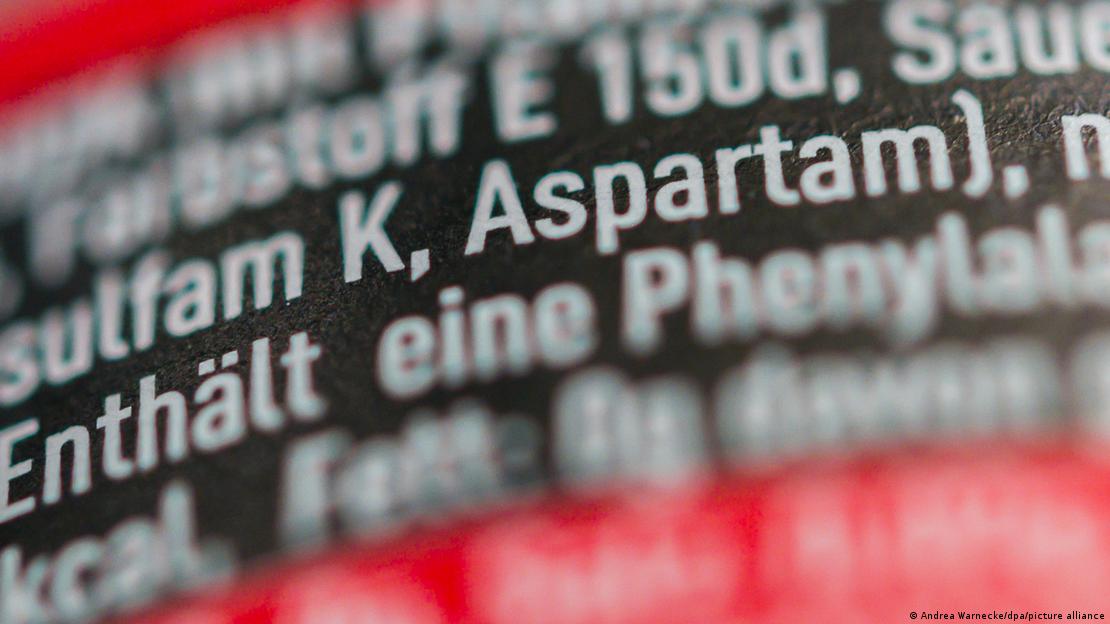
Since July 2023, the International Agency for Cancer Research (IARC) of the World Health Organisation (OBSH) has classified asstems of a potential carcinogenic “ ”. However, the IARC acknowledges, scientific evidence of this assessment is still few.
But because of the fact that from cell studies in animals as well as human observation studies, some indications of the existence of potential cancer risk have been noted, a risk description is needed, says Stefan Kabisch, a researcher at the Clinic for Endocrinology and Metablic Medicine in Charité in Berlin. “lassification of asstem as a potential cancerogenic is very unlikely to change our daily use. Classification is very careful,” adds Kabisch.
For this reason, daily doses recommended earlier remain in force, up to 40 milligrams per kilogram of body weight. An adult weighing 70 pounds [70 kg] would have to consume between 9 and 14 cans of sugar - free soda to exceed that value.
Another criticism of artificial sweets is that they have a negative effect on the bowel flora. An experiment of mice, conducted in 2014 by Israeli researchers, has shown that after regular consumption of sarcaline and sukralose, the animals were disturbed by their bowel flora and had problems with glucose metabolism.
I think it's very likely that intensive flora will be changed by sweeter consumption, since the cobbler receptors in the intestine can be influenced by sweetsmen”, says Stefan Kabisch. But even here, studies are not enough to provide final judgment.
Not every sweet one has been tested
However, Kabisch sees a fundamental problem in many studies. “Often, only two to three sweeties are tested, but there are so many sweeties that have different chemical structures that results are of no universal value,” he says. To get the right results, it is necessary to conduct experiments with each of the sweeties approved in the European Union.
The doctor sees another potential danger from the consumption of sweetsmen mainly in the perception of children's taste. Because at an early age, the brain still has to learn to convey sweet taste with the fact that the body now receives high - calories food. “Deserts cause a dissonance in the brain. On the one hand, it delights to taste sweet, but on the other hand, a lack of calories causes hunger to return quickly,” says Kabisch.
Deserts mislead the brain
This is exactly what some scholars are particularly critical of. One of them is diabetesologist and internologist Achim Peters, who has developed “Theory of the Selfish Brain”. In short, the brain covers virtually all its energy needs with glucose. When there's too little glucose, he's cheating. Orexes and food intake grow, leading to obesity.
Through his research, Peters has discovered that the sweeties deceive the brain and damage healthy metabolism. For example, eating a piece of cake that has no sugar but sweetness signals that high - calories are coming, but the brain and body are in vain waiting.
Over the long term, the brain loses its capacity to assess how much energy it receives from its food. Such uncertainty leads to a physical reaction, and a person eats excessively.
A study by France with mice shows another possible negative effect. Deserts make you as dependent as normal sugar. Addicative effect i Cheel's incentive turns out to be stronger than drugs, like cocaine.
Sweet or sugar?
Kabisch does not recommend the transition from sugar candy. In the case of sugar, it is much clearer that it promotes type 2 obesity and diabetes except tooth decay and cancer risk. ”
There is no strong reason to actively avoid sweeters, but there is no reason to actively recommend sweets. “The profit is small, the damage is not clearly visible,” ends Stefan Kabisch.