15 minutes ago
Albania Approves Law on Control of Cannabis Cultivation
Periskopi(3 years ago)
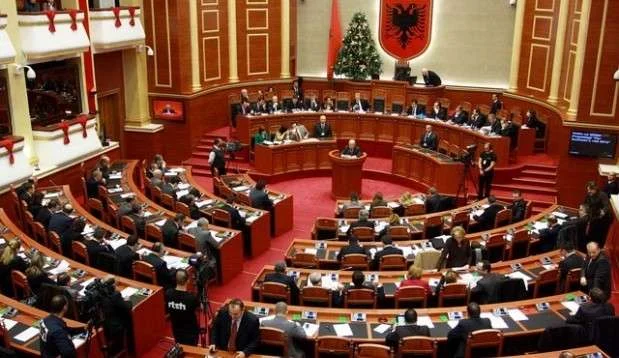
(3 years ago)Albania's Assembly examined for three hours after midnight Friday and adopted the “bill for controlling the cultivation and processing of cannabis plants and producing its byproducts for medical and industrial purposes”. The law received 69 votes for, 23 against, 3 abstentions. The three abstained votes belonged to Socialist deputies Fatmir Xhafaj, Pandeli Majko [...]
The law received 69 votes for, 23 against, 3 abstentions. The three abstained votes belonged to Socialist deputies Fatmir Xhafaj, Pandeli Majko and Erjon Brace.
The government stated that this bill aims to regulate and supervise cultivation, processing, circulation, as well as export of cannabis, its byproducts and final products for medical and industrial purposes.
Authorities believe that through a licensed process, the country's economy will grow, as well as the control of subjects, which will deal with the cultivation and processing of cannabis plants, creating a special institution.
Health Minister Ogerta Manastirliu stressed that the bill envisions the creation of an agency for control, production registration, the delivery of licenses for export through a special commission, as well as supervision by a specialised entity.
The national registry of licensed subjects will regulate the controlled production of cannabis for medical purposes. Medical literature envisions the transport of seeds, plants and to products and byproducts”, Manastirliu said.
The bill envisions that licenses can require any legal person, who has three-year experience in production, cultivation and circulation of the cannabis plant for medical purposes.
Authorities claim that the subject should be a fraud for at least 5 years of production of cannabis plants in one of the countries of the Organisation for Economic Co-operation and Development.
Under the bill, the license could be granted for a 15-year period, with the right to renovation, while implementing the license conditions confirmed every 3 years.
The bill's reviewer, opposition MP Tritan Shehu, said the bill conflicts with the Penal Code and aims to use drugs for trafficking, while security structures do not have the capacity to control the territory.
This bill is designed to license criminal groups. This law will make Albania a cannabis republic, meanwhile, affected by narcotics in all walks of society, especially young people. The production continues in black and now only awaits license”, Shehu said.
Socialist MP Fatmir Xhafaj expressed himself against this bill during his speech.
He recalled that while he was minister of Internal Affairs, police have strongly battled the cultivation of narcotics, and he himself had been fought from many sides just to hit this phenomenon.
Over those two years Albania has registered two years with the minimum statistics in cultivation and trafficking, confirmed by Guardia di Italian Finanzia”, Xhafaj said.
He said cannabis is present among Albanians, even though it is illegal, ranging from political use, done in Lazaras to financial uses.
“Is Albanian society ready for this bill with major social risks? I think this is the wrong approach. This is a business that kills. It also kills people's trust in work. I think it's an early step for Albania”, Xhafa said.
The opposition expressed doubt about why the bill was passed quickly on parliamentary commissions by the Socialists, and on the other hand, there is no study on the benefits Albania's economy has in relation to the risks and the social, health and criminal consequences of drug use.
Opposition MPs voiced scepticism that the Health Ministry, which is tasked with implementing this bill, does not have the necessary capacities, while neither has police achieved enough results in fighting criminal groups, cultivating narcotics plants in many areas of Albania.
However, the Socialist majority approved the bill with its votes, to legalise the cultivation and processing of cannabis for medical and industrial purposes, repeating that the controls will be strict and financial gain opportunities and employment are huge. /The Voice of America