22 minutes ago
Rashit says situation in the north is not heading towards normalisation
Periskopi(3 years ago)
(3 years ago)The Balkan Group's Executive Director for Policy Research, Naim Rashit, has spoken about the Kosovo-Serbia dialogue, procrastinating this process, as well as tensions in the northern part of the country. According to him, recent developments are the product of the dialogue process in Ohrid, where, as Rashi said, the European Union has almost forced out [...]
The Balkan Group's Executive Director for Policy Research, Naim Rashit, has spoken about the Kosovo-Serbia dialogue, procrastinating this process, as well as tensions in the northern part of the country.
According to him, recent developments are the product of the dialogue process in Ohrid, where, as Rashi has said, the European Union has almost forced out an agreement that has not changed the reports between the parties, but has made Serbia even more aggressive.
“The situation has changed nothing except a document that was almost forced out of Mr. Borrell and Mr. Borrell. Lajcak from the parties in Brussels and Ohrid, but who has essentially not changed the reports between Kosovo and Serbia, has not changed the approach of the parties of Serbia, it has become even more aggressive and the result of all that has happened today, and successive developments are the product of that Ohrid process, the form of making so-called agreement and failure to ensure comprehensive implementation”, political analyst has declared in an interview in the “Facebook” in Telegraph.
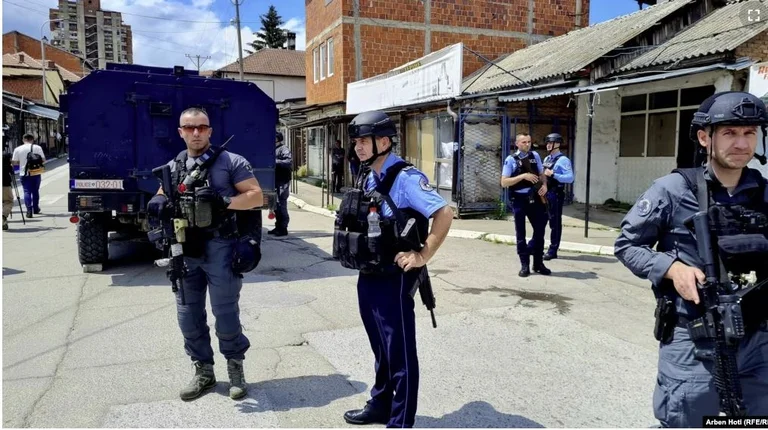
Commenting on the protests being held now and over two weeks by local Serbs in the north, Rashi has said that “has no parameters leading us to believe we will have the normalisation process”.
“Earlier, the international factor has somehow been able to convince Serbia to take some steps, and at this stage the international factor is not able to at least draw anything from Serbia in relation to Kosovo. This defect along with the agreements has brought us to this state where we are”.
He has now indicated that this does not rule out Kosovo's responsibility, which, according to him, has had to manage the situation entirely better in the north.
But what needs to be understood now is that there is no process of normalisation. The international factor is failing to convince Serbia of the situation. Now a parallel political-juridical and security process must occur to manage the north. There may also be dialogue processes in Brussels, which should be exclusively for full normalisation and comprehensive implementation of the agreement. You cannot go to Brussels for any crisis management situation in the north”.
Rashit has said it is Kosovo, which has to make a political offer, in addition to security actions that he is taking in the north.
“Pristina, Kosovo institutions and the political elite must find a bold way to confront reality in the north. Reality calls for a stir of political and security actions. I believe even with the security steps to be taken there will be international support, but this is missing a political offer. Serbs will not return to the preliminary situation without a political offer. One of them may be to have a plan for launching consultations for establishing association within Kosovo, and not to go to Brussels at all on this matter”.
“consults must be done with Kosovo Serbs and with international support for the Association statute to be built by September and then held elections. Thus Kosovo will convince the international factor to support Kosovo to manage the security situation in the north. I think that's what the international factor is looking for, ”, he has stated among other things.