a minute ago
Is Serbia's responsibility being lifted by the declaration of missing persons?
Periskopi(3 years ago)
(3 years ago)Kosovo and Serbia adopted a statement Tuesday on missing persons during the war. They did not disappear suddenly, but the term used in the declaration says that it can also mean that. International law recogniser Enver Hasani said this term equates both states in responsibility. Someone else said [...]
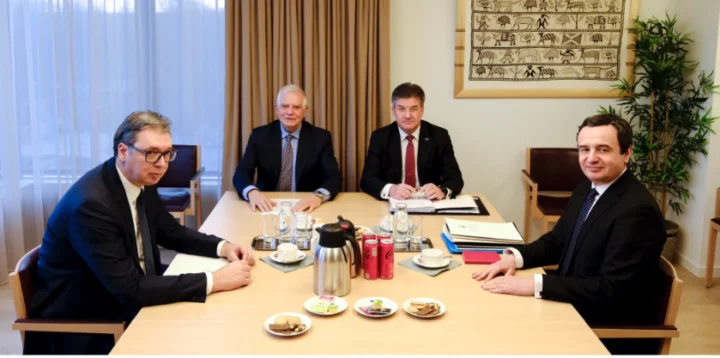
Once last night's meeting in Brussels, Kosovo Prime Minister Albin Kurti and Serbian President Aleksandar Vuciq approved without delay the Declaration of Missing Persons, which chief negotiators Besnik Bislimi and Petar Petkovic had previously agreed to in Brussels on April 4th.
After this news, opposition voices in Pristina immediately identified an unforgivable mistake, which, they say, made Kurti.
The prime minister after the meeting did not speak much of the declaration for the missing, but considered him a high positive “high mark”. She, Kurt, reinforced the words “with force” and “with violence”.
This high-level meeting we started with a high-level and positive note that we jointly agreed on the text of the Agreement, thus transformed into an agreement on the issue of the undiscovered, on the issue of forcibly missing persons, the war-violent in Kosovo. We know there are 1617 found and here the victims are not only those who were kidnapped but also their families, and all the people and society”, he said.
International law professor Enver Hasani said in Pressing at T7 he was terrified when he saw the declaration adopted.
Hasani said she has two serious problems. The first, according to him, is that Kosovo is equal to Serbia, while the second is that Kosovo has not existed as a state before 2008 and cannot take responsibility for what happened.
What's called forced extinction, I can see that the equal has immediately begun. Any responsibility of the Serbian state for this category of persons has been removed. The second, it means, is the question of the parties possessing their evidence. This is nonsense. Kosovo is built as a state, as a British scholar put it, on the night of February 17, 2008. UNMIK administration has existed in Kosovo until then. How can Kosovo give responsibility for a period when there was no”, the former head of the Constitutional Court said.
As reactions began in Kosovo, the Serbian side in Brooke presented the adoption of this statement as Serbia's victory, after the term “by force was said to have been removed. The first Serbian chief negotiator, Petar Petkov, who said they have managed to defend Serbia's interests, stressed that for years they have insisted that the declaration be adopted by another term. He said Kosovo “has insisted on the term "enforced disappreciation," which is judicial structure”, so that, as he said, “can refer to it and seek responsibility from Belgrade when it comes to violent disappearance”.
“This is not a legal structure and does not include any responsibility of the Serbian state in the judicial sense, but only shows the circumstances in which a designated person has disappeared”, Petkovic stressed.
Even Serbian President Aleksandar Vuciq said the term in the declaration is not a strict legal term, and it stands out from the term “forced intervention”, which said that “has clear legal meaning under the International Convention for the Protection of Persons Missing by Force (2006)”.
Andy Hoti, chairman of the Government Commission for Missing Persons in Kosovo, stressed how Serbia, for the first time, through an official document, has agreed to open its state archives, including classified ones, on the issue of the missing. He said the declaration adopted is not the best possible agreement, but that it is an important step and that Kosovo is gaining access to Serbian state archives.
This is a very important step. I'm not saying it's final, it's a rookie. Now we have access to Serbia's state archives. I'm not very pleased. It is not the most perfect possible statement, but the best possible statement we could have made in Brussels. This is nothing, but its implementation we hope it will lead us to finding missing persons”, he said in a direct connection to Pressing in T7.
He said that under the term “it cannot happen to equalize victims with aggressor”. According to the Convention, Hoti said the state's “alone as a state can commit crimes and could eliminate people by force”.
Even Bekim Blakay of the Fund for Humanitarian Law said that the term used with what wasn't used “doesn't know they have any difference”, but it points that “forcibly dissapused” is used only once and not in the whole text.
Nysrete Kumnova from the Association “Mothers' calls” rejoiced at the adoption of this statement.
This statement to family members is a painful but confusing statement after agreeing that our most loved ones will not remain in the land of criminals. but return to Kosovo, to its homeland. Where they were even born to be buried”, she said.
President sımpathised
President Vjosa Osmani welcomed the adoption of this statement, demanding that it be implemented soon.
Without any remarks on the terminology used, Osmani said he hoped the <x0-declaration agreed today in Brussels would pave the way for accepting these crimes and for justice”.
Above all, Osmani described the adoption of this statement as “a moment of liberation for families who have gone through inexplicable pain”, while expressing pessimism that it would be implemented immediately on the part of Serbia.
Statement amniston Serbia?
The terminology used in the declaration adopted by Kurti and Vuciq was said to house Serbia, saving it from responsibility for the disappearance of persons during the war in Kosovo.
The United Nations organization recognizes the <x0s ' forced intervention” as a crime against humanity, and in 2006 it approved the special international convention on the issue. The term used there differs from the agreed declaration between Kosovo and Serbia.
Kurti and Vuciqi's statement uses “missing persons” and “forcibly capped”, including forced disappearance and those that constitute crime against humanity, but also implies cases of human disappearances from natural disasters.
Otherwise, the term “enforced capperence”, also used in the Declaration of the International Committee of the Red Cross (ICRC) for Missing Persons.
<x0)
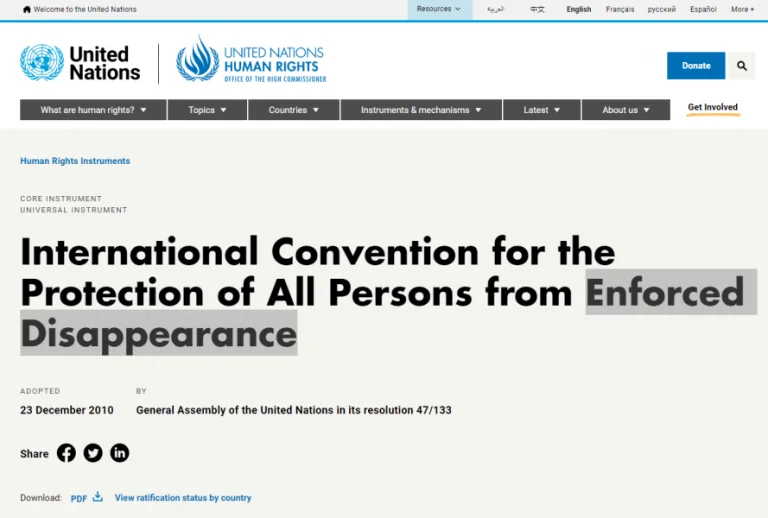
The term used by the UN at its convention specifically refers to acts committed by human beings.
The declaration adopted by Kurti and Vuciq, what is the wording and how the responsibility was determined
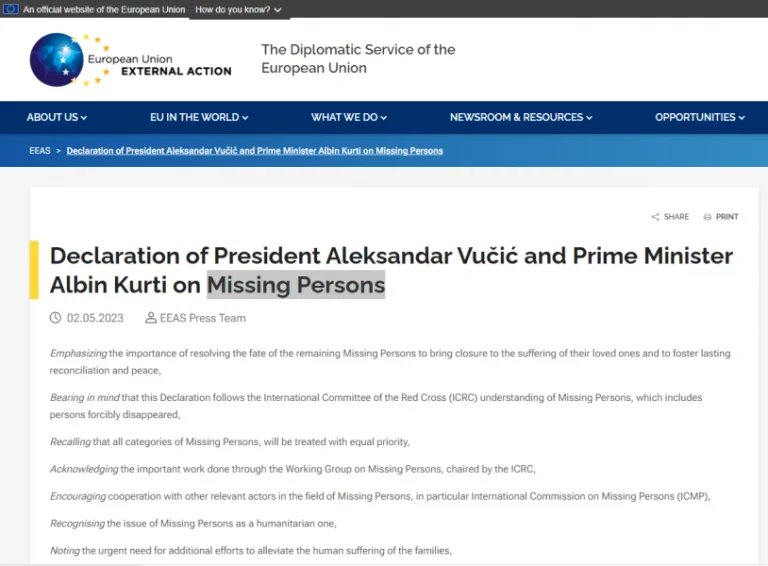
The document Kosovo and Serbia agreed on Tuesday is titled this way: President Aleksandar Vuciq's “Declaration and Prime Minister Albin Kurti for Missing Persons”.
In the text, the term “has once been mentioned by force” and, in all other cases (15), simply says “missing persons”.
The declaration envisions several commitments to the parties, which could lead to the dawning of the fate of over 1,600 people who continue to remain missing from the 1998/99 war. European top diplomat Josep Borell said the EU welcomes its approval and expects the <x0-partals to make tangible progress in closing the unresolved cases of missing persons”
Below, the full statement published by the European Union:
To ensure full access to reliable and accurate information that help to locate and identify missing persons within January 1, 1998, issue of December 31, 2000. This includes all materials, notes, orders, documents, videos, audio updates and any other document including those with classified status ) under the possession of institutions on both sides, which are important to this context,
Stressing the importance of resolving the fate of those who continue to disappear and promoting lasting reconciliation and peace,
Given that this Declaration follows the understanding of the International Committee of the Red Cross (KNKK) for Missing Persons, which includes people forcibly missing,
Remembering that all categories of missing persons will be treated with equal priorities,
Recognising the important work done through the Working Group for Missing Persons, led by the KNKK,
Encouraging co-operation with other relief actors in the field of missing persons, in particular with the International Commission on Missing Persons (ICMP),
Recognizing the issue of missing persons as humanitarian issues,
Noting the urgent need for additional efforts to alleviate family suffering,
We engage together,
To ensure full implementation of relevant commitments in the field of missing persons,
To co-operate closely in identifying burial sites and to follow with excavations,
To ensure full access to reliable and accurate information that help to locate and identify missing persons within January 1, 1998, issue of December 31, 2000. This includes all materials, notes, orders, documents, videos, audio updates and any other document including those with classified status ) under the possession of institutions on both sides, which are important to this context,
To make all local and international documents of importance available for determining the fate of missing persons to use satellite data, LEDAR and other technologies, in uncovering mass graves,
To enable and encourage the active engagement of families of missing persons in the process of identifying their fates,
To provide adequate rights and address the needs of families of missing persons,
To create and work together through a Joint Commission, headed by the European Union and monitored by the KNKK, in order to support efforts to resolve the fate of missing persons,
To monitor and support the work and progress made by the Working Group for Missing Persons through the Joint Commission.
Operational details will be agreed on the future round of EU-brokered dialogue for normalisation of relations.