a few seconds ago
Implementation of the Constitutional Decision for the Decani Monastery, “Constitution” for Kosovo's membership in the Council of Europe
Periskopi(3 years ago)
(3 years ago)Like visa liberalisation, Kosovo's membership in the Council of Europe is being conditioned by the international community. This time, completely open and without much diplomacy, the QUINT countries have made clear to the Kosovo government that it will not be possible to advance in terms of membership in this body of [...]
Through a joint media communique, the chiefs of missions of France, Germany, Italy, the United Kingdom, the United States of America and the European Union called on the Government of Kosovo to implement the entire “and urgently legal land registration of the Decani Monastery. ” But not like a call we've often heard from QUINT countries. This time around, the call has been followed with a very important condition for Kosovo.
In the communique, QUINT has said that the Kosovo government should respect the Constitutional Court's decision and that any democratic elected government should respect the independence of the judiciary, until they have mentioned that Kosovo's integration into European and Euro-Atlantic structures is impossible without that. Even in this communiqué, it is mentioned that Kosovo will not be able to join the Council of Europe without implementation of this decision.
“We are united in supporting Kosovo's democratic and European future. Implementation of the law and respect for the independence of the judiciary are the obligations of all democraticly elected governments and are necessary preconditions for Kosovo's integration into European and Euro-Atlantic institutions, including further progress in Kosovo's application for membership in the Council of Europe. The following delays are an obstacle to this progress.”, the communiqué says.
On the other hand, it has been made clear by the QUINT countries that despite the positive step where the Council of Europe's Ministerial Committee made a decision to forward the Parliamentary Assembly of the Council of Europe to Kosovo's application for membership in the Council of Europe, it will not be possible without respect for the Decani Monastery decision.
What is the context of the Decani Monastery, and what does the Constitutional Court's decision say?
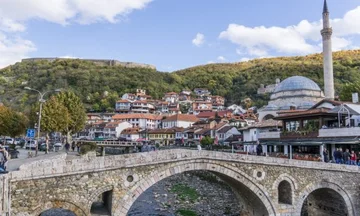
In 2016, Kosovo's Constitutional Court had ruled in favour of the Decani Monastery, on the contrary, had determined that 24 hectares of soil “contested” belonged to this monastery. However, regarding this issue, local power in Decani refuses to implement this Constitutional decision because it claims that the property is of social companies “Applied” and “Iliaria” and that São has never met the monastery, writes Paparaci.com.
The trial for the Decani Monastery case lasted from 2000 to 2016, when the Constitutional Court, exactly as today 7 years ago, ruled in favour of the Decani Monastery.
The Constitutional Court, at the time, rejected the decision of the 2012 Supreme Court's Appeal College of the Supreme Court of Kosovo, 2015, to return the course to the Constitutional Court in Decan and found that the previous ruling of the Supreme Court, which confirmed ownership of the Monastery on disputed land, is <x0)res Judica”, or the judgment of the cut form.
The Constitutional Court, had asked the State Prosecutor to take further action in line with the legal competencies related to the implementation of the verdict, while in the decision not to comply with the act, the Constitutions stressed that there is no jurisdiction to assess the responsibility for failing to comply with a Constitutional Court's decision by responsible bodies and to delegate the job to the State Prosecutor.
Since 2016, the international community has called on Kosovo governments and local bodies for implementation of the Constitutional Court's decision, while their patience now appears to have affected the end and respect and implementation of this decision has linked to Kosovo's membership in the Council of Europe.
Kurt and Osman's stances regarding Decani Monastery
Kosovo Prime Minister Albin Kurti and Kosovo President Vjosa Osmani have declared “reserved” in terms of the Constitutional Court's decision concerning the Decani monastery. In February 2022, Kosovo Prime Minister Albin Kurti had declared that the Decani Monastery's dispute originated with a decision by the government of Serbia in 1997 when they were given land to the Decani monastery because they were owned by two public enterprises.
Kurti had declared that the Decani Monastery has no independent legal identity.
We are aware that the Constitutional Court's decisions must be respected, but we should also consider the contradictions that have conveyed land cases around the Monastery in a historical and legal sense. First, everything lies in the Government of Serbia's decision in 1997 when the land was given to the Monastery in a discriminating way because it was owned by two public enterprises. Second, the Decani Monastery has no independent legal identity because it legally belongs to the Serbian Orthodox Church. It is a little surprising how the right monasteries in the procedure have been recognized. As far as the Constitutional Court's involvement in this process is concerned by granting access to the monastery.”, Kurti declared.
He had also said the Decani Monastery is part of Kosovo's rich cultural mosaic, but had declared that the Constitutional Court had not had to make a decision on an issue without being consumed at all other legal steps.
“The issue of ownership of land around the Monastery was not decided by any relevant Court, and the Constitution I believe hadn't had to make a decision on a case without all other legal scales being consumed. The Decani Monastery as we all know it is part of Kosovo's rich cultural mosaic. Unfortunately, the Serbian Orthodox Church is what has been repeatedly misused by Serbia as political instrument against Kosovo and Albanians. We will be fully committed to preserving the legitimate rights of the Monastery, but even the monastery's religious leaders will do their part by seeking solutions through dialogue and agreements with the local population and I believe that such a thing is possible”, Kurti said at the same time.
On the other hand, in October 2022, Kosovo President Vjosa Osmani in an interview for Radio Free Europe on October 7th had declared that “should be very cautious about the precedent set up with the Constitutional Court's decision in the Decani Monastery case. ”
Remember that Milosevic has given and taken land in the years of CHA90 without any criteria, without any decision, this is entirely on discriminatory grounds. He even did that during 1998-99, when we were at war, when he committed genocide against the people of Kosovo. Hence, this is the fundamental problem of this” decision, Osman said.
Where is the Kosovo membership process in the KiE?
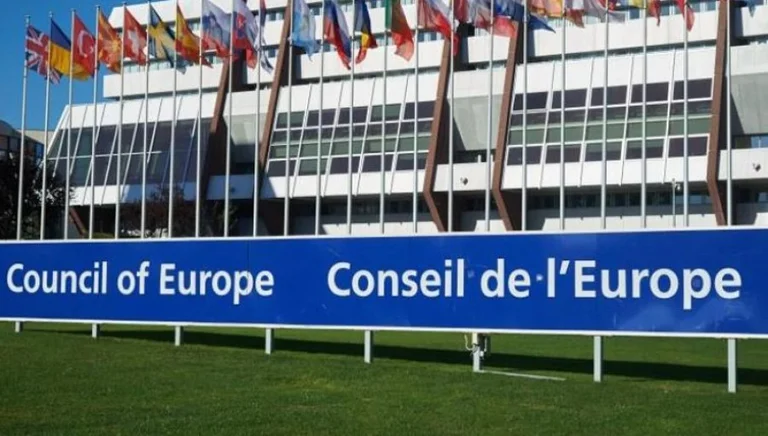
In April 2023, the Council of Europe's Ministerial Committee has decided to submit the Parliamentary Assembly of the Council of Europe to the application for Kosovo membership. Kosovo applied for membership in the Council of Europe on May 12th of 2022.
The Council of Europe, the oldest European organisation to deal with the development of democracy and human rights, has specific procedures for accepting new members. These procedures are passed through the Council of Ministers and the Parliamentary Assembly, attended by MPs from member states parliaments. In this decision there were 33 votes for, seven against and five abstentions.
After this successful step, the Parliamentary Assembly will appoint two rapporteurs from the Committee for Political Affairs and the Committee on Legal Affairs and Human Rights that will prepare their reports on Kosovo. The report will be discussed by the Committee for Political Affairs and voted by the Parliamentary Assembly.
After the reports are concluded, they are sent for discussion and voting at the plenary session of the Parliamentary Assembly, and it takes 2/3 of the votes to recommend the Committee of Ministers to invite Kosovo to become an EC member.
Unlike the European Union, where membership applications are adopted by consensus, the admission of a new member is done by majority. On March 16 of this year, the Russian Federation has been excluded from this Council because of the start of the unprotested war in Ukraine. In Russia's absence, two-thirds of its member states recognise Kosovo's independence.
Although it was cited that dialogue between Kosovo and Serbia will greatly influence the process of membership in the Council of Europe, it has already been decidently said by the QUINT countries that respect and implementation of the Constitutional Court's decision on the Decani monastery is a condition for Kosovo's advancement in the process of membership in the Council of Europe.