2 minutes ago
Former American Ambassador to NATO: Kosovo went too far north, but felt sovereignty eroded
Periskopi(3 years ago)
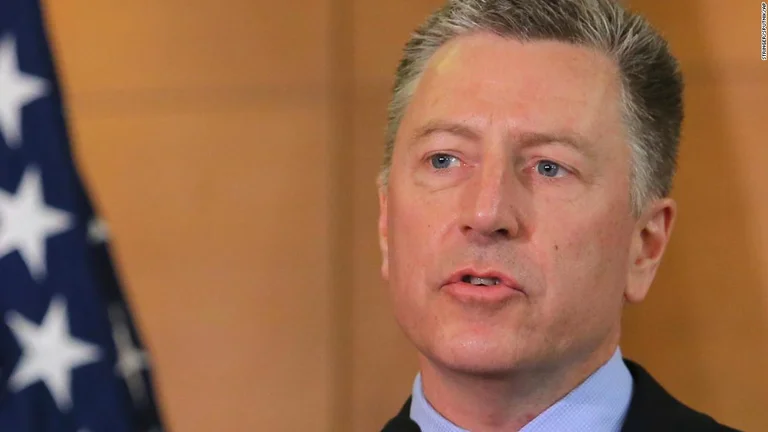
(3 years ago)Former US Ambassador to NATO Kurt Volker says the Kosovo government was wrong to act in the north without consulting the United States and the EU, but adds that the West should not neglect nationalist tendencies it says Serbia is following in the region. In an interview for Voice of America, Volker, [...]
In an interview for Voice of America, Volker, an expert at the Centre for European Policy Analysis, urges the Kosovo government to take measures to reduce tensions, but says the United States and the European Union also must engage to repel efforts that jeopardise Kosovo's sovereignty.
Ambassador Volker, what is your opinion about the recent tensions in northern Kosovo and the escalation there?
Kurt Volker: First I have to say, it's a very dangerous situation. We have seen many times in the past how ethnic nationalism has erupted in open conflict in the Balkans. This should be prevented at all costs. In view of this, I think the actions of the Kosovo police were excessive. They should have acted with greater discretion. But on the other hand, we must understand that the reason why it all started was Serbia's several-year nationalist activity in Kosovo, Bosnia, Montenegro and Serbia itself, and there was no attempt to contain it. I think this created a situation where Kosovo felt its sovereignty was being eroded. The Serb community's (in Kosovo) refusal to participate in local elections, efforts to create the Association of municipalities with Serbia's backing, all of which gave the impression that Serbia was trying to intervene within Kosovo, which of course, was unacceptable to Kosovo authorities.
Under these conditions, the solution is more commitment from the United States, from the European Union, that should repel these nationalist trends and focus efforts on establishing stability and growth for all.
The US State Secretary, directly blames the Kosovo government for the “forced intervention in the municipality”, stressing that actions were taken without consulting the United States. Do you think the Kosovo government should have been more cautious and think of the possible consequences before taking those steps?
Kurt Volker: First, close ties with the United States is vital to Kosovo. So it was hasty and reckless for them to take such action without consulting the United States. And I think that reflects on the statement of Secretary Blinken. At the same time, I think that the declaration bypasses some of the US and the European Union's responsibility that failed to control some of these Serbian nationalist actions over time, which was also the reason why it nervous Kosovo.
So Kosovo's perspective was a combination of factors. However, it is important for Kosovo to take steps to reduce tensions, work with the international community, because it will not be in a more favourable situation to deal with Serbian nationalism by acting alone, rather than working with the international community.
However, from interviews and statements by Prime Minister Albin Kurti, it appears he is not taking a step back, but is stressing that in the face of a regime like Serbia's, the government will not be deterred and will protect its democracy. Are these statements constructive?
Kurt Volker: I understand his view, as well as the fact that it's politically important not to seem weak. But at the same time, I think that he and the Kosovo authorities in general should find a way to ease the situation, to return to co-operation with the US and the European Union, while insisting that the international community undertake a more powerful role than it has so far played for deterring nationalist actions.
I think it is also important that the United States also make an effort to reduce the scale so that the situation does not become even more provoked.
American amassador in Kosovo, Jeff Hovenier, said that in response to Kosovo's stance, NATO cancelled Kosovo's participation in the Defender 23. exercise. Do you feel that this was an appropriate response?
Kurt Volker: I think it's a matter of judgment. Clearly, the United States government is unhappy with the Kosovo government and they wanted to do something to express that dissatisfaction. I think that because of the way Kosovo did, without directly consulting the United States, the US is trying to stay. Personally, I think we should support Kosovo's independence and sovereignty, advise them to take a step back, relax, scale the situation, and maintain a more balanced attitude regarding the role nationalism is playing in the region at this point.
In view of how harsh this American attitude was, how much do you think the two countries' relationship has been damaged?
Kurt Volker: I think I would characterize the current situation as frustration and nervousness. I hope the situation gets on track again.