43 minutes ago
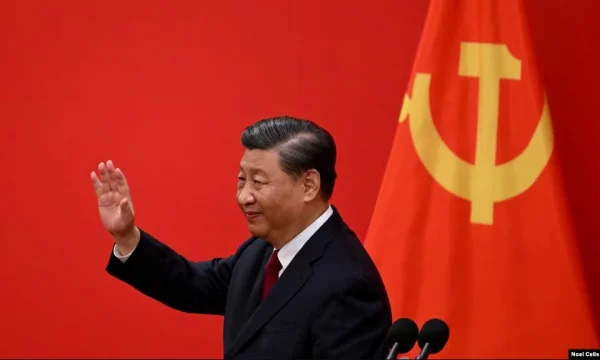
Xi Jinping wins third term as president of China
Periskopi(3 years ago)
(3 years ago)Chinese leaders Xi Jinping were given a third five-year term as president of China on Friday. The adoption of Xi's appointment at the ceremony of the National People's Congress (NPC) was expected and imagined, as the leader has sidelined potential political rivals and filled up the high ranks of the Communist Party that [...]
The adoption of Xi's appointment at the ceremony of the National People's Congress (NPC) was expected and imagined, as the leader has sidelined potential political rivals and filled the high ranks of the Communist Party leading the country with his supporters since assuming power in 2012.
Xi's vote at the National Population Congress was unanimous, with 2,952 pro and none against. Members of this Congress are named by the ruling party.
Xi, 69, had named himself for a third five-year term as party secretary-general in October, breaking a tradition under which Chinese leaders hand over power once a decade.
A border set for two mandates for China's presidency was abolished by the Chinese Constitution earlier, prompting suggestions that it could stay in power for life.
Xi also was unanimously appointed commander of the 2 million-member People's Liberation Army, a force that effectively receives its orders from the party, rather than from the country.
At the other polls, party third-ranking official Zhao Leigh was appointed head of the National Population Congress. The vast majority of the body's legislative work is directed by its Permanent Committee, which meets throughout the year.
The former leader of Shanghai's party and member of the Permanent Committee of the Political Bureau, Han Zeng, was appointed to the largely ceremonial post of state vice president.
Xi, Zhao, and Han were later sworn in, holding a hand in a copy of the Chinese Constitution. At the hearing, 14 vice presidents of the congress were also sworn in.
Xi's new mandate and the appointment of close people to him in key positions underscores his monopoly on Chinese political power, eliminating any potential opponents against his highly nationalist agenda for building China as the top political, military and economic rival of the United States of America, and the biggest challenger of the democratic world order led by Washington.
During a meeting of the small group of delegates with Xi on Monday, he said that the Western “countries led by the United States have implemented control, siege and all-out printing of China, which has brought unprecedented serious challenges to the development of our nation”.
Xi called for the fastest <x0 loss of armed forces to world-class standards”.
“Kina must maximize its national strategic capabilities in an effort to systematically improve the country's overall force to face strategic risks, protect strategic interests and realise strategic goals”, Xi was quoted as saying at the meeting with delegates. / REL