2 hours ago
Thousands of Ukrainians join the Offensive Guard
Periskopi(3 years ago)
(3 years ago)On March 10th, thousands of civilians and soldiers marched together along the capital's central streets, cheering “Glory to Ukraine” and “Glory to heroes” in a mood for Dmytro Kotsyubylo, the youngest commander ever decorated as Ukraine's Hero, and the first volunteer warrior to be decorated while still alive. Known with [...]
The images of top leaders, including Commander General of Armed Forces General Valeriy Zaluzhniy, military intelligence chief Kyrylo Budanov, and Defence Minister Olexiy Reznikov on his knees as they pay their last respects to the 27-year-old soldier, have quickly plunged deep into the public's conscience. Likewise, the tears of his partner, Alina Mykhaylova, who is a medical assistant in his unit, Da Vinci's Wolf and a member of the city council of Kiev.
At the age of 18, Kotsübayalo played a significant role in EuroMaidan protests, which pushed Ukraine's geopolitical orientation towards the West that forced the pro-Russian president of Ukraine, Victor Yanukovych, to leave power and flee to Russia.
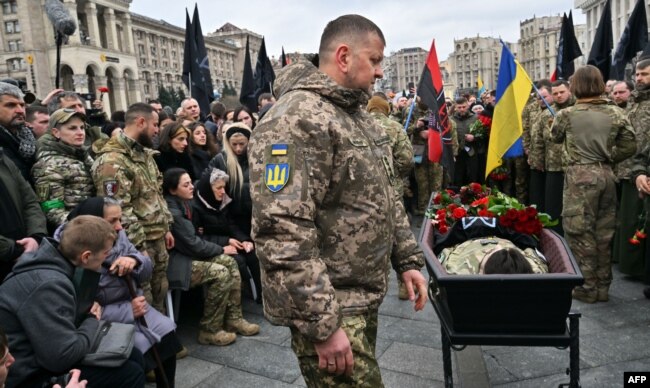
His death marked a transformative moment in Ukraine's resistance against the Russian occupation and highlighted a grim reality: some of the most devoted soldiers are dying, creating a great need for others to fill their countries.
As Russian offensive continues east, causing increased military losses, many Ukrainians hope a counteroffensive that top officials say will come soon will be crucial to the final departure of Russian forces from the country.
Some are joining the Watchtower Offensive, an offensive brigade that is forming in the Interior Ministry, as Ukraine prepares to regain territory occupied by Russia in the east and south.
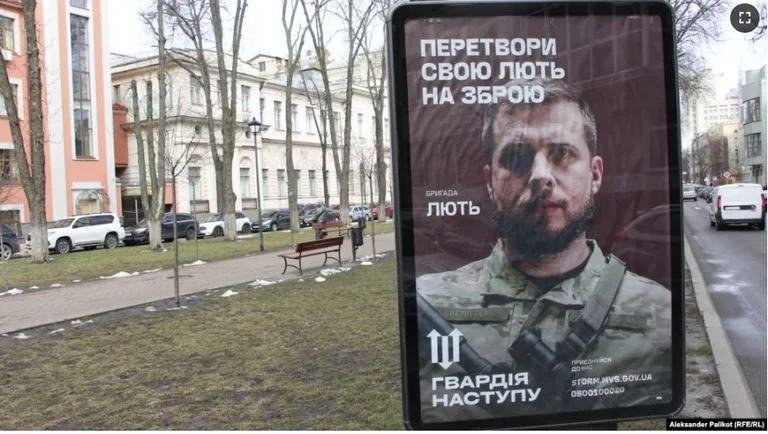
The ministry has launched a major recruiting campaign. On the streets, squares and other points around Kiev, figures of well-equipped, skilled and fixed soldiers are placed in billboards bearing slogans such as “It is time to restore what is your” and “Baskohu”. According to Interior Minister Ihor Klymenko, more than 28,000 people have volunteered to serve in this formation.
High priority project
The idea of the Againstensive Guard was discussed for the first time more than six months ago by the Interior Ministry and the office of Volodymyr Zelensky's president, Deputy Interior Minister Catherine Pavlichenko told Radio Free Europe.
According to her, the aim of the project is to create an attack brigade that combines the experience of experienced soldiers with the determination of new volunteers.
Interior Ministry units, especially the National Guard, have fought together with the regular armed forces, which are under the Ministry of Defence, since the February invasion of 2022 and in some cases since the outbreak of war in Donba in 2014.
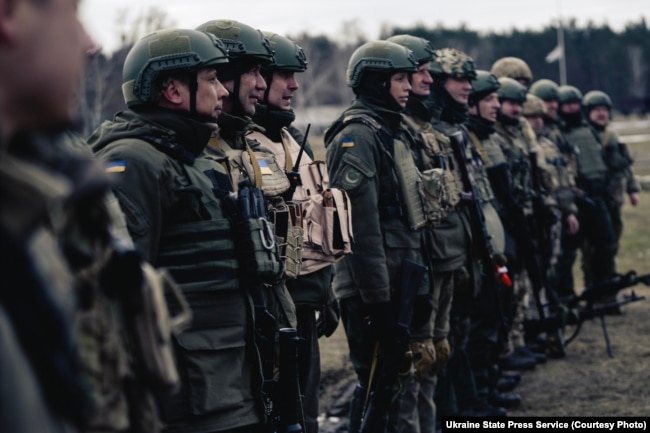
“The experience of de-covering the Harkiv and Herson regions showed that our troops are needed at any stage of hostility and behind them”, Pavlichenko said, referring to the counterensive in which Ukrainian forces recovered large parts of territory in the east, later and south last year. She said a considerable number of new members of the brigades were employees of interior ministry agencies that want to become part of the war.
This guard will consist of tens of thousands of troops, she said, and the first of them will be ready to go to battle in early April.
The Guard of Offensives consists of six brigades within the National Guard, including the Azov Brigade once, as well as one brigade each from National Police and Border Guard. Anyone can apply to become part, online or personally in an office.
On Training
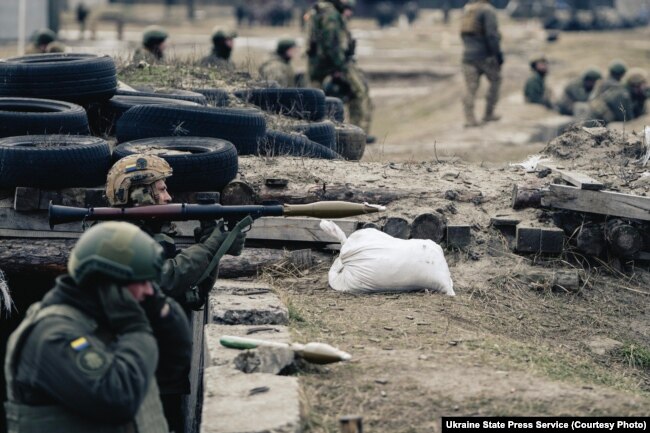
In a training ground outside Kiev this month, the newcomers at the Ruce Army Brigade Ukrainian for “stuhija”, although some members say it's an acronym for the Brigade for the Elimination of Russian Soldiers were going through a comprehensive training programme based on NATO standards, originally on individual level, then grouping and finally one-level, told Kosovo Free Europe Radio Costtyyn Wakhayev, a commander of the battalions of Brigades.
Now replenishing with new soldiers, the unit was involved in decisive fighting in the Kiev and Chernihiev regions at the beginning of the occupation, when Russian forces briefly stopped in the capital. Some of its members are currently protecting Bahmut.
After the possession of gunfire, martial medicine, and the use of various types of equipment, recruits practice offensive operations near where there are battles. Some of the commanders and members of the brigade are now participating in training programmes in Poland, Germany, or Britain.
The Bureviy Brigade has artillery, armoured personnel carriers and some tanks available. But Vakhramyeev, who has been fighting since 2014, said that while the new personnel will soon be “ready for work”, the unit will need <x2 most heavy equipment, shells and air support” to carry out major attacks.
Despite such challenges, two men who joined a month ago -- Dmytro Horditsa, a 41-year-old painter and Denys Irzehytskiy, a 21-year-old medical student -- say they believe the Ukrainian counteroffensive will be a success.
“Enough to be observer”, Horditsa said during a break from training. He says he joined the Offensive Guard because he believes it's where the best “of those still in the reserve” comes.
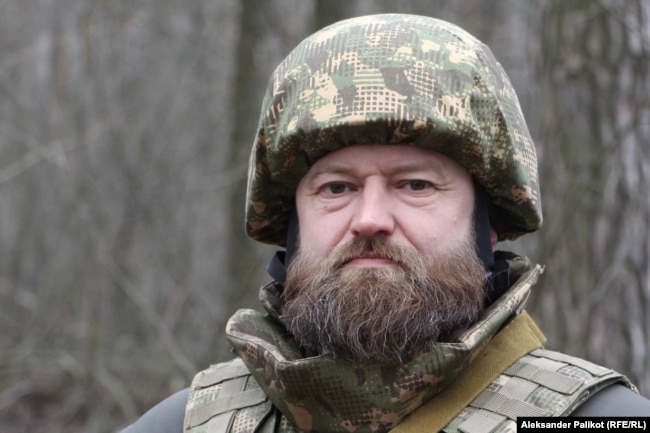
Horditsa, who created hundreds of works of religious art in different styles throughout his artistic career, had zero military experience just a month ago. Earlier he was not recruited because of visual problems. Now these restrictions have been lifted, he says.
He says he's glad his commanders are giving him time to train before going into combat, because “doesn't always happen like this”. Many of his friends are already fighting and some have been killed, he says.
Irzhytskiy says he joined because “does not want to lead an empty life when the Russians are killing innocent people” and wants to be able to say that “participated in victory after the end of the” war.
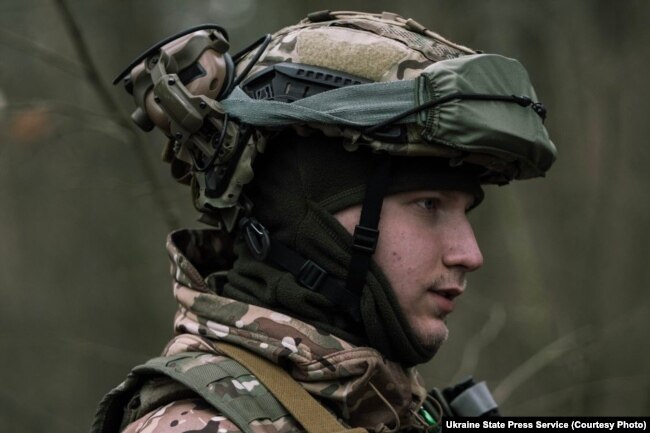
For several months, he was a first aid instructor in another unit, but he accepted an offer to move to the Bureviy Brigade, because he believes this will enable “to participate in a real war”. Within a week, it will go to Britain for training, and after that it hopes to settle east of Ukraine.
“Even if I save only one person, it will be a” victory, he said.
Reconstruction of the Army
The recruiting campaign for the Guard of Offensives promises that its members will participate in the liberation of territories occupied by Russia, but the role its brigades will play during counteroffensives is unclear.
Military expert Mykhaylo Zirokhov told Free Europe Radio that the formation will likely play a supportive role, while regular armed forces will carry out key anti-offensive shares. About 50,000 Ukrainian soldiers are preparing for it in and abroad, he said.
According to Zirokhov, Russia's offensive to the east, where Russian troops have failed to capture Bahmut for more than seven months, has shown that “Moscow wants to impose the logic of World War II, where anyone with more soldiers wins”.
The Onensive Guard is mainly a “media campaign” because most of its brigades “are not created again, but simply are renamed”, he said.
They are also strengthening with new volunteers and new sources from the Interior Ministry a necessary process, as the ranks of those who are already fighting have been impoverished 13 months after the invasion.
But in the end, we cannot compete with Russia in number and without a technological advantage, our [attacking] troops find themselves in the position of Wagner soldiers around Bahmut”, he said, referring to fighters from a Russian mercenary group that has suffered massive losses.
Mykola Byeleskov, an analyst at Ukraine's National Institute for Strategic Studies, told Radio Free Europe that the establishment of the Offensive Guard adapts to a first historical model in many past wars, when an army should be rebuilt after a year of fighting. Its creation, he adds, sends a good signal to Ukraine's international supporters that “ka still has a segment of society that wants to join fighting”.
For the time being, Ukraine is obliged to put its workforce under constant pressure to maintain its positions, and the interior ministry's recruiting campaign may compensate for some of the losses, but the success of the counteroffensive is based on Ukrainian military's ability to penetrate Russian forces' tactical depths, he says.
According to Byeleskov, Ukraine's push in the battlefield in the coming months is more likely to come in the form of constant pressure on Russian targets, similar to advances in the Herson region last fall than a lightning counterattack such as the liberation of occupied parts of the Kharkiv region in 2022. /rel