44 minutes ago
Kosovo-Serbia not implemented agreements over years
Periskopi(3 years ago)
(3 years ago)After about seven months of discussions, the Kosovo and Serbian sides agreed on Monday, February 27th to the European proposal, known in public as “the Franco-German plan”, stressing that no further discussions are needed about it. On the other hand, the practice on the past has shown that many agreements signed in Brussels have remained only [...]
International commitment to the adoption of the European plan by Kosovo and Serbia, which has also been supported by the United States of America, was finalised at the February 27th meeting, when he agreed verbally about this proposal between Prime Minister Albin Kurti and Serbian President Aleksandar Vuciq, even though the document as such was not signed by the two leaders.
The guarantee on its implementation has given EU High Representative Josep Borrell, who after the trilateral meeting, said that the end of March is the time when he expects work to be finalised. He even warned that before the meeting, to be held by mid-month, EU emissary Miroslav Lajcak will visit Pristina and Belgrade to get their proposals.
Although practices in the past show that some agreements that have been signed in Brussels and not only have been implemented, facilitators of the dialogue process guarantee that this time there will be implementation of the plan.
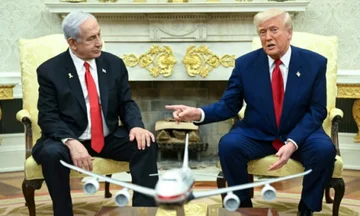
The agreement, which was implemented in part, was Washington, which was signed in September 2020 by then Prime Minister Avdullah Hoti and President Vucciq with the mediation of then president of the United States, Donald Trump and Emissar Richard Green.
In August 2015, the agreement on the establishment and principles of the Association of Serb majority municipalities was also signed in Brussels. This agreement has not found implementation since the same is not in line with the Kosovo Constitution.
However, to implement the French-German plan, political analysts who say they see greater seriousness from the EU and the US this time around.
Political analyst Imer Mushkolaj says there is already greater seriousness both from the EU and the United States that what the parties agreed on should be applied to practice as well.
He considers that the agreement must be implemented overall, which according to Mushkolaj, any deviation from its full implementation is a failure from the beginning.
It seems that this time there is greater seriousness even from the EU and the U.S. that what is agreed on, to apply in practice, and it's important that what they're going to find out, there's a limit of what, when and how it's going to happen and not to be left to the will of any party in the sense of reasons they can find to avoid any other article or other of the <x1) agreement.
This time I consider that, given the American engagement, especially, regardless of the plan is European, I believe it should take the race from the United States. It is very important the US alliance along with the EU that this agreement be implemented” -- he adds.
Optimist on international pledges for full implementation of the European proposal has also indicated Demush Shasha from the EPIK Institute. He says the Allies will provide sufficient guarantees for successful implementation of the agreement.
We have also seen significant political engagement of our Western allies in the negotiator process. In this direction I consider that our allies will provide sufficient guarantees for successful implementation of the agreement. Also, I consider both parties Kosovo and Serbia ʹ understand and have more to gain than lose out on the proposed” agreement - Shasha points out to KALLXO.com.
Speaking of the March 18th meeting, analyst Mushkolaj expects between the head of the Kosovo executive and the Serbian president to have formal annex signatures for implementation of the agreement.
The “expects to have extremely serious moves by March 18th because US and EU warnings are due to be completed within March because they are very interested in ending everything within March, in the sense of the final deal on this provisional agreement and its implementation to begin. The sides will agree that beyond the European plan that is acceptable, the guide for the implementation of this”- also estimates Mushkolaj.
Shasha, meanwhile, finds it difficult to predict what might happen as he says optimistic that the parties will agree to the implementation plan.
The “is hard to predict because there is still a gap between the parties in terms of the implementation plan and in particular the nature of association. However, I am optimistic that the parties will be able to agree in the coming weeks on open issues, and therefore I expect the next meeting to mark the agreement on the implementation plan”- says Shasha.
International guarantee for implementation of EU proposal
The European Union's Emisari for Kosovo-Serbia dialogue Miroslav Lajcak says their mission is agreement to implement the European Plan Guide, which he said would also become public.
In an interview for “Atlantic Council”, Lajcak says he has asked the Kosovo and Serbian sides to prepare their realistic and constructive proposals based on the content they have been given.
Our <x0 Mission is agreeing to implement Guide, with that in mind, we ask both sides to prepare their realistic and constructive proposals based on our content that I shared with both leaders in December. I expect to discuss that with Prime Minister Kurti and President Vuciq when I am in Pristina and Belgrade”- Lajcak said.
It is very important that before the meeting on March 18th, we know the expectations of both sides when it comes to implementation and, on this basis, let's meet for the document to reflect their positions. Leaders want guarantees that what they also want to accept, this is normal and logical in view of the importance and sensitivity of the” issue, the EU emissary adds.
Political in implementing the European plan, the United States' envoy for the Western Balkans, Gabriel Escobar, has also indicated.
He said there are great expectations in the seriousness of implementing the European proposal. Escobar in a virtual conversation with journalists said countries in the region should recognise each other and have positive relations between themselves.
Unobserved Agreements
Although Kosovo and Serbia have agreed to several agreements in Brussels and Washington, as such have not been implemented.
Such is the establishment of the Association of Serb majority municipalities, which was envisioned with the 2013 Brussels Agreement reached between Kosovo and Serbia, when Prime Minister Hashim Thaci was. The Brussels agreement had been ratified in the Kosovo Assembly.
The association of Serb majority municipalities is designed to gather around itself ten municipalities in Kosovo, where the majority of the population is Serb, which are North Mitrovica, Klokoti, Partesh, Ranillug, Gracanica, Zvecani, Zubin Potoku, Novoberda, Leposaviqi and Shtrpca.
But even in 2015, Kosovo and Serbia under EU mediation had reached an additional agreement on establishing association.
In October 2015, this agreement was sent for interpretation at the Constitutional Court by then Kosovo President Atifete Jahjaga.
The Constitutional Court, in the decision issued in December 2015, said the Agreement for Association on 23 points is not in line with the Kosovo Constitution
The Constitutional Court of Kosovo has found that the principles for it are not in line with the Kosovo Constitution, even though it has said they can be harmonised with a legal act of the Government of Kosovo.
Although it is not in line with the Kosovo Constitution, international partners have repeatedly cited that the agreement on Association should be implemented by Kosovo. And on the other hand, the Government of Kosovo has repeatedly stressed that the unconstitutional agreement could never be implemented.
The other agreement between Kosovo and Serbia, which was partially implemented was Washington's, signed by then-Prime Minister Avdullah Hoti and President Vucciq with the mediation of then president of the United States, Donald Trump and emissary Richard Green.
Several infrastructure projects, including what is called the “Autastrada of Peace”, Belgrade-Pristina, as well as the question of Lake Weyman, located on Kosovo territory, and affects Serbia's.
The two sides will agree to work with the American Energy Department and other subjects of the American Government in a feasibility study, with the aim of joint use of Gazivoda Lake/Wyman, as the safe supply of water and energy”, It says at one point in the document.
In July 2021, Hoti Democratic League of Kosovo (LDK) party initiated a resolution through which Prime Minister Albin Kurti was required to implement Washington's agreement.
However, the Assembly failed to adopt this resolution, as 24 LDK deputies voted for, while 57 deputies of the ruling party éistvendosje Movement abstained.
Avdullah Hoti now in the quality of LDK deputy, had declared that Washington's agreement, “should be seen as an important step towards consolidating the state of Kosovo in the international arena”.
Meanwhile, incumbent Prime Minister Albin Kurti has reiterated that for him the most important point of the agreement is Israel's recognition. Kurti had stressed that he has not changed his attitude as far as the Lake of Weyman is concerned, as he has said “Wyman as he is, is Kosovo's artificial lake for Kosovo”.
Nor has the energy agreement, agreed with Kosovo and Serbia in June 2022, begun implementation.
This agreement was a 100-day calendar, up to consumer fate in the north. But even after a few months, the fortune has not begun because much of this guide's points have not been implemented.
Although the agreement exists since 2013, and still has no application for it, citizens of municipalities: Northern Mitrovica, Leposaviq, Zvecan and Zubin Potok do not pay for the current spent now for more than two decades.
From 1999 to 2017, the debt for Kosovo's north has been paid by citizens of other Kosovo municipalities. Their bills have been higher by 3.5 percent.
After much complaints, however, the Court of Appeals decided at the end of 2017 about suspending this practice, arguing that it is illegal. This decision was later confirmed by the Constitutional Court of Kosovo, and the payment was subsequently made by the Government of Kosovo and COST.
Content of Franco-German Plan
The European Union has published the plan known as the Franco-German Plan for normalising relations between Kosovo and Serbia.
This plan contains a total of 11 articles, as well as a statement at its beginning.
The full content of the plan is as follows:
The contracting parties,
Aware of their responsibility for preserving peace,
Dedicated to contribute to regional co-operation and security in Europe and to overcome the legacy of the past,
Aware that the invisibility of borders and respect of territorial integrity and sovereignty and protection of national minorities are fundamental conditions for peace,
Based on historical facts and without prejudging the different Paul views on fundamental issues, including status issues,
In the desire to create the terms for cooperation between the sides in behalf of the people,
They agreed:
Article 1
The parties will develop normal, good neighbourly relations on the basis of equal rights.
Both sides will mutually recognise relevant documents and national symbols, including passports, diplomas, vehicle plates and customs stamps.
Article 2
Both sides will be guided by the purpose and principles set out in the United Nations Charter, especially those for sovereign rights of states, respect for their independence, autonomy and territorial integrity, the right to self - determination and human protection, rights and non-discrimination.
Article 3
In harmony with the United Nations Charter, parties will resolve any differences between them only by peaceful means and refrain from threatening or using force.
Article 4
The sides act under the assumption that neither can represent the other side in the international sphere or act on its behalf.
Serbia will not oppose Kosovo's membership in any international organisation.
Article 5
Neither side will block nor encourage others to block the other side's progress on their respective EU path based on their merits. Both sides will respect the values mentioned in Article 2 and 21 of the European Union Treaty.
Article 6
While the current agreement represents an important step of normalisation, the two sides will continue with a new impetus to the EU-led dialogue process, which should lead to a legally binding agreement for the full normalisation of their relations.
The sides agree to deepen future co-operation in the fields of economy, science and technology, transport and connection, judicial and law enforcement relations, post and telecommunications, health, culture, religion, sports, environmental protection, missing persons, displaced persons and other similar areas through reaching specific agreements.
Details will be agreed on additional agreements brokered by the EU-led dialogue.
Article 7
Both sides commit to creating specific agreements and guarantees, in line with relevant instruments of the Council of Europe and relying on existing European experiences to ensure a proper level of self-management for the Serb community in Kosovo and the capacity to provide services in specific areas, including financial support from Serbia and a direct channel of communication for the Serb community with the Government of Kosovo.
The sides will formalise the status of the Serbian Orthodox Church in Kosovo and offer strong level of protection for Serbian religious and cultural heritage sites, in line with existing European models.
Article 8
The sides will exchange permanent missions. They will be located at the government headquarters. Practical issues related to the deployment of missions will be addressed separately.
Article 9
Both sides take into account the commitment of the EU and other donors to create a special investment package and financial support for common Paul projects in economic development, connection, green transition and other key areas.
Article 10
The sides will create a joint Committee, led by the EU, for monitoring the implementation of this Agreement.
Both sides confirm their obligation to implement all past dialogue agreements, which remain valid and binding.
Article 11
Both sides commit to respecting the binding Implementation Guide in this agreement.