2 hours ago
Kosovo Councilman in Rambouille: No recognition for Kosovo from Serbia, not 2023
Periskopi(3 years ago)
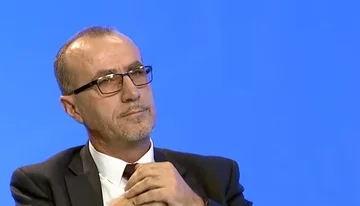
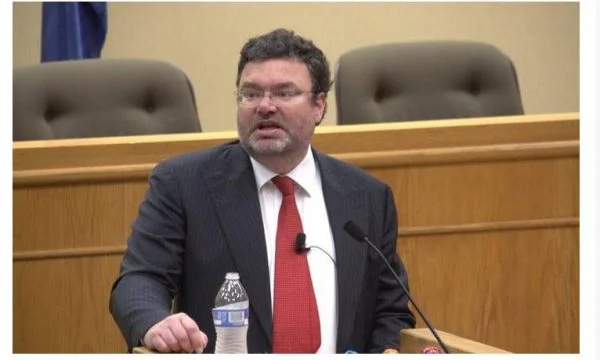
(3 years ago)It was part of the team that has advised former President Ibrahim Rugova in Rambouillet in the early 1990s, then was part of the team for the Ahtisaari Agreement, and nearly two decades in a row advised Kosovo governments in talks with Serbia. Mark Weller, international affairs expert, has talked about relations between Kosovo and [...]
It was part of the team that has advised former President Ibrahim Rugova in Rambouillet in the early 1990s, then was part of the team for the Ahtisaari Agreement, and nearly two decades in a row advised Kosovo governments in talks with Serbia.
Mark Weller, international affairs expert, has spoken about relations between Kosovo and Serbia, agreements reached over the years, “The Franco-German plan” and more.
Weller has said that this agreement from the last meeting between the two countries is a step, but it is a step towards an even larger step leading to the main goal.
All of Kosovo's international partners have made it clear that this agreement simply sketches the way towards full normalisation of relations. And full normalisation at the end would include formal recognition of Kosovo on the part of Serbia. This agreement does not offer this, but offers some things in the middle because the agreement offers what Serbia and Kosovo, in fact, should treat each other as states even without yet fully knowing each other as states”- has said Weller.
Welle describes Kosovo as continuing at its main requirement, which is recognition by Serbia but, according to him, no one expected this requirement to be met in February or March 2023.
Welle has added that the European Union has demanded that Serbia become an EU member only if it achieves what is called a comprehensive, final, legally binding agreement for normalising relations with Kosovo.
“Mr. Biden and others have made it clear that this means recognition of Kosovo and that the process should have Kosovo's recognition centralised. And this is a new achievement of politicians only recently in Kosovo, so that they have managed to move the process more towards that goal than to establish more and less agreement on this or other specific feature”- has said Weller.
Welle further said the European Union and Americans are trying to make Serbia a clear choice.
Are you with us, part of the West, sharing the European Union's values with us? And if so, then you must maintain a clear position on Kosovo, but in that case there is a feeling that we should offer, so that the EU should offer a clear perspective of membership. For this reason, the process of meeting the condition of full normalisation between Serbia and Kosovo is now being carried out in an accelerated way”- Weller has said.
Welle estimates that Kosovo is in a good strategic position, because according to him, Serbia must give something that is very, very difficult. So Serbia must remove the part from its constitution that claims Kosovo is an integral part of Serbia and must recognise Kosovo.
“If Kosovo engages constructively in all parts of this initial agreement on the road to full normalisation, then Serbia cannot be concealed behind the argument that Kosovo is obstructing the process, and therefore the issue of recognition has not really come up in discussions”- Weller has said.
Welle, further speaking of the agreement, has said it urges Serbia to deal with Kosovo in line with the UN Charter's goals and principles, including lack of force and not threaten to use force.
Kosovo and Serbia must exchange diplomatic missions, even though they are called permanent missions and not embassies, but they are embassies in every respect, except the name. So it must confirm, in fact, even in reality treat Kosovo as a state with which it follows the path towards normalisation, and this is a major change”- has said Weller.
Weller during an interview on the #KallxoPernime show has invited all critics of the recent agreement between Kosovo and Serbia to refresh memory and remember that it was another government that in 2013 signed the first Brussels agreement and promised the foundation of this association.
According to him, it is probably a little insincere now to complain about this agreement.
But again, this and perhaps even previous governments have been successful in moving the debate forward. If you look at the deal and it will be helpful for those who criticise it first to read it very carefully, we will see that the word Association of Serb Major Communities is nowhere mentioned in the”- said Weller agreement.
By contrast, German Chancellor Olaf Scholz also believes the process dialogue between Kosovo and Serbia will be concluded successfully soon to reach a comprehensive agreement.
The professor of justice and international court legalising him at Cambridge University, Weller, has said that Republika Srpska is a very bad example that should never have been accepted in that form because it sealed up Bosnia's division, even if the state of Bosnia as a whole continued. That, according to him, was not proposed at the provisions of the agreement reached in 2013 between Kosovo and Serbia.
This new agreement is helpful because this explains that we are talking about an Association where municipalities co-operating in the implementation of authority they already have as a municipality, and therefore no authority is added to them other than the possibility to coordinate what they already do, so to co-ordinate more together”- Weller says.
Weller has added that Kosovo's experience in the past has been that if he says no and does nothing further, he will eventually impose a solution he does not want to have.
Therefore, according to him, it is much better for Kosovo to come out and offer its visions and proposals.
But it's just a community of Serbs, and that's why they're unlikely to form an association of their own at this moment” -- it added.
Tuje Weller as government adviser who signed the 2013 and 2015 agreement has said how to
It has had a budget to help restore and maintain monasteries and other objects that the Serbian Orthodox Church, perhaps under Belgrade's direction, has not been able to withdraw. And Kosovo should try to see how much it would be possible to have a direct dialogue with church authorities”- added Welle.
Welle has also said there is room for all communities in Kosovo, so there is room for the ethnic Serb community, and that in time it must become clear that engagement with Kosovo authorities, instead of supporting Serbs, and is the way forward in this context of good neighbourly relations between Kosovo and Serbia.
In a word, this offers elements of the de facto recognition and reaches the issue of association and allows Kosovo, at least now, in the phase of negotiations on the implementation of the Agreement, to insist that this issue should be addressed in a way that is fully in line with the current legislation and the Constitution of Kosovo”- Weller says.
Weller has added that with the acceptance of this agreement, Kosovo has taken a truly constructive turn, as under it the circumstances of past years have somehow allowed the international community to present Kosovo as the problematic side, because it was appropriate in view of the goals and other geopolitical pressures they were trying to address.
“I think the Serbian side has already returned to Belgrade and has said they would never hand over one of the parts of the agreement -- the point that concerns the ease of Kosovo's membership at the UN”- adds Welle.
Serbian President Aleksandar Vuciq has broken Belgrade's hopes of signing the European Union plan because Kosovo's membership in the United Nations organisation is involved.
Welle has at the end also talked about the process of negotiations in Rambouillet, saying that the circumstances when Serbia did not sign this agreement and on the other hand Kosovo signed it are exactly the circumstances that allowed NATO's involvement in the measure that eventually brought Kosovo's independence, a fact that no one can remove now.
The result of this was that Kosovo could declare independence with the support of its friends and allies and gain recognition from more than half of the world's states, which is a huge achievement given that the normal states refuse to accept the secession, for example, see the case of Catalonia” said Weller.
Otherwise, it has been 23 years since the Rambouillet Conference in Paris.
The Kosovo delegation had basically accepted the proposal for resolving the crisis in Kosovo, which the Contact Group had proposed, but the Serbian delegation -- no matter how basically -- agreed to this proposal, defended the position that NATO troops are not allowed to cross Serbia and international forces in Kosovo to be within the United Nations.