an hour ago
German trade unions fear flow of Balkan labour force
Periskopi(3 years ago)
(3 years ago)The German government will double the number of workers from the Balkans, for despite the qualifications to obtain a working visa. Unions fear the flow of the Balkan labour force. According to data from the Institute for Labour Market and Professional Studies (IAB) there are currently 1,98 million free jobs in Germany. To [...]
According to data from the Institute for Labour Market and Professional Studies (IAB) there are currently 1,98 million free jobs in Germany. To act against the chronic lack of labour force, the German government plans to liberalise the relevant law on labour migration. Part of the legal package is the so-called “Regulatory of the Western Balkans. The government envisions two fundamental changes: On the one hand, this regulation will no longer be limited in time until the end of 2023, but the contingent of workers from the Balkans will double to 50,000 workers annually.
Permission to work without qualifications
When more than 1 million refugees came from Syria, Iraq, and Afghanistan through the Balkan route in the latter half of 2015, they were joined by many from the 6 Western Balkan countries. At the time, they constituted 30% of asylum applications, although nearly all demands were unknown. Merkel's government then closed agreements with Balkan countries on accepting returning refugees, and in 2016, the regulation of the Western Balkans was approved. It allowed the arrival of a contingent of those seeking work without the bureaucratic obstacles of qualification. Two criteria had to be met: The job permit requirement should be submitted to German representatives in these countries and you should not have applied for asylum.
A regulation that should satisfy all parties. In Germany, there would be regulated migration of the labour force without qualifications or medium - quality qualifications. On the other hand, the plight of the job market in these countries, where youth especially suffers from unemployment, would be alleviated. In Kosovo, for example, unemployment reaches 21%, that of young people even 55%. It is not surprising, then, that as a result of the Federal Labour Agency regulation by the end of 2020, it has provided 260,000 principal visa permits and 98,000 working visa permits from applicants of Western Balkan countries.
Fear of Bulling
These numbers are expected to increase further. German government plans for Western Balkan Adjust are welcomed by German employers. It is those who put regular pressure on the government to liberalise the working immigration conditions in Germany. The German Unions Association DGB is more critical. Evelyn Räder, on board this association, says the DGB welcomes migration for work, but stresses that working conditions for employers from the Balkans should be viewed very carefully. The incoming “people are largely dependent on their employer. They have a job permit, but it's connected to their workplace. This creates fear that if you don't put your head down, they might even turn.” On the other hand, they do not speak German and are not informed of their rights. All of this causes them to accept in practice the worst working conditions, Räder points out.
Not <x0)
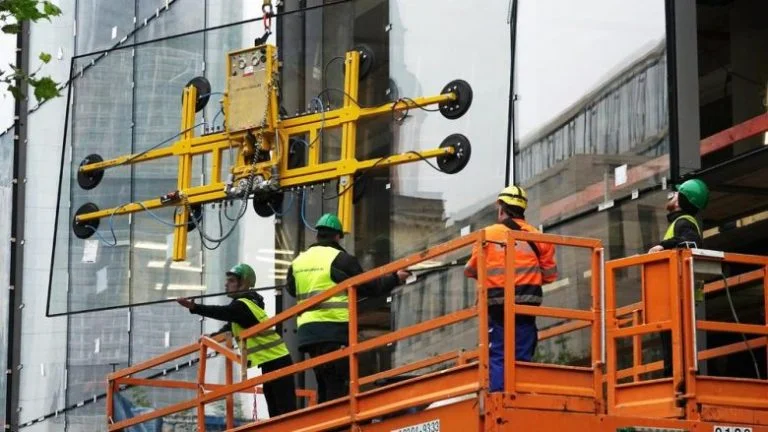
Three-quarters of the workers from the Balkans work in construction, gastronomial and healthcare. Four percent only in construction. Most of these jobs are jobs with relatively low salaries. Although the German government explains labour market reform for foreigners with a lack of labor force, the Western Balkans' regulation does not respond to that measure because qualifications are not required for them to obtain a work permit.
According to DGB's assessment, it's not about attracting qualified forces, it's about gaining labor power for simple well-paid jobs. This is just a employment program in favour of employers, which in this way acquires labor power, which in case of need, can be re-enlisted”, Räder says.
Uncertain Work on Building Camps
This problem is noted at the construction branch. The Construction Industry Association has resigned last year from extending the fee-based deal. Workers can only be paid a minimum wage of 12 euros an hour, which is much less than previously paid. At one time, 13 to 16 euros an hour were paid on this branch.
In this way employers can pressure those who ask for higher pay because there are always less - expensive labor forces. On the other hand, they do not have to fear trials. Workers from the Balkans are a particularly endangered group, they do not recognise their rights, and for many from the Balkans working conditions are unacceptable compared to the countries they come from. It adds that state controls are very few.
Protecting Workers and Intenduality
“We are concerned that in this way pressure is exerted on the working conditions of all employees in this branch -- it will become more difficult to reach tariff agreements and without them create a dumping programme in terms of write-off”, warns Evelyn Räder from DGB.
The solution for the Union Association, the DGB, lies in other changes to the Western Balkans Yahweh's regulation. One of the major changes would be the possibility of changing employers, without having to apply again for work visas, as would many other foreign workers.
According to the current visa application regulation, the application for the visa takes place in German representatives of the country origin and is given for a certain job. Change is possible in these terms, but the request for a visa permit should be made from scratch to the Federal Labour Agency. For many workers from the Balkans, this is a very complicated procedure, many do not even know there is such a possibility. The DGB requires employment on the basis of the Western Balkans Adjust only where there are tariff deals. On the one hand, employees would be protected, on the other hand, not undermined by union taifs' autonomy. -
Evelyn Räder has a message for Balkan workers who want to work in Germany: “Get information about your rights and ask for help. You don't have to chew everything you're offered. In Germany workers have rights, Evelyn Räder points out. /dw