 33 minutes ago
Borrell: China's Partnership With Russia Has Borders
Periskopi(3 years ago)
(3 years ago)China's partnership with Russia has borders and Europe must welcome all Beijing efforts to distance itself from Moscow's war in Ukraine, European Union for Foreign Policy and Security High Representative Josep Borrell said on Friday. Borrell's statements followed this week's summit with Russian President Vladimir Putin [...]
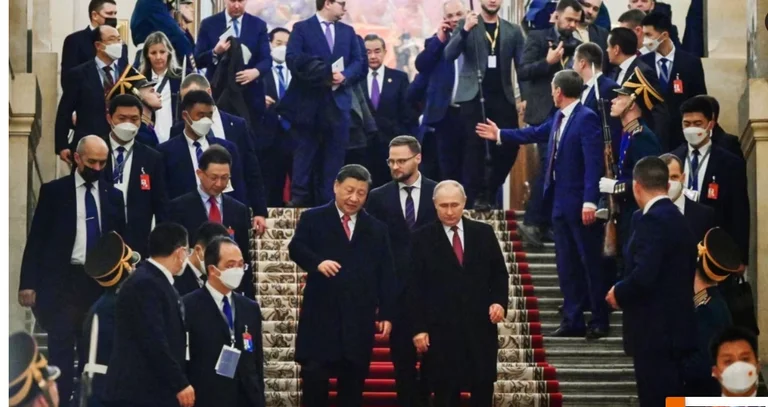
Borrell's statements followed this week's summit between Russian President Vladimir Putin and Chinese President Xi Jinping. The two leaders declared a cross-border “partnership” in February 2022, just days before Russia invaded Ukraine.
However, Borrell said China, although it has established close economic and diplomatic ties with Russia, has not established a military alliance with Moscow and has not sent weapons to help Russia in its fight in Ukraine.
“It seems that this unlimited friendship has certain limits”, Borrell told reporters in Brussels.
“Kina, for us, has not passed any red line”, he added.
Borrell also said he will soon visit China, though the travel date has not yet been set.
With this, Borrell will be in the wake of those European officials who will soon visit China.
Spanish Prime Minister Pedro Sanchez plans to visit Beijing next week, while French President Emmanuel Macron and European Commission President Ursula von der Leyen will travel together next week.
Borrell said Beijing's proposals to end the war show that he does not want to line up fully with Russia and that the EU should welcome this, even if Western officials have made it clear that they do not see Beijing's initiative as a full peace plan.
He said China wants to play “facilitators” rather than mediators.
As Russia welcomed China's proposals, “Kina is emerging in a role that I think we should postpone”, Borrell said.
China's 12-point plan has been rejected in the West because it does not call on Russia to withdraw from Ukraine and is interpreted as an attempt to freeze the conflict under Moscow's terms.
Xi and Putin signed a joint statement after a key meeting in the Kremlin on March 21st, stressing China's “positive” and its objective, impartial “towards the Russian invasion of Ukraine.
The two leaders introduced a package of agreements detailing plans for future economic ties and closer co-operation between the two countries' state media while criticising the West by attacking the United States, NATO, new AU defence pact KUS made up of Australia, Great Britain and the United States.
The talks, however, did not result in crucial agreements on key economic issues Moscow needs to help it cope with the mounting pressure of Western sanctions.











