 an hour ago
The Battle for Bahmut continues as the EU discusses ammunition for Ukraine
Periskopi(3 years ago)
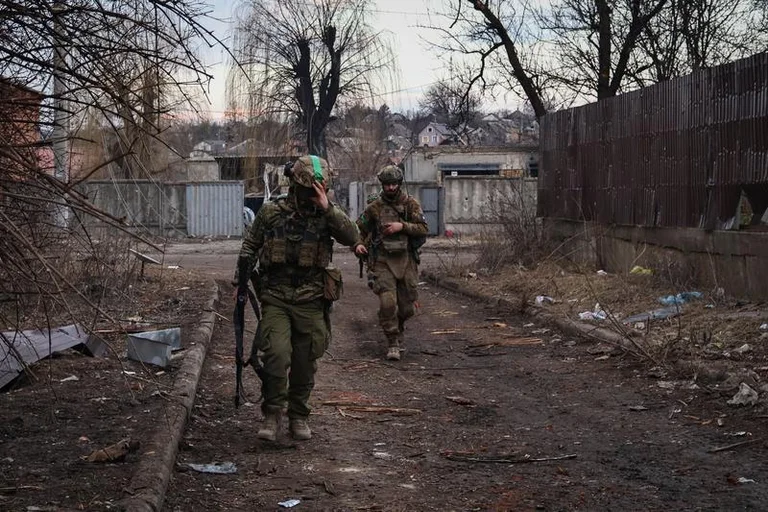
(3 years ago)Ukrainian forces have fired the new Russian attacks on Bahmut in the last 24 hours, Kiev said on March 20th. The battle for this devastated Ukrainian city, located in the eastern Donjeck region, continues as European Union ministers on March 20th prepare to discuss a 2 billion-euro plan [...]
The battle for this devastated Ukrainian city, located in the eastern Donjeck region, is continuing as the European Union ministers on March 20th prepare to discuss a 2 billion-euro arms supply plan Ukraine desperately needs.
Russian forces have carried out 69 attacks on the preliminary day in Bahmut and in nearby settlements in Avdjivka, Lima, Marjinka and Shahtarsk, the Ukrainian Army General Staff said.
According to the Ukrainian Army, Russian forces have continued to attack civilian settlements in the Donjeck and Zaporije regions, causing casualties among civilians and damaging infrastructure.
In parts occupied by Moscow in the southern region of Herson, Russian soldiers at checkpoints are forcing civilians to be equipped with Russian passports, threatening them with violence and imprisonment, the Ukrainian Army reported.
The western parts of Herson, including the town of Herson, were liberated by Ukrainian forces last November, while the Russians withdrew to the other side of the Dnjeper River.
In Brussels, the EU foreign and defence ministers gather on March 20th to discuss plans to offer ammunition to Ukraine worth 2 billion euros on the basis of the plan, which includes the shared purchase of ammunition from the European bloc.
“Time is important, we need to send more artillery ammunition and we have to do this at a speed of”, EU foreign policy chief Josep Borrell has warned.
Ukrainian Foreign Minister Dmytro Kuleba is expected to address this meeting through Kyevi's video connection. He is expected to inform his European counterparts about the current situation on the battlefield.
Kiev has said it is known to 350,000 missiles per month to withstand Russia's offensive in the east and be able to carry out a counterensive during the spring.
EU member states, since the launch of the Russian invasion of Ukraine, have given Kiev military assistance worth $13 billion.
The bloc's foreign ministers are also expected to speak of Moscow's responsibility for driving Ukrainian children to Russia, but also of measures to facilitate Ukrainian exports.
The International Criminal Tribunal in The Hague on 17 March issued a warrant for Russian President Vladimir Putin over his role in the forced transfer of Ukrainian children to Russia.
The court also issued arrest warrants against Maria Lvova-Belova, who is Russia's commissionary on children's rights. /dw











