26 minutes ago
Article 7- Association as Belgrade loves it: The complete analysis of Daniel Serwer on his blog
Periskopi(3 years ago)
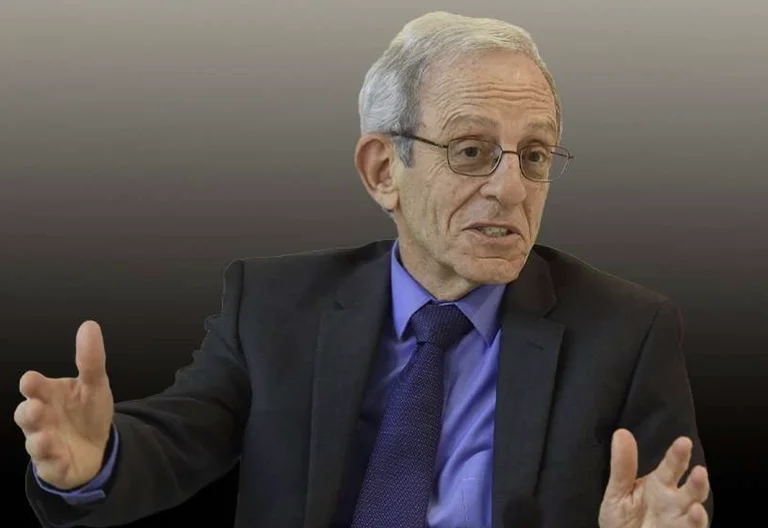
(3 years ago)Daniel Serwer, the connoisseur of political issues in the Balkans, has published a scripture on the recent meeting between Prime Minister Albin Kurti and Aleksandar Vucinqi in Brussels. In his analysis, published on his own blog, Mr. Serwer brings out the goods and problems of the deal. Periscope brings it into full translation [...]
Daniel Serwer, the connoisseur of political issues in the Balkans, has published a scripture on the recent meeting between Prime Minister Albin Kurti and Aleksandar Vucinqi in Brussels. In his analysis, published on his own blog, Mr. Serwer You get the goods and problems of the deal.
Periscope brings the translation full below:
Days earlier, the European Union welcomed the meeting between Kosovo Prime Minister Albin Kurti, and Serbia's president, Aleksandar Vuciq, which ended without signing “normalisation relations”. This can be classified as failure, especially after months of expectations.
Thus writes Daniel Serer in his blog, which closely analyzes the agreement reached, which according to him has improved relations between states, reciprocity and international involvement.
Praising unwritten agreement
1. Improve inter-connection relations.State: Article 1 and 2 have high scores in this category, while they include recognition of each other's sovereignty, equality, independence, territorial integrity, recognition of symbols and documents. Article 3 also uses revisions of the United Nations Charter in use and the threat of force used in sovereign states. All of this leads to mutual recognition as independent and sovereign states in addition to formal recognition. This is virtual recognition.
2. Reciprocity: Article 4 says neither side can act on behalf of the other side or present it on the international stage. This goes up in the reciprocity category. This article also enables Serbia will not block Kosovo's membership in any international organisation, which includes the UN. This is not mutual because Kosovo has not tried to block Serbia's membership. Article 5 specifically applies no mutual deadlock to the EU. Article 6 requires that both sides continue to dialogue with the goal of “on a legal agreement to normalise relations”. This does not mean mutual recognition, but it is close, especially when Article 8 is read about permanent exchange of diplomatic missions.
3. International Includement: Article 9 promises international investment and financing. Article 10 enables an EU-led committee for implementation. Article 10 enables a implementation plan to be discussed at future dialogue sessions. No recognition of any of Kosovo's five non-recognising countries is mentioned here, nor does it have specific financial pledges.
Not bad, I'd say: maybe eight out of 10, if the parties agreed to sign it. It's a shame Vucin was unwilling to sign it.
The Problem
Article 7 is problematic.
Article 7 of the Plan says that the two sides commit to creating specific agreements and guarantees, in line with relevant instruments of the Council of Europe and relying on existing European experiences, to ensure a proper level of self-awareness for the Serb community in Kosovo and the ability to provide services in specific areas, including access to financial support from Serbia and a direct channel of communication for the Serb community with the Government of Kosovo.
The sides will formalise the status of the Serbian Orthodox Church in Kosovo and offer strong level of protection for Serbian religious and cultural heritage sites, in line with existing European models”.
While Article 10 says that <x0-Pales will establish a joint committee, led by the EU, for monitoring the implementation of this agreement. Both sides confirm their obligation to implement all past dialogue agreements, which remain valid and binding”.
These are unconventional provisions intended to satisfy the Kosovo Serb population, without any comparable agreements within Serbia. The first paragraph replaces the provisions in the 2015 Brussels Agreement for the Association of Serb majority municipalities (ASM). Instead of assuming that institutional form, it outlines functions that Belgrade wants from such an association: “self-recognition” for the Serb community, “The use of services” partly financed by Serbia and a direct “communication” with the Kosovo government”.
This is a big step in the right direction. There are many other ways, apart from the Association, that would pose a threat to Kosovo's territorial integrity and sovereignty to meet these functional goals.
The second paragraph requires a law on the status of the Serbian Orthodox Church, which will be contradictory due to property issues.
Kurt said yes, no Vuchy. EU moves forward, US needs to reevaluateHer Dream
Prime Minister Kurti said he was ready to sign this agreement. This moves dialogue in a good direction: towards recognition, reciprocity, away from association. President Vuciq refused to sign. This puts criticism on his shoulders. This also represents the incompatibility of many involved as guarantors who would persuade him to sign the agreement.
The European Union decided to move money into dialogue under the basis of the unwritten agreement. That's the best he could do. The next step will be the implementation plan.
It will not be easy for Vuciq to leave the Asociation or proceed away with some projection that moves towards Kurti, but Kosovo officials have an opportunity to overcome the moment of these talks on the basis of this unwritten agreement. On the other hand, Americans and Europeans must admit that their peaceful visual-à-vis strategy towards Vuciqi has failed. Remove the carrots and sticks. /Periscope.
Read: Article 7 of the European plan Kurt accepted, a bite that's easily overran: Why?