13 minutes ago
Analysts speak: Implementation of European Plan, Hardest Stage
Periskopi(3 years ago)
(3 years ago)The European Union's proposal for normalising Kosovo-Serbia relations, which was made public after the recent meeting in Brussels, envisions the establishment of a joint committee, led by the EU, for monitoring the implementation of this agreement. Politologists and jurists say this mechanism can be composed of representatives of the Government of Kosovo and [...]
Politologists and jurists say this mechanism could consist of representatives of the Government of Kosovo and Serbia, with the goal of achieving as many results in practice as possible.
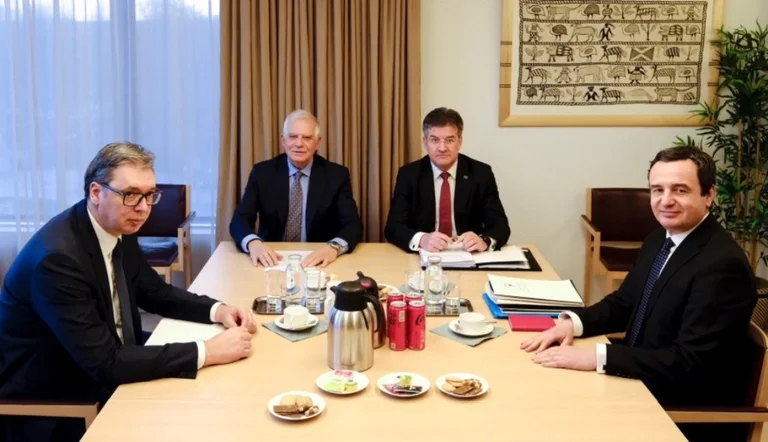
Although they had long discussed it on Monday, February 27th, Prime Minister Albin Kurti and Serbia's president, Aleksandar Vuqiq, did not sign the EU proposal titled “Agreement on the road to normalisation between Kosovo and Serbia”. This agreement, consisting of 11 articles and the Guide for its implementation, can be signed during March.
For the implementation of this deal and all others signed under the dialogue in Brussels, the 10th Article of the European Plan envisions that the “pals will create a joint committee, headed by the EU, for monitoring the implementation of this” agreement. According to the same article, both sides confirm the obligation to implement all past dialogue agreements, which remain valid and binding.
Speaking of establishing this mechanism, political science professor Bekim Baliqi told Radio Kosovo that such commissions are usually made up of the governments of both sides and one mediator, and are made in order to achieve more results in practice.
This commission will be a kind of working group and whatever remarks or comments it has, it will go to address them in time and demand that it be implemented. So, you're going through the technical phase of the deal and this may be the hardest phase, because it's not enough to say a photographic or even the reconciliation in principle, but there are the details that determine the pace and overall outcome of this deal”, Bekim Baliqi told RTK Radio.
Lawyer Ehat Miftaraj, from the Kosovo Institute for Justice, says the main work of this committee will be monitoring and postponing implementation of 33 agreements reached in Brussels, between Kosovo and Serbia.
“How successful it will depend on how much the EU and the US will be persistent to demand results, and in some way force and push both Kosovo and Serbia to fulfill the obligations they have so far, so that they will find it easier to ask for the fulfillment of the” obligations, Miftaraj said.
In the EU proposal for normalising relations between Kosovo and Serbia, there is no mention of Kosovo recognition. Nor does the Association of Serb Majority municipalities, which, in reference to the European plan, be mentioned based on the 2013 agreement signed by Kosovo and Serbia.