41 minutes ago
Perez: I don't think Kosovo will be a priority of the Catalonians in the new Spanish government.
Periskopi(3 years ago)
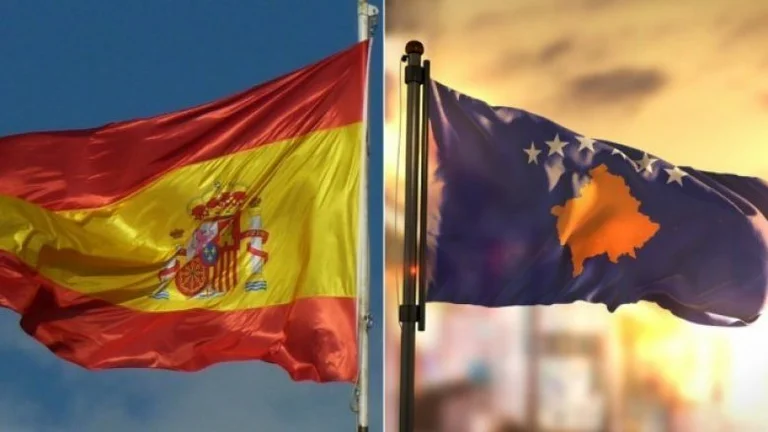
(3 years ago)Spain is one of the five European Union states that continue not to recognise the independence of the Republic of Kosovo. This official Madrid's frozen “ “is thought to be melting because the ruling coalition of socialist Pedro Sanchez is included in the Catalan party “Junts”, thus resulting crucial in the creation of the majority [...]
But how much will the issue of Kosovo's independence for the Catalonian party involved in the Spanish government and how much can this affect the changing attitude of Spain? In this regard, political analyst Alejandro Esteo Peres, who recognises the region and is part of the “Balkans in Europe Police Advisory Group”, has spoken.
Perez has suggested that he does not think that the Catalonian parties will have the issue of Kosovo's independence as a priority, since according to him, Kosovo's case has been used by them more as a case or experience over which the Catalonians have argued their right to independence rather than as a goal in itself to promote openly Kosovo's recognition.
“I think the Kosovo issue has been a major card for the pro-independence Catalan parties. But it is necessary to stress that Kosovo is used mostly as a tool, as a “tutation case”, i.e., as an example of a recent experience of independence/recompliance, on which the Catalan experience could be based (Slovenia was also used as a study case), and not as a goal in itself or as an opportunity to openly support the recognition of Kosovo. In this context, I don't think it is among Junts' priorities to seek recognition of Kosovo when it has many more critical issues to negotiate with the government (e.g. The application of the next Law for Amnesty, which includes the many rankings of Junts)”, Perez said.
However, he says that perhaps the next Catalonian pro-independence party “the Catalonian Republicans” can turn it into the Spanish Parliament for discussion, but stresses that “does not think that the attention is on this matter”.
But if not for the Catalonians, under what circumstances can Spain change its stance on Kosovo's independence? Peres for the Express Journal has said that even if official Madrid does not decide for recognition of Kosovo's independence, they cannot ignore the fact that Kosovo is already governed by Kosovars and that reports with “ “career”” of Kosovo cannot hold through diplomats in Belgrade.
When he says that, Perez proposes as a first step for Spain to open an Interconnecting Office for Trade or Culture, so that at least there will be some kind of presence in Kosovo. But it says that this controversial idea at the end of 2021 has been forgotten and that it is currently under discussion.
“I believe that, even if Spain does not recognise Kosovo in the long-term plan (which is the most likely case), Spain should not ignore the fact that Kosovo is under another administrative, judicial and political regime from Serbia ʹ so Spain cannot expect its relations with Kosovo “to channel through its diplomats in Belgrade. That's why I think a good first step would be to create a certain commercial or cultural liaison office so that at least there would be a presence in the country. That was an idea that was slandered at the end of 2021, but it seems to have been forgotten and seems to be off the table. Another question, of course, is whether the government of Spain would really be willing or willing to take this step”, Alejandro Esteo Perez has concluded.
Kosovo has declared its independence on February 17th 2008. Spain and four other EU states continue to recognise citizenship, thus creating major difficulties on Kosovo's road towards Euro-Atlantic integration.
Solving the problem with Serbia is thought to be the key to gaining recognitions from the 5th European side. Spain is also among the only countries in the Schengen Zone where Kosovars will be able to travel without visas after January 1st, 2024.