21 minutes ago
Military security expert: We'll see the 24-September rerun, Banja wasn't chosen by chance.
Periskopi(3 years ago)
(3 years ago)Units like Northern Brigades, Bridge Guards and Civil Protection are not paramilitary formations, but, we can say, government forces, that is. Security and security services forces of a particular country, says Dean Jebiq, military security expert in an interview for The Geopost. He points out that weapons seized, like [...]
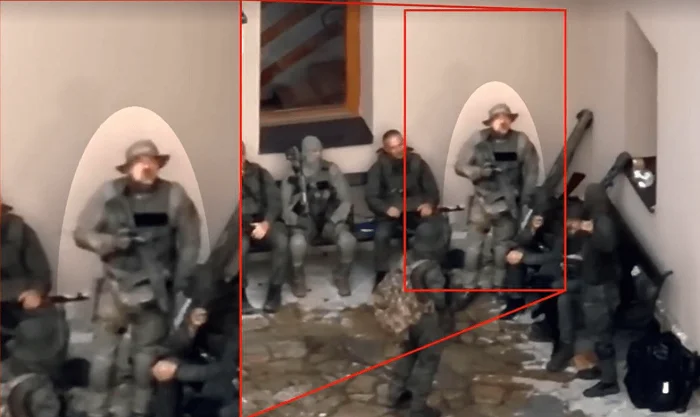
Units like Northern Brigades, Bridge Guards and Civil Protection are not paramilitary formations, but, we can say, government forces, that is. Security and security services forces of a particular country, says Dean Jebiq, military security expert in an interview for The Geopost.
He emphasises that weapons seized, like snipers “The black arrow” 12.7mm which uses the most elite units of the Serbian Army is one of the most irrefutable arguments of who actually stands behind the training, training and preparation of such a unit.
Jebiq alludes to Serbian President Aleksandar Vuciq's statement that such uniforms could be bought on the black market, but, he points out, <x0);pajis that they had could only be bought by a state arms dealer, in this case was the state of Serbia”.
He says Wagner offered a kind of decree and paradigm such that state history can turn into a business, in which the contracter businessman will take responsibility for his management and will in fact implement state policy in a large way.
“In this regard, there is a link between Russia and this case, given that Milan Radoic was considered one of the influential businessmen, many controvers in northern Kosovo, where we can absolutely say it was Prigo~ in miniature”.
He emphasises that in the future we will see resolutions of 24 September until, he says, the “do not disrupt that link to organised crime and terrorism in Kosovo”.
Banjska, he points out, had two goals and the monastery was not chosen by chance.
The initial goal of the operation, he says, was “triggering a conflict that would benefit Serbia greatly in combining Brussels' diplomatic negotiations and rounds between Prime Minister Albin Kurti and Serbian President Aleksandar Vucic”.
You are among the first military and security commentators to identify members of the Northern Brigade as the top suspects for the terrorist attack in Kosovo in late September. Do you know who is in charge of this organization? Are paramilitary groups, as in the past of the war, the key to causing conflict in Serbia?
Jebic: What these paramilitary units are, it shows the kind of weapons they possess, which is exclusively in service to the most elite units of a designated state. In this direction, units such as the North Brigade, the Bridge Guard, and Civil Protection are not paramilitary formations, but, rather, we can say, government forces, that is, the security forces of a designated country.
When we talk about the Northern Brigade, it is formed, according to information thus far, in January 2022. It consists of local youths between the ages of 18 and 25. According to data, it is about 300 members who were sent to Mount Copaonics in January 2022, where they underwent intensive training in handling small arms, mine explosives, antitank, and so on. Those funds that were provided on Mount Kopolonik in the town of Crna Glava have been provided by the Serbian Army, though, according to the model of intelligence of reliable denial, we will never get that kind of recognition.
But if you look at the weapons that have been seized, the best example is the sequencing of the rifle or sniper against the battery “Zastava M93” or “Black Arrow” 12.7 mm. Therefore, such a sniper is used by the most elite units of the Serbian Army and they are the only users of that sniper. Clearly, as one of the most irrefutable arguments, who actually stands after training and preparing such a unit.
When we generally talk about the use of such units as the general country became Wagner, even though Wagner belonged to the category of paramilitary companies - private military companies, such as a company, in the corporate sense, a military organized company that meets the external political and security requirements of the state - so that the state itself will not go into war and conduct cyberspace wars as proxy, but also in front space, in the area of low and high physical conflicts, even if you want wars. Such units are excellent for use, with the view that they do not have a flag and as such are most often attributed to local residents of a certain area, and therefore freely we can say that it is one of the most elegant ways of carrying out organized terrorism, because your political and security goals are met and no one can point to your flag and that soldiers are struggling with unique uniforms that have nothing to do with your country. That was the case in Banjska, given that we had uniforms confiscated by Kosovo security forces, which were unique. So let me say, universal and, as President Vuciq said, it can be bought on the black market. Such uniforms could be purchased on the black market, but the equipment they had could only be bought by a state arms dealer, in this case the state of Serbia.
You mentioned Wagner as a model. How much influence has Russia had on the terrorist operation in Banjska?
Jebic: Russia's influence should be seen as a kind of global influence. However, with the formation of the private Wagner company, which of course is not the first private military company in the world, the mercenary armies are also mentioned by Tukidi in “Peloponnese wars” Hence, it is a natural phenomenon of war as a sociological phenomenon, and as such it is nothing new, except that statehood, sovereignty, adopting the state camera did not amount to an expression such as the case with Wagner.
So we have the case of the Special Operations Unit, the Red Berets, which are known formations of Serbia's State Security Department, which overnight plunged into the state camera, even though it was made up of people who had a criminal past, who had behind them a whole range of war crimes, commitments in wars that Serbia was never responsible for as one of the participants and a host of other activities.
In this direction, Wagner offered a model of how with small formations that have a high level of technical-technology devices in the field of technology, weapons, opposing weapons, vehicles, fears... a whole multispectorial power projection system. So, if you want a cyber operation, physical type operations, if you want conservation and physical security operations of VIPs and sites that are part of critical infrastructure, Wagner offered a kind of decree and paradigm that state history can become a business, where the contractor businessman will take responsibility for managing it and actually implement state policy in a large way. In this respect, there is a link between Russia and this case, given that Milan Radojic was considered one of the influential businessmen, many controvers in northern Kosovo, where, absolutely, we can say, was a miniature Prigozhin.
What's the probability of seeing September 24th repeat?
Jebic: The answer to the question of whether we can expect a repeat of Banjska's scenario was actually offered by initials of such operations before the 24th and a few days later there was another case of blocking several operations that are very frequent, we had trucks and logs again. We will continue to have until the link of organised crime and terrorism in Kosovo breaks down. So if you listen to politicians, journalists, security guards from Kosovo, all agree that the people in northern Kosovo are more than relaxed and more than willing to co-operate, co-exist and that such types of turbulence and unrest complicate the normal functioning of their lives very much. And the main issue of security in Kosovo is the issue of organised crime. The group gathered around Milan Radojici and Zvonko Veselinovici has cleared up and darkened in Kosovo. All we need to do is look at the videos from the raids, freely we can say Milan Radojich's hackers, and if we compare this kind of infrastructure with the payment power of an average person in northern Kosovo, it will become absolutely clear that this is a criminal complex that is involved in state terrorism. So that connection, that connection between organised crime and terrorism really complicates any kind of operation that would eliminate such groups. Simply, their level of integration into all social issues is such that such an operation would require a complete recompliance, we can say freely, of the political structure of Kosovo, even though it is very unclear and very problematic by the face of both sides of the negotiating table, and simply, whether or not a community of Serbian municipalities will be formed, organised crime in Kosovo will remain as a kind of control. Official Belgrade puts all important figures under the table that can make some sort of mobilization of measures in Kosovo. And this is actually the role of Veselinovic and Radoicchi, who based on the suffering of local residents built an empire that Pablo Escobar would envy.
In an analysis for the Sarajevo agency Patria, you've presented a very interesting topic that seems to have gone to the public radar: the Banjska monastery is not chosen by chance and the operation had its primary and secondary objective. Can you explain?
Jebic: The operation performed in Banjska is that in modern military security terms, it is called ʹoperation with a false flag or a black flag operation. a flag replacement operation, an operation under the flag and fake uniforms. In this direction, the operation aimed at creating a climate in which the mobilization of the Serbian Army and all security agencies would be justified. Actually, there was a cassus bell. That's why choosing Banjsca's monastery is not random. Of course, it is very important to note that planning such operations involving several months of analysis, discovery, assessments are simply standardized operational procedures that are put into the planning of the operation itself and trying to cover every aspect of the development of events. Of course, it is very authentic for the Banjsca monastery that during the attack, pilgrims from Vojvodina stayed and were robbed. It is very unusual that all the media in the region overcome this fact, even though it first turned out to be news that pilgrims had been robbed. So if we follow a logical sequence, pilgrims in the Orthodox monastery have been robbed by members of a terrorist organisation that undoubtedly applies Serbia's state policy. So a very confusing circumstance at least. Of course, what stinged the ears was that none of the pilgrims spoke of the media, but that kind of crisis communication - self - communication after the event - was taken by a priest. So this indicates that the operation actually had two primary and secondary objectives. The primary goal of the operation in Banjska was to create conditions for the escalation of the conflict in Kosovo, and with this the permanent disqualified of the Kosovo side, which in that scenario, so the terrorists coming to Banjska would be dressed in Kosovo's uniforms, the security forces, speaking fluently Albanian, which is absolutely no problem for people living even in the north, is given the impression that the church was actually attacked by criminals who were cut off by command or simply instructed by Kosovo authorities and who attacked pilgrims in the monastery. You can imagine what kind of media propaganda station would create if a picture of those killed or injured were released in public or, in extremes, simply say abused, Orthodox, in an Orthodox monastery. It was the first part of the entire operation, which failed only because of the Kosovo police patrol crash, in which after the activating of the explosive vehicle, police (Afrim) Bulnjak remained killed.
The second goal, i.e., was certainly to frighten groups north of Serbia, namely, in Vojvodina, and even more specifically in Novi Sad, are absolutely unhappy with the policy led by Vuciqi's SNS, that is, an entire patriarchal octopus ruling Serbia today in that world of criminogenic and precisely on the basis of that criminal structure it is possible to perform such operations successfully, as the government has established a strong link, so a strong monopoly with organised crime and people under land. In this direction, the intimidation of pilgrims from the north -- whether from Vojvodina -- would also mean conveying a message to those groups so that they can understand delicately what it looks like when they turn their backs on the state, namely, the regimes Aleksandar Vuciqi. So the aim of the operation was internal and external intimidation, if we can say so, since the initial goal was to provoke a conflict which, in this combination of Brussels' negotiations and diplomatic rounds between Prime Minister Albin Kurti and Serbia's president Aleksandar Vuciq, highly favoured Serbia.