4 minutes ago
Kan: de facto recognition does not solve problems between Kosovo, Serbia
Periskopi(3 years ago)
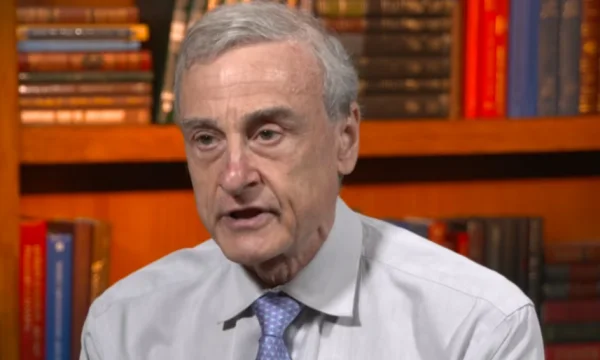
(3 years ago)David Kanin, professor of European Studies at Johns Hopkins University in the US, is not optimistic that international demands for Serbia to recognise de facto Kosovo and Kosovo to form the Association of Serb majority municipalities would solve problems between the two countries. To have a lasting solution, according to him, it must [...]
To have a lasting solution, according to him, it must come from protagonists themselves, not from outside.
We had one in 2018, with a division plan [of territories]. Nobody liked it, everyone noticed the problems and they were real. But, the fact that it came from both sides, that [the president of Serbia, Aleksandar] Vuciq and [then Kosovo President Hashim] Thaci have been ready to co-operate, it has had to be the most important item”, Tan says of Radio Free Europe.
With the formation of Association, he says, Serbs in Kosovo would have an organisation that would be recognised internationally, while Kosovo itself is not recognised.
For the Banjska attack, it seems that there are many questions that “remain in the air”, but the most likely “, appears someone in the military command chain or intelligence chain in Belgrade, has had links to it”.
“I think that the idea of imposing sanctions on Vuciki is now very low on the list of priorities, taking into account everything that is happening in the Middle East”, Tanin says in question whether Serbia is avoiding possible sanctions from the West.
Radio Free Europe: The European Union's special envoy in the Kosovo-Serbia dialogue, Miroslav Lajcak, spent two days in Kosovo, meeting representatives of the Government and the Opposition. This time, he did not continue his visit to Serbia. Can this be seen as a kind of pressure on Kosovo to accept the draft status state for the Serb majority municipalities' association?
David Khan: Yes, it is. Nobody loves [Kosovo prime minister] Albin Kurti. They don't like dealing with it. Lajcak and Kosovo have no good relations. The West, of course, believes Kurti is more guilty than [Serbia's president, Aleksandar] Vuciq, despite the incident in Banjska, which we can discuss. He has changed things, he has become an obstacle to Vuciqi, who was doing very well diplomatically.
But, yes, there's pressure on Kurt to change his position. I, frankly, I think the West would like to get rid of Kurt, would like someone else to be prime minister. The West has realised it will not be handed over to the Association of Serb majority municipalities, because it knows it would be a creation that would function against Kosovo's sovereignty no matter what the West says. And, in my opinion, he's right.
Kurt is under this pressure for a year or so. But I think it is important to keep in mind that all of this, in terms of the Franco-German proposal [the Ohrid Agreement on normalising Kosovo-Serbia relations] and implementing the 2013 [for Association], is part of a model dating back to 2006. Since then, the United States has initially failed to agree on Kosovo's status. Since then, Western politics has not succeeded, there have been a number of failures. And, with any failure, Western ability to impose what it wants diminishes.
But is such pressure justified?
David Khan: In my opinion, it's not. I think the western approach is poor thinking. Justifiable is a funny word. I don't think it's an excuse or not, it's about whether it's a good strategy or not, whether it makes sense or not. There's no for me. However, the West has power and influence. He may keep trying to push things the way he wants to.
But, as we have seen since 2006, the West has not been able to create a status for Kosovo that is internationally accepted, and especially accepted by Serbia.
The two protagonists disagree with Western access, and both, in their own way, have been able to block [the process of normalising relations] for many decades.
The EU urges Serbia to recognise de facto Kosovo, while Kosovo expects it to form association. Can this de facto recognition solve the problems between Kosovo and Serbia?
David Khan: I don't think it solves them. First of all, it's not de facto recognition. He has knowledge or no recognition. What Serbia is really asking is not to prevent Kosovo from membership in international organisations. It could also withdraw from efforts to convince countries that have recognised Kosovo to recognise it. This is not recognition.
It is important to remember that Taiwan, for 30 years, has had permanent seats in the UN Security Council, as has China. When geopolitical has changed, that seat hasn't helped Taiwan at all. Serbia knows and Kosovo knows this agreement is very bad for Kosovo.
The so-called de facto recognition is not recognition. It would be a modest victory for Kosovo in a diplomatic way, without Serbia really doing anything.
Serbia would preserve the support of Russia and China on the UN Security Council and could block any resolution. So this is a unilateral agreement. Kurt knows that and he's right.
According to you, what should be the model for association that would not jeopardise the functioning of the state of Kosovo?
David Khan: That's the problem, that model is at risk. I understand that there would be common responsibilities, in health, in education... Even civil society activists who support it say there will really be very limited responsibilities. But that doesn't matter. What matters is that Serbs in Kosovo will have an organisation that will be recognised publicly, while Kosovo itself is not recognised. And it'll be a kind of tool, no matter what his official functions are.
Both governments [in Kosovo and Serbia] know it will be a tool for the Serbian List to expand its expansion in Kosovo and, in particular, south of the Iber River. [v.j. The Serbian list is the largest Serb party in Kosovo, which is supported by official Belgrade.
So, what's the way out?
David Khan: First of all, I want to remind you here of American Secretary of State Antony Blinken's speech to Gaza, held last Friday. He has said two things first, that the two states solution between Israel and Palestinians is the way forward; and second, he has also said this is the only way forward. This is what we always hear from Western diplomats and the Balkans.
But to have a sustainable solution to this [Kosovo and Serbia], it must come from within the region, from the protagonists themselves. I believe that any agreement, whatever, that comes out of both sides, should be seriously handled by internationals. We had one in 2018 with the plan to divide [the territories]. Nobody liked it, everyone noticed the problems and they were real. But, the fact that it came from both sides -- that Vuciq and [then Kosovo President Hashim] Thaci -- have been ready to co-operate -- has had to be the most important point. We had to be willing to consider problems and work with them.
If the solution doesn't get out of the region, it's unlikely to work, in my opinion. This does not mean it will function [if it leaves the region], but internationals must help.
It's been almost seven weeks since the Banjska attack. According to you, what has been Belgrade's role in this incident?
David Khan: Someone in Serbia has had fingerprints on weapons and ammunition [found in Banjska]. I think Kosovars have shown this quite convincingly.
I don't know if Vuchy knew about this. I doubt it, because it wasn't in his favor. The toilet is smarter. Things were going well. Everyone hated Kurt, and he had good relations with Europeans.
Now, Aleksandar Vulin has just resigned from the intelligence head's position. No one links the fact of his resignation to the incident. But it seems possible, at least it seems possible. I don't know, I'm just wondering if it might be. Most likely, it seems that someone in Belgrade's military command chain or intelligence has had anything to do with it.
The big question for me remains: what Milan Radojic planned [who has accepted responsibility for the attack on Banjska]. Let's just say the goal has been achieved, they [armies] have managed to get in and do what they planned... What would happen tomorrow? Have they made efforts to take over the physical control of northern Kosovo? Have they tried to revolt? Have they smuggled anything so important that Radoici has needed an unusual number of people? All these questions are still in the air.
The West has not reacted to Serbia, even though the responsibility for the attack on Banjska has been taken by Radojic, former vice president of the Serbian List, controlled by Belgrade. Is Serbia escaping possible West sanctions?
David Khan: Yeah. I don't think there will be sanctions against Serbia. I don't think the West blames Vuciqi for that. I may be wrong, I don't have access to classified materials, and I don't know what our [American] Government thinks.
It is also important to note that the Gaza war has favoured Vuciqi, as has [Russian President Vladimir] Putin. The Gaza War has distracted everyone. I think the idea of imposing sanctions on Vuciki is now very low on the list of priorities, taking into account everything that's happening in the Middle East.
And, of course, the Middle East is now in people's minds. This enables Putin to strike Ukraine, enables Vuciqi to exit the error in Banjska, and harm Kurti because the pressure on it has returned and no one will impose sanctions on Vucinqi.
Do you think Vuciq will change the approach to dialogue with Kosovo after the December elections in Serbia?
David Khan: Let's see what happens in the election. The important thing in these elections, I think, has nothing to do with Kosovo. It concerns mass killings that occurred in Serbia last May. I think they've been the biggest threat to Vuciqi since he took power.
If the pro-Western opposition can take advantage of the anger of people with Vucinqi é that has been felt after the assassination, then it may have a chance to do better in the elections. If Vuciq manages to retain control, he will not change anything regarding Kosovo.
Do you think the United States should do more in this process?
David Khan: I think the U.S. should reconsider its entire approach. We are trying to convince Kosovars to make serious concessions for Serbs, in exchange for very little. That was our model. We really need to rethink that.
And, one last question, what should be expected for the Western Balkans following next year's presidential elections in the US?
David Khan: If Donald Trump returns, as in the first term, he will be pro-Serbian. Vuciq is expecting Americans to be more pro-Serb. Clearly, even Milloard Dodik [Serbian leader in Bosnia and Herzegovina]. Even if these two are not in power, America's attitude towards the region will become more sympathetic to Serbian interests if Trump returns. I base this trial on bringing Trump's first administration.