14 minutes ago
European Commission urges Serbia to explain for Russian humanitarian centre in Nis
Periskopi(3 years ago)
(3 years ago)Serbia must inform the EU of activities of the Serbian-Russian humanitarian centre in Nis and its integration into the emergency management system, according to the European Commission's annual progress report on environmental and climate change. Also, Serbia must ensure that the humanitarian centre in Nis does not double its role [...]
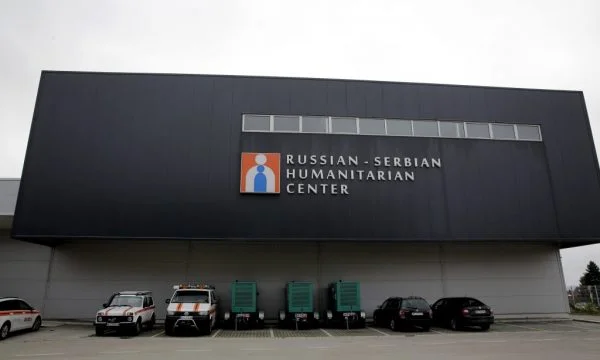
Serbia must inform the EU of activities of the Serbian-Russian humanitarian centre in Nis and its integration into the emergency management system, according to the European Commission's annual progress report on environmental and climate change.
Also, Serbia must ensure that the humanitarian centre in Nis does not double the role of the European Commission's Emergency Co-ordination Centre, writes in part of the report referring to civil defence.
On the website of the Serb-Russian Humanitarian Centre, it was reportedly formed in 2012 on the basis of an agreement between the governments of Serbia and Russia in order to provide a host of humanitarian tasks on the territory of Serbia and other Balkan countries.
In part of the Commission's report on Civil Protection Issues, Serbia reportedly actively participates in the EU Civil Protection Mechanism, that it has sent rescue teams to Turkey after the February earthquake and participated in the work of operational teams to send humanitarian aid to Turkey and Syria.
In March, Serbia also sent aid to Ukraine through the Mechanism to repair energy damage caused by Russian attacks on civilian infrastructure.
The Commission estimated that Serbia has a good legal and policy basis for disaster risk management based on the Law for reducing disaster risk and emergency management.
The amendments to this law are planned for 2023 aimed at eliminating minor shortcomings and introducing new instruments for empowering those involved at the local level.
It was also estimated that during the past year Serbia has improved its readiness and capabilities for reaction and that it has launched an online registry of disaster risks, in line with relevant EU regulations, which provides real-time data.
The Commission also stated that Serbia has not been linked to the Joint EU Emergency Communications and Information Centre (CESIC), but has expressed interest in joining the “only for reading” available to participating countries in Mechanism. /AntinaM