27 minutes ago
Brussels' report on Albania: Corruption remains serious concern
Periskopi(3 years ago)
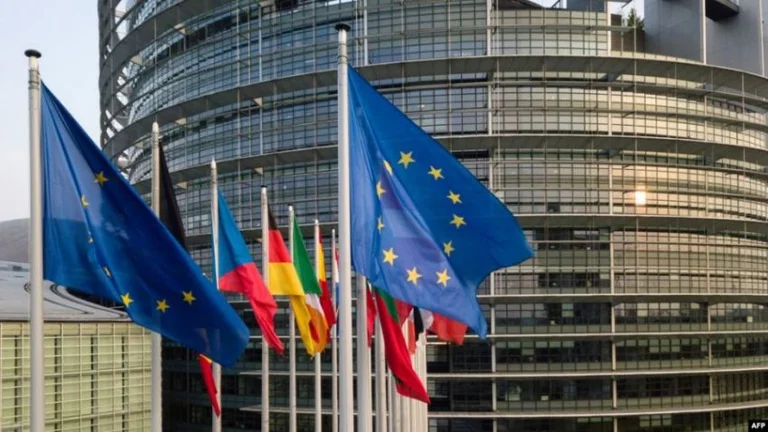
(3 years ago)Despite some advances, fighting corruption in Albania, remains a serious concern”. This is the assessment of the report for Albania, which is expected to be approved in Brussels today. According to the document, the country “has some sort of preparation level” in the fight against this phenomenon, which is seen as “spread across many areas of public and business life”, while [...]
Despite some advances, fighting corruption in Albania, remains a serious concern”. This is the assessment of the report for Albania, which is expected to be approved in Brussels today. According to the document, the country “has a certain level of preparation” in the fight against this phenomenon, which is seen as “spread across many areas of public and business life”, while pre-emptive “continues to have a limited impact, especially in vulnerable sectors which “require targeted risk and committed action”. The report notes the Special Prosecutor's investigations in several high-level cases, but however, the European Commission stresses that “the achievement of the number of final sentences at high level remains an important priority to further address the culture of impunity”.
The same estimates, for “some preparation level”, are also for the fight against organised crime, which requires more efforts in fighting illegal drugs, including increasing the capacities of law enforcement authorities”. Albania has adopted the law to produce cannabis for medical and industrial purposes. For this, it is required that “ensure that there are mechanisms to effectively prevent cannabis deviation in unintentional use”. According to the report “progress that has been achieved with the sequentification and seizure of organised crime-related assets must continue”. On the other hand, it is estimated that “fighting against cyber crime, money laundering and prevention, and combating human trafficking remain areas in which additional results are needed. Data on cases of money laundering and high-level corruption remains insufficient and financial investigations must be conducted further”.
With a better level of preparation, assessed as “messatar”, the functioning of the judiciary is considered. “The implementation of justice reform followed, resulting in good progress in general. Efficiency of the judicial system and access to justice continued to be affected by the long term of procedures, increased labour burden and large number of outstanding cases, which remain particularly high in the courts of Appeal and First Scale. Albania must ensure that criminal procedures are systematically launched against judges and prosecutors, whose verification process revealed criminal elements”, the report notes.
These issues are part of the first group Albania will have to face at the moment of landing at the membership negotiating table, as well as those dealing with the functioning of democratic institutions and public administrations, or and economic criteria, public procurement, statistics and financial control.
In terms of political criteria, the report estimates that the <x0 political scene continues to be marked by political polarisation, in the context of deep continuing divisions within the largest opposition party” and that “parliamentary executive oversight remained limited”. As far as it is concerned with the government, the report notes that “, while placing reforms related to the EU at the centre of its legislative and policy planning, the government must refrain from measures that are not in line with EU standards. The government also must engage in stronger public communication on the EU membership process”.
Regarding public administration “Albania remains an average prepared. New strategies for public administration reform and public finance management reform have not yet been prepared and adopted”, the report stresses. As far as fundamental rights are concerned, “efforts to implement the legal and policy framework must intensify”.
The report speaks of a limited “progress” in the field of freedom of expression, where it is estimated that “Albania is located amid some level and an average degree of preparation”. Concerns remain the same as the past, while stressing that “the establishment of business interests and politics, the lack of transparency of sources of financing, the concentration of media ownership, intimidation and uncertain working conditions continued to undermine media independence, pluralism and the quality of journalism. The atmosphere of verbal and physical attacks, defamation campaigns and charges of intimidation against journalists has not improved”.
The College of Commissioners is expected to approve today, in addition to separate reports for each country, including the document on enlargement strategy, as well as the new growth plan warned by Commission President Ursula von der Leyeen. / VOA/