a minute ago
The book on Tivar Massacre in the Hands of American Readers
Periskopi(3 years ago)
(3 years ago)At the University of New York, the English edition of the book “The book in English, rich in even more detail, sheds light on a serious event at the end [...]
At the University of New York, the English edition of the book “
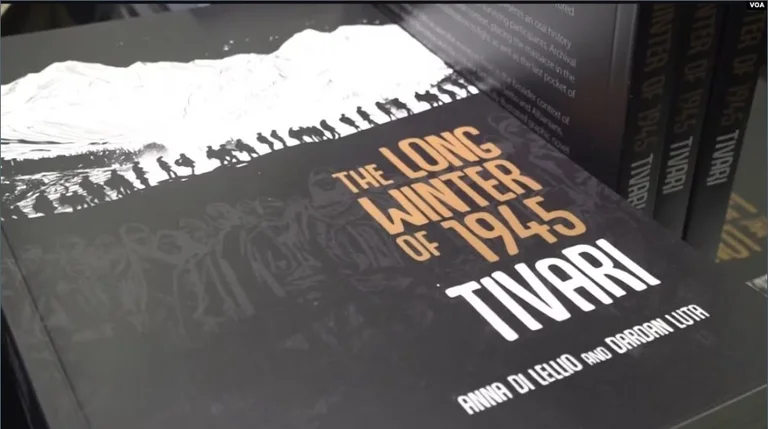
The book in English, enriched with even more detail, sheds light on a serious event at the end of World War II, known as the Tivar Massacre, where Serb forces killed hundreds of unarmed Kosovo Albanians.
Throughout the history of ten men from a Drenica village who managed to survive the Tivar massacre, the English edition of the book called “Dimri long 1945” brings to the American reader one of the most serious events of Albanian history at the end of World War II.
Money
78 years, hundreds of young and unarmed men from Kosovo, summoned to a military mobilization by the former Yugoslavia authorities to fight the Nazis, were killed by Serb forces in Montenegro.
It still takes work on the complete dawn of this event, says author Anna Di Lelio, but she adds that history books like this are necessary, especially now when the world is facing two major wars -- Russia's in Ukraine and the Israeli-Hamas conflict in the Gaza Strip.
“People continue to repeat the same actions. I think it's important that this book comes now, an indication that massacres should not be forgotten. The dead bear the history of a country. Their memory is preserved throughout generations. The work of historians is designed not only to prevent the printing of history but also to understand it, to speak of it, to apologize, or to atone for sins if necessary. Let's not forget the dead. It's better to remember them openly through civilised discussions. Let's see what happened to those people, because they're not just numbers”, says American author Di Lelio.
Dr. Shinasi Rama, from the International Relations Program at New York University, says that through such publications, people learn how to solve present problems.
We need to pay attention to history because what's happening today is yesterday's story. So what happens today becomes history tomorrow. We must preserve the sense of truth and values regarding what is happening. Because the clearer we have the phenomenon happening, the better we will be able to deal with that problem and people in the future, says Dr. Rama for the Voice of America.
The book is based on oral evidence of survivors and their families, archive documents, and historical research.
The events in this publication relate with little text and illustrations of the Kosovo artist Dardan Luta, who is also coauthor of the book. The objective of this format is to reach new readers.
“
History is very touching. In fact, my society, which has seen the book, has no knowledge of Albania or Kosovo. But they have been deeply affected by this story. We've made the book for new generations, but even older people like it or it's easy to read. Through the images, we are much better able to convey the extremely tragic and traumatic emotion of this history”, says author Di Lelio.
This creative way of revealing history should also be used to clarify other past events, says history professor at Hunter College Dr. Elidon Michael.
“Ngre the question of the platform, which is the right method to bring in, to contact the reader, especially a new generation, with history and the demitation of the history writing process based on documents and evidence, to make the process more vulnerable. There is much work to be done by authorities and the research infrastructure in the Albanian world, whether in Albania, Kosovo or other lands where Albanians are available, not to be limited to that narrow national or regional outlook only, but to create a registry, to speak, even by ways, methods, new technologies,”, says Mr. Mohill for the Voice of America.
Dr. Rama agrees, while speaking of the need for young Albanian readers, though facing a dynamic life, to learn about their past.
“
In this attempt to earn a living, in the race to move forward, we are forgetting and bypassing exactly what is very important to us who we are, where we come from and where we are going. Where we're going is largely determined by where we were”, says Mr. Rama.
The English variation is published by Canadian University “Toronto Press” and will use it as an example to explain to his students a way of making historical research.
The Albanian edition of this book was presented to the public in Kosovo in March 2019. /REL