9 minutes ago
Lajcak: It's not just association, Serbia has unmet obligations
Periskopi(3 years ago)
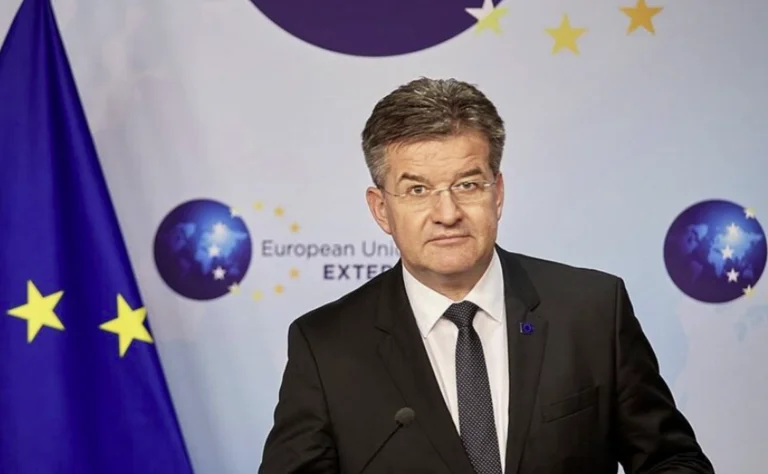
(3 years ago)The European Union's special envoy for the Kosovo-Serbia dialogue, Miroslav Lajcak, underlined the necessity that, apart from the Association of Serb majority municipalities, which is Kosovo's duty, Serbia must implement all provisions of the Agreement on the road to normalisation of reports. But this [the association] is not the only element that needs to be implemented. Serbia [...]
The European Union's special envoy for the Kosovo-Serbia dialogue, Miroslav Lajcak, underlined the necessity that, apart from the Association of Serb majority municipalities, which is Kosovo's duty, Serbia must implement all provisions of the Agreement on the road to normalisation of reports.
But this [the association] is not the only element that needs to be implemented. Serbia also has many obligations not implemented by the agreement, and we should see the implementation proceed in parallel so that Kosovo and Serbia can get what they are hired for, Lajcak said through a post on social networks.
Referring to the recent European proposal for the statute for Association, which was presented to the parties on 21 October during the visit of “Great Pesses”, Lajcak stressed that this proposal is a modern European way of resolving the sensitive issue of minority protection in line with the best European standards “and does not violate the red lines submitted by the parties”.
Lajcak confirmed that Kosovo and Serbia have had comments and questions regarding the European proposal, and said the European bloc in the coming weeks will clarify all the parties' questions and concerns.
He warned a meeting between Kosovo and Serbia's chief negotiators to discuss the next steps in implementing the agreement towards normalisation.
“Now, the focus should be on advancing implementation of the agreement without preconditions and delays. As European leaders have clearly stressed, formalities should not prevent this important process”, the European emissary wrote.
On 26 October, leaders of three key EU states -- France, Germany and Italy -- along with representatives of the bloc's institutions -- held separate meetings with Kosovo Prime Minister Albin Kurti, and Serbia's president, Aleksandar Vuciq.
Despite high-level political involvement in efforts to unblock dialogue, the parties failed to agree on the issue of implementing agreements reached earlier.
Kurti expressed readiness to sign an agreement on normalisation, including the European proposal for forming association, but added that Vuciq was not ready. Vucic has said he is willing to implement provisions of the Agreement towards normalisation that does not include respecting Kosovo's territorial integrity and Kosovo's membership in the United Nations.
On February 27th, Kurti and Vucinic reached agreement towards normalisation. On March 18th, the parties agreed on the Annex to implement the agreement. However, the agreement has not been signed by the parties, as the Serbian president has refused, arguing that “Serbia is an internationally recognised state, while Kosovo is not”.
This agreement, of 11 provisions, envisions, among other things, a level of self-awareness for the Serb community in Kosovo and mutual recognition of state symbols, while calling on Pristina and Belgrade to implement, as well, all previous dialogue agreements.
A day after meetings in Brussels, France, Germany and Italy urged Serbia to recognise de facto Kosovo and for Kosovo to form association.