23 minutes ago
German Ambassador: Kosovo, Serbia engage in dialogue
Periskopi(3 years ago)
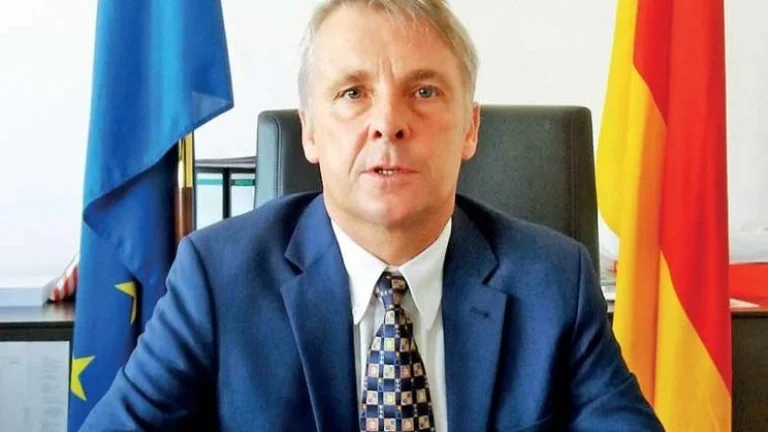
(3 years ago)Germany's ambassador to Kosovo, Jorn Rohde, has stressed that after the events of September 24th, Kosovo and Serbia, they must engage in dialogue, namely, even in the implementation of the Brussels and Ohrid agreements, these consist of several steps. According to him, for Kosovo, it means the beginning of the implementation of the municipality Association with the Majora [...]
Ambassador Rohde has said the facilitator Lajcak and senior representative Borrell have Germany's support.
“You could see, even before the attack, that the EU, which essentially facilitates the process, in the September 18th statement, has once again highlighted what is expected of Kosovo and Serbia. Serbia has been criticised because it has not implemented the energy guide, as well as harassment against police officers, but we have said that Kosovo has not implemented some things that have been asked since 3 June”, the German ambassador has said.
Germany's ambassador to Kosovo, Jorn Rohde, has stated that the September 24th attack on Banjska was not organised by disgruntled citizens, but was planned to trigger slaughter and was prepared with military methods.
Ambassador Rohde has said that the September 24th attack, the EU has classified it, has called it a terrorist attack. According to him, the attack was murderous, a coward, against the police in office, and we sought the punishment of such perpetrators. He has declared that evidence should be collected, those evidence should be assessed, then political decision must be made.
He has said Germany has made it clear to Serbia that it must support investigations concerning this attack.
Total interview:
It's always a pleasure to have you, Ambassador. I would like to start this interview with developments in Kosovo, but start with what is happening in the Middle East, the war between Palestine and Israel. How do you see this development?
Rohde: This murderous terrorist attack, I believe, has shocked everyone, these terrorists who hit children, take hostages and use them as human shields, I believe, requires clear, unified answers from all of them. I made a post yesterday at X, a small picture of the Brandenburg Gate, which is lit in the colors of Israel, which is a sign of our solidarity with Israel. Especially for Germany, solidarity with Israel is one of the cornerstones of our democracy.
RTK: But there is general concern that conflict can spread to other countries. Are you worried about this too?
Rohde: No, I believe this has been launched as a terrorist attack and as such has to be faced. This is not a country war. Of course, we know Iran is supporting these terrorists, and in Lebanon there are even militant groups, and so far we know it doesn't spread. So, I can't say I have that glass cup, but the sooner these terrorists are eradicated, the easier we will try to find political solutions. You see that even there, if the political solution is not found, tensions can always flare up. But this is just a deadly terrorist attack, and right now these terrorists need to be neutralized.
RTK: Why are you saying this is not a war between states, because we know that the official declaration of the government of Palestine says they have the right to defend themselves?
Rohde: Yeah, who's defending himself here when a music concert is attacked, when people get killed there, what kind of protection is that? This is not defense, it's a terrorist attack.
RTK: Do you think this conflict cannot spread to other countries?
Rohde: What I think is secondary, but for now, I don't see this happening. Israel has the complete right to self - defense, and it does not turn the offender into a victim or the opposite. I think we should all be solidarity with Israel to stop this thing as soon as possible and release all hostages.
RTK: Two weeks ago, Kosovo was a very important topic in the world because of what happened in northern Kosovo. Any danger of losing sight of what's happening in the Middle East?
Rohde: You know, we're in the middle of a lot of local conflicts, and you see what's going on in Armenia and Azerbaijan, in Karabah, you see the conflict in the Middle East, now this terrorist attack, but I can assure you that we're focused on trying to find solutions to this unresolved conflict. Last Friday there was a meeting of foreign ministers within the Berlin Process, while next Monday we have the Summit, so my Chancellor will come, the other leaders will come, and we will continue to support him, and to remind people that, in fact, the protagonists have the responsibility to refrain from violence and find solutions.
RTK: Let's now talk a little more in detail about Kosovo. Mr. Ambassador, it's been two weeks since the Banjska attack. In Pristina it has also been called a terrorist attack. Is it Germany, too, a terrorist attack?
Rohde: The EU classified it, called it a terrorist attack. Our envoy to the Western Balkans has named him that, and I have used that term myself. It was a killing attack, a coward, a police officer on duty, and we've been looking for the punishment of the perpetrators. I hope this will happen, until we have clearly asked Serbia to support transparent investigations, as well as bring those responsible to accountability.
RTK: Yes, but Serbia is doing something else. Radojichi was arrested but was released in a few hours.
Rohde: Yeah, we've seen that, we've got it, and I think we're still collecting evidence. It's not over yet. We see it almost every day, even the Kosovo Interior Minister publishes new discoveries every day, I believe it is still very early, but my minister, the foreign ministers, on Friday, have clearly told what we expect from Serbia to participate in transparent investigations, to ease tensions.
RTK: Yes, but do you believe Serbia will be transparent in investigations?
Rohde: Yes, that's the expectation we have! If it is not transparent, there may be consequences. But I cannot predict what will happen. You've seen the clear statement, because this murderous attack on September 24th was a clear turning point, as well as the clear dimension of the weapon that was found, as I said in another interview, these weren't just disgruntled citizens, this was an attack with military methods to cause slaughter.
RTK: Who do you think was behind this attack behind that group?
Rohde: I believe that there is no need to think, chief Milan Radojkiqi himself said he was behind that attack.
RTK: Yes, but who stands behind Milan Radojicicchi?
Rohde: Specific structures, likely in Serbia. Probably, because I don't know, like I said, there's still evidence to be found. But the weapon probably didn't come from the moon.
RTK: Do you think Serbia's president is also behind this? Because two days ago, he said Radojici is his closest ally, but would not extradite him to Kosovo.
Then you're asking about two very different things. What the president of Serbia has said, as well as what I think. The president also said he didn't know anything about the attack, so his statement is he's not involved. As I've already said, it's hard to speculate, evidence should be collected, and once we have all the evidence, and part of that is whether Serbia follows the path of the EU and NATO, to participate in those investigations, then we can make our own decisions, including political ones.
RTK: So you're saying there is not enough evidence yet to ascertain that Serbia stands behind that attack?
Rohde: Yes. If we are still under way, the evidence must be collected, the evidence must be assessed, then the political decision should be made, how much both sides are contributing, so to say, to providing those evidence. So far, I can't give you any final results, as well as I'm not going anywhere, if I keep speculating. But, there are clear requirements for Serbia, as well as again, the attack has been unprecedented, while we have said very clearly that the Kosovo Police have done the work extremely professionally on 24 September.
RTK: Yes, but to talk about some details, because Kosovo police have published some images from which this group that has attacked the north of Kosovo has been trained in Serbia, Copenhagen, isn't that enough evidence that Serbia is behind this?
Rohde: I've seen the images, but governments don't make decisions based on what they see in social media, governments make decisions based on evidence given by governments, governments for government, I don't make judgments based on the videos I see in social media. There may also be false news when news came out that Milan Radojki is in the monastery and later came out and accepted, okay. But professional investigations mean governments offer other governments full evidence. This means that full police work must be accomplished, and this must be done fully. So, please don't ask me to judge according to social media videos.
RTK: We are not talking about social media, it was a press conference by the Police Director General, as well as the Minister of Internal Affairs in Kosovo. That's what I'm talking about, not social media.
Rohde: Yeah, but still, I don't know what the investigators have, I'm not a cop, what evidence they've given up. These tests should be appreciated, and I'm not part of this. I'd like you to have some patience, I know it's hard after this weekend, I remember talking to colleagues who couldn't sleep on September 25th, because all memories of the full conflict return. It's perfectly clear, but before we go out with the findings, we have to be absolutely sure.
RTK: Are you talking about international investigations, is it necessary to have international investigations?
Rohde: This is demanded by the Government of Kosovo, as well, I am the last to oppose an international investigation. If that shed more light on the case, why not?
RTK: You expected the reaction of the Serbian List, while they reacted in three days. How did you see the reaction of the Serbian List?
Rohde: The reaction came after I spoke, it's not very convincing to me, what they've said. Finally, we still have law enforcement agencies, the Kosovo Police, as the perpetrators rise as heroes or martyrs, and this is a bit absurd, even yesterday in Berlin, where several locals there celebrated Hamas' attack on Israel. This is completely absurd, I'd say, as well as worrying.
RTK: I want to go back to September 24, that morning, because that day you met the prime minister. That morning, what were you thinking, what was going on in your mind that day?
Rohde: In the afternoon, when police action was still under way, I believe we talked a lot about what I said earlier, that the police had done professional work, as well as what was equally important, in extremely close co-ordination with the second and third responseer, EULEX and KFOR.
RTK: Were you involved directly?
Rohde: Me? No.
RTK: I mean Germany, as an ally?
Rohde: No, it was the clear responsibility of the Kosovo Police, police are the law enforcement agency responsible for all of Kosovo, while EULEX was on monitoring the situation.
RTK: Now Kosovo is asking the international community to make a decision to sanction Serbia. Is any decision on sanctions against Serbia expected soon?
Rohde: I can't tell you that. I can repeat once again that once they have gathered and provided evidence, there may be consequences, but I cannot predict the future.
RTK: Yes, but you said several times there must be political solutions. After what happened on September 24, has everything changed?
Rohde: I'm the one who answers the questions, but I was going to ask you, not even the worst terrorist attack does not change the fundamental issue, which needs political solutions to unresolved conflicts. So, Kosovo, Serbia, all Western Balkan countries want to be members of the European Union. Now to limit this to Kosovo and Serbia, to achieve EU entry, as our Chancellor has said last week, it is unthinkable to enter the EU two countries that do not recognise each other. Therefore, membership requires normalisation, while normalisation requires negotiations among themselves, and the talks mean that the parties must engage in dialogue, namely, even in implementing the Brussels and Ohrid agreements, and these consist of several steps. For Kosovo, it means the beginning of implementation of the Serb-run municipality Association for Serbia requires recognition of de-facto in some steps. If we don't get there, how can we achieve political solutions, then normalisation, and once membership? So nothing has changed in this regard.
RTK: I think it has changed, in Kosovo, for example, the president and prime minister have said there should be sanctions against Serbia first and then dialogue, not in the other direction. So, is it hard to continue with dialogue now?
Rohde: You can look for things, but I just laid the road ahead. It's hard to ask 27 countries to do something to you, but it's not very realistic. Normalisation still means talking between the parties, finding the solution, as well as implementing the Ohrid Agreement is, for our clear conviction, the road to normalisation. Because it asks the other side to recognise the documents, exchange permanent missions, stop from preventing Kosovo from membership in any international organisation, and certainly requires content from stimulating rhetoric, because it continues.
RTK: You talk about Association, but hasn't the last attack proved that association is actually not about local Serbs, but about criminal gangs, as well as criminal groups?
Rohde: I am completely against the distraction of the dialogue process through terrorist attack. Still, we need the political solution, as well as I am convinced that most people -- whether Kosovo Albanians or Serbs, Bosniaks or others -- want to live in peace, or as the Government of Kosovo has declared, when it has taken power, work and justice. When you have a constant climate of crises, then no one is helped, not most or minorities.
RTK: Are you optimistic that dialogue will continue without sanctions against Serbia?
Rohde: I don't know what's going to happen, but I can only repeat that absolute demands cannot be made. I fully understand the position that this attack really doesn't allow that usual continuation, as well as we've seen many comments, I've seen special envoy Lajcak, who has said the measures must be removed. So there's a difference, but for us, the basic equation, and that's what my minister said Friday, you may not want to hear it, but that Pristina and Belgrade should continue talking to each other, as well as start implementing the agreements.
RTK: Yes, but that should continue to go into dialogue as well as implement agreements, but first there must be punishment for Serbia. That's why I'm asking, if the international community, the European Union, will impose sanctions on Serbia first, and then see if there is a possibility for dialogue.
Rohde: You're asking me the same question again, while I can only give the same answer. I can't predict the future, but I don't think it's realistic to impose ultimatums on the facilitators, you need to talk to each other, as the investigations continue.
RTK: Yes, but President Osmani, but Prime Minister Kurti also said that Mr. Lajcak is not neutral in the dialogue process. Prime Minister Kurti has said Lajcak has sided with Serbia. How do you see this?
Rohde: For us, lightman Lajcak and high representative Borrell have our support. They've put forth great effort these years, and I don't think it's wise to hit the mediator. At the moment, we have a difficult situation, but to be sure Lajcak has full support of the EU.
RTK: Yes, he has full support, but is neutral in this dialogue process?
Rohde: Otherwise, he couldn't be an mediator.
RTK: So Germany supports it.
Rohde: Yes, we support him. You could see, even before the attack, that the EU, which essentially facilitates the process, in the September 18th declaration, has once again highlighted what is expected of Kosovo and Serbia. Serbia has been criticised because it has not implemented the energy guide, as well as harassment against police officers, but we have said Kosovo has not implemented some things that have been asked since 3 June.
RTK: Now it's a difficult situation, and we'll see how dialogue moves away. Is there still danger of destabilisation in northern Kosovo, any other attacks?
Rohde: Again, September 24th has changed things the way you have seen, how KFOR has reacted. Perhaps on the other hand, you noticed that we have increased the number of KFOR forces. Germany is already thinking about sending additional troops. This is not done to re-internationalize Kosovo's “north, as others might like to say, is simply a reinforcement of KFOR's presence, as well as to ensure that these attacks occur no more, but also to show solidarity with Kosovo. KFOR has a mandate, and is now even better equipped to implement this mandate as soon as possible. On the other hand, Kosovo has our support, so from Germany, Kosovo is sovereign, and we want you to be part of the European family as soon as possible. The less conflict there is and the more political dialogue, the greater the likelihood that this process will go faster. We've seen unfortunately in recent years that there hasn't been much progress, that's what I've said in several interviews, the entire Western Balkan region has faced migration, and when you live in constant crises, many people just pack things and leave. So Europe is not coming to them, they're heading towards Europe. The same can be said of Kosovo.
RTK: But what is Germany's reaction to statements KFOR must take over Kosovo's north?
Rohde: KFOR's mandate is clear. KFOR reacts only after Kosovo's request. You have seen it on September 24th, the Kosovo Police have managed the situation professionally, E ULEX has been in the country, monitoring, but there has been no demand from Kosovo, the Government, to intervene. That is one of those things where both sides are on the same side, the Government of Kosovo, but that of Serbia, for various reasons, welcomes the increased presence of KFOR.
RTK: Are you still awaiting elections in northern Kosovo?
Rohde: This is part of the suspension, to remove police from municipal offices, for mayors to operate in alternative spaces, as well as the election process to begin.
RTK: Even after September 24th? Is the same thing expected?
Rohde: We're talking about suspension, we're talking about an election situation that everybody's in, how it gets to her, don't ask me.
RTK: In fact, that was the last question. Thank you very much, Mr. President. Ambassador.
Rohde: Thank you so much for the invitation.
Rohde: Germany has made clear to Serbia that it must support investigations
Germany's ambassador to Kosovo, Jorn Rohde, has stated that the September 24th attack on Banjska was not organised by disgruntled citizens, but was planned to trigger slaughter and was prepared with military methods. He has said Germany has made it clear to Serbia that it must support investigations concerning this attack.
Ambassador Rohde has also spoken of the dialogue process, declaring it cannot be distracted by terrorist attacks and that parties should speak to themselves and implement agreements.