2 minutes ago
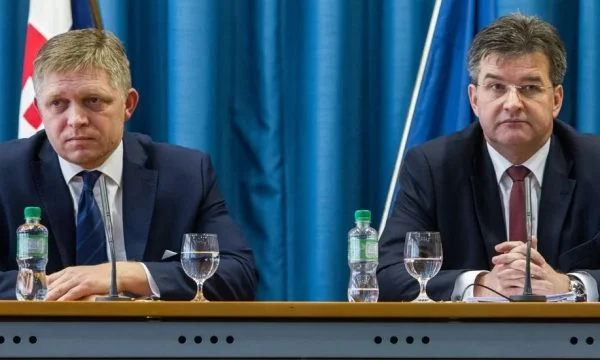
The Economist: Slovakia's new prime minister can remove Lajcak from dialogue by appointing him in his government?
Periskopi(3 years ago)
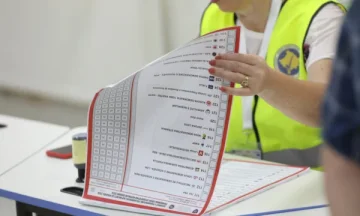
(3 years ago)A party led by a pro-Kremlin figure won elections in Slovakia on Sunday, show the preliminary results of the vote. According to preliminary results released by Slovakia's Statistics Office at 9am local time, the populist SMER party of politician Robert Fico won 22.9% of the vote. Fico is a close ally of [...]
A party led by a pro-Kremlin figure won elections in Slovakia on Sunday, show the preliminary results of the vote.
According to preliminary results released by Slovakia's Statistics Office at 9am local time, the populist SMER party of politician Robert Fico won 22.9% of the vote.
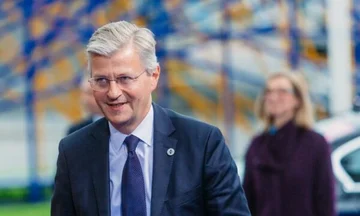
Fico is a close ally of Miroslav Lajcak, the European Union's emissary for Kosovo-Serbia dialogue.
While Fico is expected to be appointed Slovakia's new prime minister, it is likely that a role in the new government will be offered as well, Lajcak reports. The Economist
The Economicsi It reports that Fico can appoint Lajcak to his old post as foreign minister of Slovakia, removing him from the post of the EU special emissary for the Kosovo-Serbia dialogue.
Lajcak is a Slovak diplomat who previously served as minister of foreign affairs in Slovakia and as president of the UN General Assembly for the 72nd session (2017-2018).
He was the EU Special Representative for Bosnia and Herzegovina from 2007-09, while also acted as the international community's High Representative there. As a personal envoy of the EU High Representative, he negotiated, organised and supervised Montenegro's independence referendum in 2006 on behalf of the European Union.
Otherwise, Fico started his career with the Communist Party when he was a lawyer.
In 1999, he left the Democratic Left Party, political heir to the Communist Party, to establish his own, Smer-SD.
In 2006, this party won a landslide victory in parliament, catalyzing Fico in the prime minister post two years after Slovakia joined the EU.
Fico then formed a coalition with the far-right National Slovak Party, which shared its rhetoric against refugees and popular trends, and increased its popularity during the global financial crisis 2007-09, refusing to impose austerity measures.
During the 2015 migration crisis in Europe, he took a stand against migrants, rejecting the creation of a particular Muslim community in Slovakia” and criticising the European quotas programme for refugee distribution.
Fico initially established a reputation on the European scene as his country's representative at the European Court of Human Rights in Strasbourg from 1994 to 2000.