a few seconds ago
Is Germany reevaluating electricity with coal?
Periskopi(an hour ago)
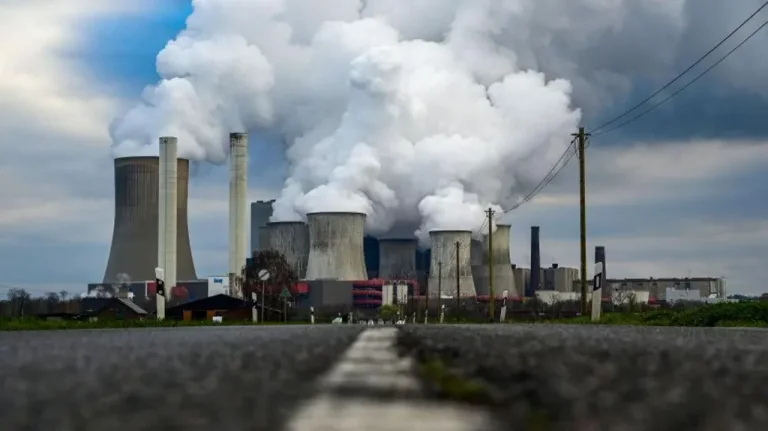
(an hour ago)Germany is Europe's largest energy production coal user and the fourth largest in the world after China, India and the US. But he has vowed to stop all his use until 2038.
Germany has even accelerated its removal gradually in 2030, reports BBC, broadcast Periscope.
Currently, about 20% of German energy production comes from coal, but wants to end this as it focuses on increasing wind and sun energy.
In fact, Germany already receives more than half of its electricity from renewable sources, 59% last year.
As a replacement for wind and solar energy, especially for winter months, it wants to replace coal with more natural gas power plants. These generally release half of the carbon dioxide rather than coal, and gas currently accounts for 13% of German electricity production.
However, the recent rise in global gas prices after the US-Israel conflict with Iran has encouraged a number of countries to reconsider coal as a source of energy.
Japan has eased the rules to allow the increased use of coal power plants, Italy is delaying closing its remaining stations until 2038, and India has postponed maintenance closures.
What about Germany?
In March, Chancellor Friedrich Merz said: "We must supply this country with electricity. I am not prepared to risk the essence of our industry simply because we have adopted plans to gradually remove the energy that have become unrealistic. "
Was this the beginning of a gradual removal of energy? Will Germany retain its coal energy after all?
The problem with the German government over what burns the country to produce electricity is double, supply and price. Germany has an abundance of cheap and easily available lignite. It has the largest reserves in Europe and the largest third at a global level. It's completely self-sufficient in fuel.
By contrast, it must import 95% of its natural gas supplies. So when the global cost of gas increases, the transition to the much cheaper lignite is financially very attractive. And Germany doesn't have to worry about supply shortages.
Meanwhile, nuclear energy is not an option, as Germany closed the last of its nuclear plants in 2023.
Not surprisingly, the German energy firm LEAG, which is the country's second largest lignite mine, is optimistic with the suggestion that coal - produced energy can receive a relief.
"We highly welcome the fact that the German federal government is placing not only medium-term security but also long-term supply at the centre of its energy policy considerations", she said in a statement.
He also stressed that he increased rope supplies to compensate for the ban on Russian gas imports following Russia's invasion of Ukraine in 2022. We already demonstrated our ability to attract reserves quickly to return to the market when the situation requires it. "
By contrast, Hauke Hermann, a senior researcher at the environmental research institute ão, insists that more coal is not the solution. Instead, he wants to see a further increase in use of renewable resources.
For some in the German industry, they only want a decision about gas or coal. "Our industry needs reliable energy", says Wolfgang Groe Entrup, director general of the German Chemical Industry Association (VCI).
"Only renewable energy can't guarantee this yet... Companies will invest billions only if they can believe that energy will remain reliablely available at competitive prices in the future. "
While practically no one outside the far-right AfD party is calling for a full removal of gradual coals, some relief from gradual removal is another issue.
A possible compromise being proposed concerns six coal power plants that use imported heavy coal, which is less polluting than German local lignite. These are currently used only as a reserve to replenish the national network as necessary, as during a cold winter.
The owner of some of these thermal power plants, Steag Iqony Group, says they should be allowed to operate all the time.
If they were temporarily allowed to resume regular production, they could supply electricity to several million homes", says a company spokesman. "We think these thermal power plants should be used to strengthen the safety and sustainability of supply. "
A parliamentary commission established in March is considering this possibility.
The challenge for the German government is that it is a major coalition that includes centre-right CDU parties. CSU and the left-wing SPD. The first are more favourable for extending coal use, while the second is against it.
The SPD's energy spokeswoman, Nina Schaeer, warns that easing the rules for coal would be"counterproductive to the energy transition and would imply new effects of fossil deadlock".
By contrast, the deputy chairman of the CDU and the president of the German region of Saxony, Michael Cretschmer, says: "Germania, as a major industrial nation, must do everything in its power to ensure that energy remains affordable. "
He adds: "Energy Transition must be fully recalculated. It should not be a cost issue, but rather a matter of realistic review of supply security and sustainability. "
The government should decide this year whether the 2030 deadline for gradual removal of lignite should be respected, or whether some of the capacity can be maintained for a limited period as strategic reserves.
And in August, the government will publish a statuteic review of gradual coal removal, which will include the impact it is having on its energy supply, security and prices. The original goal was to see if Kochleusstig could accelerate. Now it's quite possible for him to be used to slow it down. /Periscope/