an hour ago
Director of the American Oda: We are seeing a decline in foreign direct investment in Kosovo
Periskopi(3 years ago)
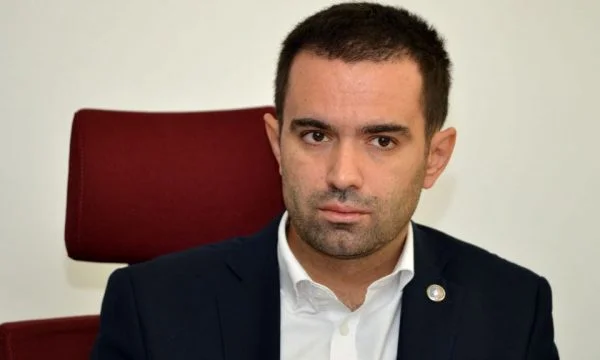
(3 years ago)The executive director of the American Economic Ode in Kosovo, Arian Zeka, says the decline of foreign direct investment in Kosovo is inevitable because of the perception created that the country does not offer stability and suffers from judicial uncertainty, which any investor, as he says, would avoid at any cost. During an interview for Voice [...]
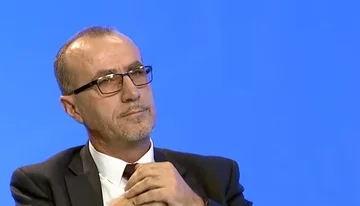
The executive director of the American Economic Ode in Kosovo, Arian Zeka, says the decline of foreign direct investment in Kosovo is inevitable because of the perception created that the country does not offer stability and suffers from judicial uncertainty, which any investor, as he says, would avoid at any cost.
During an interview with Voice of America, Mr. Zeka stresses the need to reach a normalisation agreement with Serbia, which would result in normalising economic relations between two countries. He adds that what is currently important and in conditions where the world is involved in a new conflict, is that the United States' attention to the Balkans, and Kosovo in particular, is not missing.
Voice of America: Mr. Zeka, for more than a year, relations between Pristina and Belgrade have been extremely tense. They marked an even more alarming level after the attack on September 24th. You have said that for years Kosovo has failed in terms of attracting investments not only from serious corporations, but all corporations in general, including American corporations. What effect is this situation on the business climate expected to have?
Arian Zeka: For coincidence, I woke up today with news that there is a decline in foreign direct investments in Kosovo over the past period, compared to the same period last year. There was a 12 per cent decline in the volume of foreign direct investments and does not know whether it is necessarily connected to the current political situation, with tensions in the north or the armed attack there. However, we are seeing a decline in foreign direct investment. Of course, a slightly more literal study is needed to conclude whether there is a connection between the political situation, tensions and the possibility of attracting foreign direct investment. However, this is happening. It's something that the American Economic Oda (of Kosovo) has repeatedly warned. Even though we are an economic iode, we have had three or four statements in which we have stressed the need to reach an agreement on the overall normalisation of relations between Kosovo and Serbia. And in this respect, without letup the achievement of economic normalisation between Kosovo and Serbia. Despite our efforts, supported by the United States government and various projects financed by American taxpayers, we continue to be in this situation today. It is difficult to talk about a normalisation of reports as long as leaderships in both countries cannot reach an agreement or what is most important, do not implement signed or achieved agreements in the past.
Voice of America: You have often mentioned the issue of lack of foreign direct investment. Do you think the government is doing enough to attract them?
Arian Zeka: Never enough. What the current government is doing and I want to be objective, however, that the government has undertaken great efforts to fight corruption, organised crime and empowering order and law throughout the territory of the Republic of Kosovo. But it seems that these efforts of our own, the efforts of the current government -- all of the past governments -- are failing to create positive results because of these open problems, which we have with our own scratches, in the first place with Serbia. Of course, the lack of functionalisation of the state and empowering international subjectivity, due to non-recognition by key states, EU members and international institutions and organisations alike.
Voice of America: At the beginning of September, the rooms you run urged the Kosovo government to remove the restrictive measures imposed after June 15th, against imports coming from Serbia, as such a decision in your opinion has affected imports from American-owned companies. Do you comply with the same request after September 24th?
Arian Zeka: Good question, since September 24th has changed things in many ways, yet I will repeat what continues to be the position of the American Economic Ode and yet there should be no barriers to the movement of goods, people, services and capital, regardless of which barriers are imposed. For the sake of truth, Kosovo producers face numerous barriers imposed on the part of Serbia's authorities, in their efforts to export goods to Serbia and on the other hand, security measures imposed on the part of the Kosovo government should also be removed, as it has impact on market functioning, hinders circulation of goods and, as we have said in our statements in early September, to foreign-owned companies. I repeat, what's happening right now is that the government has eliminated all barriers to a series of goods that are imported from Serbia, for raw materials, then for half-products, so products that are further subject to the processing process, while on the other hand continue to have a stop for finished goods, and these goods are produced mainly in factories that are owned by American, German and other investors.
Voice of America: If we put aside the issue of the normalisation agreement between Kosovo and Serbia, what is another obstacle that has influenced the decline of foreign investments in Kosovo?
Arian Zeka: After all, even this obstacle is political nature, or at least its roots are in political issues, that is, perception, which is largely not good for Kosovo. As long as we can't become a member state of the United Nations Organization and secure full membership in other international organizations, part of which we're not, we're actually seen as an incomplete story and as a country that produces endlessly, lack of stability, offers judicial uncertainty, and of course that's something investors want to avoid at all costs.
Voice of America: Currently, the world is facing a new crisis in the Middle East. Do you see possible consequences of this new conflict on your country's economy?
Arian Zeka: What we would not like to happen is, of course, that this conflict in the Middle East escalates further or in any situation, what we're underlining even at these meetings, with representatives of the American government and other organizations, which have a powerful impact on the rise of American foreign policy is not to lose attention to the Balkans again, in particular, in Kosovo, since what can happen afterwards, will take much more time and energy to recover the damage that could happen. So again I repeat, that despite what can happen in other crisis centres around the world, the Balkans should not lose the attention of the United States of America and the European Union.