15 minutes ago
The battle for <x0) red lines” in Brussels raised more questions than answers
Periskopi(3 years ago)
(3 years ago)Of course, in international relations actors use different strategies to try to get the point of reaching the final agreement near their point, while it is the leadership task to draw “red lines” along the process, but it's strange that the <x3x4> are taken into account by the European Union (BE) in connection with [...]
There is no doubt that in international relations, actors use different strategies to try to get the point of reaching the final agreement near their point, while it is the leaders' duty to draw “red lines” along the process, but it is strange that the <x3-lines of red” are taken into account by the European Union (BE) in connection with the Association of Serb majority municipalities.
So say connoisseurs of political issues as they comment on the EU Special Emissari's statement of Kosovo-Serbia dialogue, Miroslav Lajcak, regarding modern European “proposal” for the majority Serbian Communist Association statute in Kosovo, which, in addition to the best “the European subset”, does not exceed the red “<5> of the parties, until <x> questions and concerns are expected to be addressed in the future.
In essence, what is required is a constitutional solution that creates a representative institution for people and assigns it policymaking duties on issues that are essential to their identity and material well-being. At least Kosovo wants this. On the other hand, a solution is required outside Kosovo's constitutional framework, an institution with executive competence and the idea of interference in an internal system. That's why at least Serbia is.
EU foreign policy expert from the Council of Democratic Policy (DPC) in Brussels, Toby Vogel, in a proposal for Albanian Post, says that, in the first place, Lajcak's statement on <x1) red lines” is an apparent attempt to hide “the full prosecution of the dialogue process, which, according to him, has been turned into a means for crisis management and has not produced any meaningful agreements before started ten years.
Although EU leaders have welcomed the readiness of Kosovo Prime Minister Albin Kurti and Serbian President Aleksandar Vucic for implementation of the Base Agreement (Brussels, February 27th) and Impulation Annex (Our, 18 March), the parties have not reached agreement on implementation formalities, even though the two sides said they have problems with the draft.
The parties undoubtedly declare their red lines and it's clear what those are. Kurti doesn't want to create an Association of Serb-based municipalities with unclear competencies, while Vucic doesn't want to do anything that seems like concession for Pristina several weeks before the elections. I think both sides are now basically playing for the time”, Vogel points out, broadcast the Albanian Post.
As the director of the Institute for Social Policy “Mousine Koklari” in Pristina, Visar Ymer, in a proposal for Albanian Post, says that beyond deepening the lack of transparency, very strange is the urcrats' attempt to wipe out the two opposition things' “
Lajcak hasn't explained any longer, so it's hard to understand.
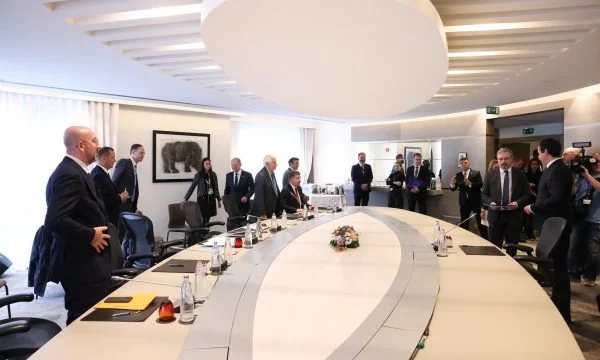
The dialogue process between Kosovo and Serbia has gone through several waves now and a time, changing direction as a response to new crises, but neither the direct involvement of leaders of key EU states and the invitation of Kosovo's prime minister and president of Serbia at the European Council summit in Brussels on Thursday has managed to meet expectations for a compromise agreement negotiated with clear reconciliation expressed with the signing.
Vogel, however, gives an explanation.
I suspect that the specific obstacle in the last round was the implementation deadline, following Kurt's insistence on achieving results earlier than predicted with the previous draft”.
The Serb majority municipalities' association is estimated to be a second major mechanism for Kosovo Serbs after the qualified vote, which for issues affecting the interests of the Serb community, is a kind of dealt with but, that it is looking for a third “Pal under its control, while in Kosovo they fear not for what this instrument represents today legally, but for what it can present in the future.
While the search scope for “response” and “the solution platform” is expected to continue the following days, the issue of the Serbian Major Commission Association is expected to be re-entered slowly in the agenda of actors engaged on the ground ) one of the priorities of the organised community in terms of normalising relations between Kosovo and Serbia.