an hour ago
MPJ: Serbia has lost battle in Council of Europe
Periskopi(3 years ago)
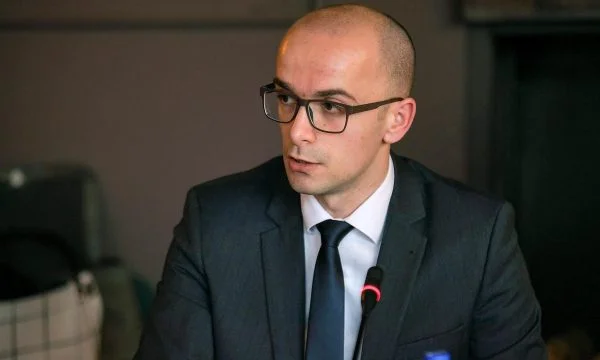
(3 years ago)Deputy Minister of Foreign Affairs Kressnik Ahmeti claims there has been a number of paperʹno, which Serbia has sent to Strasbourg in opposition to Kosovo's application to the Council of Europe, but according to him, the same has lost this battle. Ahmeti says Kosovo has secured support in votes as well as [...]
Number two at the Foreign Ministry, among other things, talk about dialogue, the issue of recognition, as well as expectations of becoming part of the Partnership for Peace this year.
During the past year, the Republic of Kosovo submitted membership application to the European Union as well as to the Council of Europe. Both of these processes, Ahmeti says they are relatively long, requiring patience, but considers they have been necessary actions.
Serbia has always been active in opposing the Republic of Kosovo, whether in the bilatheral sense or multilatheral sense, in the case of the Council of Europe has rejected a day before we apply. On May 11th of last year, Vuciq had called the meeting of the Council of National Security that Kosovo is applying to the Council of Europe -- that is, an absurdity of its own kind -- and there has been a number of paper·nons which have been sent from Serbia to Strasbourg but which have been countering what we have done -- so Serbia has followed our steps not vice versa. I can say with full conviction that Serbia has lost the battle in the Council of Europe, and a fact of that is that legal opinion shows that we can become a member of the Council of Europe and support is there. We have lobbied on some plains, both diplomatic and political, to secure support in votes, and that is, we have secured this support, the interpretation of legal clarification that has no obstacle, and this is the losing battle for Serbia”, the deputy foreign minister says.
The deputy foreign minister hopes for a constructive approach by Serbia to the Brussels dialogue as well, not only from Serbia but also from the European Union itself.
“We hope we will have a more constructive approach as well from Belgrade to dialogue, but also another approach by the European Union and other Western countries where it is not played with this neutrality card in situations where it is clear who is guilty as we had the situation at the end of last year with the barricades, with the kidnapping and beating of Serbs from Belgrade's illegal structures, with attacks on journalists, with gun attacks on Kosovo police officers, with attacks on EULEX patrols, attacks on KFOR patrols, that was not at all peaceful, so things should be declared as they should have the consequences of the money, he says.
Ahmeti claims Serbia has also not stopped even the so-called recognition campaign for Kosovo, but adds it has not achieved any results.
There are 30 states to which Serbia has asked for recognition of Kosovo, which the Government of Kosovo has identified since the phase of signing the mortorium in Washington. But Ahmeti believes the number is even bigger.
I believe this is the minimum of cases, because it's what we've been able to identify, there's probably other cases, but as we know there's nothing, they haven't achieved any results, and on the other hand we've put both official and formal contacts with countries that have previously been attacked with our reports with them, so we have turned diplomatic relations with a number of countries, so even on this level it has failed. I don't say that this is impossible to do with any state, because using Russian weapons, exploiting corruption and other forms, it can also be done, but we will not follow Serbia's steps, we have our own policy and we will follow it, we will be practical in our strategy, but watching and caring what they do”, Ahmeti says.
In an interview for Kosovo Press, Ahmeti also answers about the lack of new recognitions where Kosovo has not accepted new recognitions since February 2021, when diplomatic relations with Israel have been established.
“The declaration of Kosovo's independence was an extraordinary act not only for us as its citizens but also in the international arena, and for that reason we had a large number of immediate recognitions and an extraordinary help from our partners in order to ethanicise Kosovo as an undeniable reality in the international arena. But Kosovo is already a normal reality in the international arena and we cannot expect recognition as acts when we first declared independence, now the process is incapacitated so we have developments in smaller steps with countries that still do not recognise us and here we certainly know that Greece is avanguard, as it were, to say of the five non-recognitional countries with which we have deepened and expanded reports extremely often<1>, he says.
However, Ahmeti considers that last year has been productive in terms of Kosovo's relations on the Bilatreal Plain, stressing that 111 agreements have been signed.
“On the bilateral level we had political consultations with about ten different countries in the middle of foreign ministries, this is a very useful mechanism where concrete and practical issues of bilateral relations and co-operation are discussed, then we had 111 agreements signed only during the past year, of various characters showing a deepening and expanding of the bilateral reports of our Republic with other countries. While at the multilateral level we broke down éstaus kuoʹ which said the right was extremely useful for Serbia, so earlier pledges that Kosovo will not target membership in international organisations, was tremendous success for Serbia, and we have already broken this Kosovo applied to the Council of Europe and the European Union, and as the prime minister has already publicly stated, we will take concrete and formal steps and membership in the NATO-based Partnership for Peace programme”, Ahmeti says.
Regarding membership in the Partnership for Peace, Ahmeti says there have been lobbies over the past year, but adds it will be more intense this year.
“I don't see reason for Kosovo not to become part of the Partnership for Peace, as far as non-recognitions (countries) are concerned, so international organisations shouldn't mix with that bilateral one if a country that has not yet recognised Kosovo in favour or agreed in another form is conservative, does not imply recognition, it has been shown by Greece since 2015, when it has voted in Kosovo's favour in some cases, therefore I see no problem at this level of”, Ahmeti says.
The deputy foreign minister also suggests that they are interested in doubling the number of defence attachés from the current seven during this year.
It is our interest to increase the number of defence attachés, currently seven, and with Minister (Armend), Mehe and his cabinet, we have worked to increase this number and I believe that over this year we will be somewhere close to doubling or doubling this number”, he says. / KP/