12 minutes ago
Reuters brings it for the first time: How Putin had rejected the deal before the great occupation
Periskopi(4 years ago)
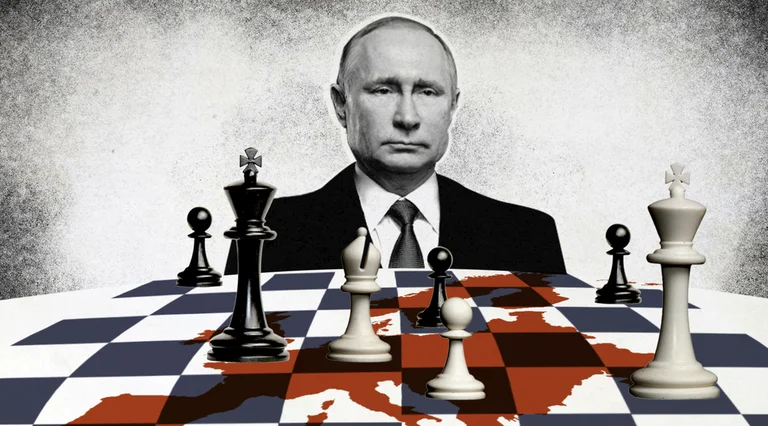
(4 years ago)Vladimir Putin's top envoy to Ukraine had told the Russian leader that as the war began, he had reached a provincial agreement with Kiev that would meet Russia's demands that Ukraine stay outside NATO, but Putin had refused and continued with his military campaign, according to three people [...]
Ukrainian-born envoy Dmitry Kozak had told Putin he believed the deal he had reached has lifted Russia's need to launch a full invasion of Ukraine, according to these sources. Kozak's recommendation to Putin to approve the agreement is being reported by Reuters for the first time.
Putin in several pre-war presentations had claimed that NATO and the organisation's military infrastructure were approaching Russian borders by accepting new members from Eastern Europe and that the alliance was now preparing to bring Ukraine into its orbit. Putin had publicly said it posed an existential threat to Russia- forcing him to react.
But, despite early support of the negotiations, Putin made clear when Kozak's agreement was presented that his actions and concessions had not gone far enough and that he had expanded his goals, including annexing Ukrainian territory lands, sources said.
Asked about Reuters findings, Kremlin spokesman Dmitry Peskov said: “This has nothing to do with reality. This never happened. This is completely incorrect”.
Kozak did not respond to requests for comments sent through the Kremlin.
Mykhailo Podoliak, adviser to the president of Ukraine, said Russia had used negotiations as a shield to prepare its conquest, but he did not answer questions about the substance of the talks, and did not confirm that a preliminary agreement had been reached. “Today, we clearly understand that the Russian side has never been interested in a” peace agreement, Podolyak said.
Two of these three sources said efforts to finalise the deal had occurred shortly after the Russian invasion on February 24th. Within days, Kozak believed he had Ukraine's approval of the key conditions Russia was seeking and recommending Putin to sign the deal, sources said.
After February 24th, Kozack was given a white card: they gave him the green light: he reached the deal. He returned it and they told her to cancel it. Everything was canceled. Putin simply changed his plans on the ground”, one of the sources close to the Russian leadership said.
The third source -- which was announced over the phone by people who were informed about the disks between Kozak and Putin -- made the difference in time, saying Kozak had proposed the agreement to Putin and it was rejected, just before the invasion. Sources sought to maintain anonymity because of the sensitivity of information.
Moscow's offensive in Ukraine is Europe's largest military campaign since World War II. It sparked strong economic sanctions against Russia and military support for Ukraine from Washington and Western allies.
Even if Putin would accept Kozak's plan, it remains unclear whether the war would end. Reuters was unable to prove independently whether Ukrainian President Wolfymyr Zelensky or other senior officials were committed to the relevant agreement.
Kozak, now 63, has been Putin's loyal lieutenant since working with him in the 1990s in St Petersburg.
Kozak had support for reaching a peace agreement because since 2020, Putin had charged him with tasking for talks with Ukrainian counterparts in the Donbas region, which has been controlled by pro-Russian separatists since 2014. Following the chairmanship of the Russian delegation in talks with Ukrainian officials in Berlin on February 10th -- mediated by France and Germany-Kozak during a conference with journalists -- had said the latest round of these negotiations had ended without results.
Kozak had been present when three days before the invasion Putin had gathered his army and security chiefs for a meeting with the Russian Security Council in the Kremlin.
State television cameras had caught some parts of the meeting when Putin had unveiled plans to formally recognise separatist minorities in eastern Ukraine.
As soon as the cameras had left the rooms, Kozak was declared against steps that would break the situation in Ukraine, two of the three people close to the Russian leadership said. The third person who had learned what had happened to the people who had been part of the meeting also said.
Another person interviewed by Reuters, who had helped in the post-invasive talks, said disks failed early in March when Ukrainian officials realised Putin was determined to continue with the full-scale invasion.
In six months since the beginning of the war, Kozak remains in his post deputy head of the Kremlin staff, but he no longer keeps files on Ukraine, according to six sources who talked about Reuters.
From what I see, Kozak is nowhere looking at”, said one of six people, who is a close source of separatist leadership in eastern Ukraine. /Periscopi/