42 minutes ago
Three Questions for the visa liberalisation process
Periskopi(4 years ago)
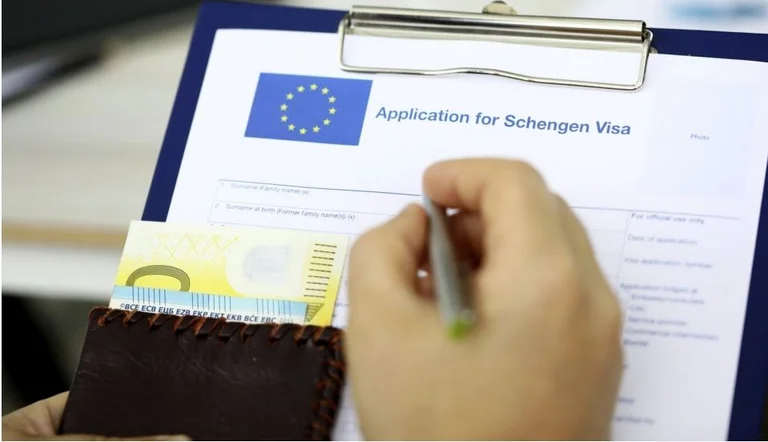
(4 years ago)The visa liberalisation process for Kosovo, which would enable its citizens free movement in dozens of European countries, now lasts ten years. Now, it looks like it's in the final phase. The Czech Republic, which currently heads the European Union, has warned that discussion at the EU Council on this process, [...]
The Czech Republic, which currently heads the European Union, has warned that the EU Council discussion on this process will begin on 13 October.
The European Commission and the European Parliament have supported visa liberalisation for Kosovo since 2018. But the latest insistence is the Council of the EU, or member states.
What will happen and not on October 13th?
On this date, if the plan doesn't change, the visa working group on the Council will be in order for the first time, the topic of visa liberalisation for Kosovo.
This will be the start of the process on the Council and not its end, as on this date the procedure will be launched, which will lead towards the formal decision on visa liberalisation.
What will be the steps following discussions on the EU Council?
The European Commission's up-to-date technical report to meet conditions on Kosovo's part will be considered at the Council's meeting of the working group for visas.
If there is reconciliation among EU member states, then the responsibility to give the green light for launching trilateral discussions between the European Parliament, the Council of the EU and the European Commission will be borne.
Given that the Commission and Parliament have no reserve for visa liberalisation for Kosovo, this procedure is expected to be closed soon.
When reconciliation is reached in these discussions, then the same will formally confirm the ambassadors of member states.
That could happen in November, if there is political will.
The decision, later, is voted into the European Parliament's relevant commission, and then into the plenary session.
After parliament formally votes, representatives of the member states, with qualified majority, also vote on the decision.
The next step is to confirm the decision by the ministers of member states on the Council.
All of this, according to some European diplomats' expectations, could happen by the end of this year.
The last step, then, is publishing the decision in the EU Official Journal, with which the date of entry into force is set.
Is there the support of member states on the Council?
Support from most member states exists a long time ago. But, due to objections or reservations from some important countries, such as France and the Netherlands, visa liberalisation for Kosovo has not been put in order on the Council.
Now, according to diplomats' assessments, support has increased greatly. Moreover, some sources say that, recently, no voice has been heard against member states. These positions have also been expressed at various political-level meetings.
However, discussions on the Council's task force and later among the ambassadors will be the main test of access to member states.
Diplomats in Brussels estimate there are two main reasons that go in favour of visa liberalisation.
One is the fact that Kosovo has fulfilled all technical criteria from the roadmap for visa liberalisation. The European Commission has confirmed this fact that the great majority of member states now agree on.
The second reason is that it is assessed as an appropriate political moment, in which the EU -- through visa liberalisation for Kosovo -- wants to prove that it is dedicated to the Western Balkan region and is willing to reward those countries that meet the criteria and mark progress.
The Czech presidency of the EU Council has also been called on in these arguments when it has called on member states to support visa liberalisation for Kosovo the only country in the Western Balkan region that does not yet enjoy such a regime. /Rel