25 minutes ago
Holland model for solving the old problem of wandering dogs
Periskopi(4 years ago)
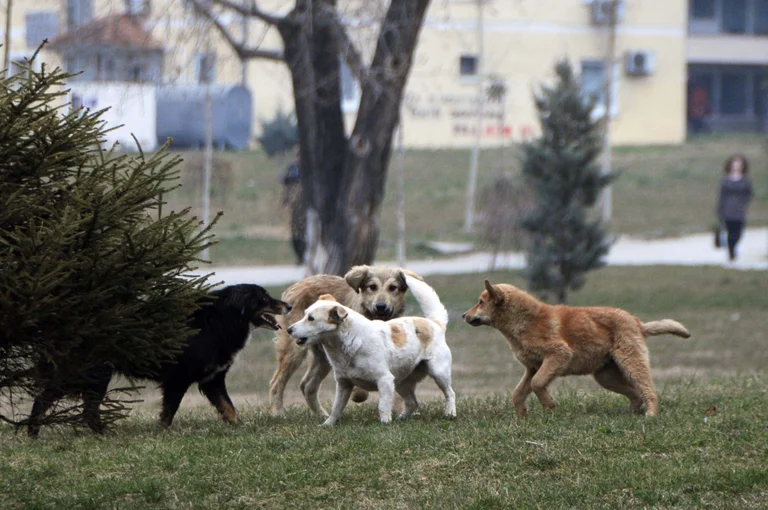
(4 years ago)School education, dog registration, dog dropout sentences, and breeding control are seen as steps that could lead to reducing the number of stray dogs in Kosovo. The attacks are numerous, especially during the winter season, when they are hungry. Kosovo Police Data [...]
The attacks are numerous, especially during the winter season, when they are hungry. Kosovo Police data shows that 42 cases of attacks by stray dogs have been recorded in the January-March period alone.
Free Europe Radio has reported in April on the case of a citizen in Pristina, Fidan Imer, who was attacked near the city centre.
In an effort to find a solution at the country level, the Ministry of Management of Local Power, in late July, has questioned “The national strategy for management and control of dogs with and without owners in the Republic of Kosovo” for 2022-2028.
In Kosovo, the number of stray dogs is not known, nor do those with owners.
The strategy, which has been designed with civil society initiative, aims at addressing the problem of wandering dogs through control of dogs with owners.
According to her, the main sources of wandering dogs in Kosovo “are easily identified” and are linked to: abandoning unwanted dogs by owners, breeding and uncontrolled dog sales, illegal import of associated animals, and continuing reproduction of clean dogs on the streets.
This document, for now, has only been drafted and can enter into force only after it is voted in the Kosovo Assembly.
Why aren't dogs registered in Kosovo?
Albion Raci, a 31-year-old from Pristina, says he has always wanted to keep his dog at home. He owns two of the “Belgian Malonis”.
Raci says that his dogs have equipped them with a microchip, which is placed under their skin by veterinarians. This provides the dog with a passport to move abroad and identify.
Raci says he has done so voluntarily and by personal desire, but shows that pet owners in Kosovo can even avoid that step.
You can have a dog in Kosovo without a problem, nobody comes to ask you something”, he tells Free Europe Radio.
In Kosovo there is no state database where dogs with owners would be registered, through which the identification of lost or abandoned dogs would then be made. Dog registration, currently only on individual grounds through veterinarians.
Kosovo's Food and Veterinary Agency (AUV) says it is making efforts to start registering dogs with owners.
“The AUV, once the identification and registration project of the dog owners, will make announcements to all owners to bring dogs to contracted veterinary ambulances, in order to establish microchip, vaccine against rage disease and passport equipment”, AUV says in a statement to REL, but does not specify the time when such a thing can begin.
Emina Haxhiu, owner of four dogs in Pristina, says she sees no reason to register her dogs.
I lost my dog four months ago and there was microchip. In the end, it has not been found”, Haxhiu says.
The [Kosovo] police do not have the device that reads the chip. That device is owned only by veterinarians and bordering”, she says.
Free Europe Radio has asked the Kosovo Police if it can identify dogs with microchip, but, until the publication of this article, there is no answer.
Elza Ramadani, from the Association for Animal Rights in Kosovo, says registering and identifying dogs with owners is the main step towards managing wandering dogs.
The wanderers come from dogs with owners. In Kosovo there has never been management of dogs owned by”, says Ramadani for Radio Free Europe.
Why haven't the projects so far resolved the problem?
The Kosovar Centre for Security Studies (QKSS), in a study published in 2020, has found that more than half of citizens have perceived stray dogs as a threat to public safety.
The first projects for treatment of wandering dogs in Kosovo began in 2018 with the method of capture, sterilization, vaccine, and launching. The Food and Veterinary Agency says about 14,000 dogs were treated that year.
The project continued during 2020-2021, when some 7,000 stray dogs were treated”, the AUV says, and adds that this approach has not solved the problem.
Numerous projects have also been developed at municipal levels, with a rise in shelters and shelters for feeding stray dogs.
AUV says that during 2020, it has established 29 shelters for treating stray dogs.
The Animal Rights Foundation says that the method of capture, sterilization, vaculation, and issuing dogs has also been transmitted by irregularities and suspicion of poor animal treatment.
The “should be stressed that, in the past, the measures that have been taken are done without monitoring and assessment, without controlling the work of veterinarians on the ground”, says Elza Ramadani from this foundation.
She says several criminal charges have been handed over to the courts, under suspicion of mistreating animals from contracted veterinarians to practice the method of capture, sterilisation, vaccination and issuing dogs, but, according to her, the cases have not received epilogue.
Netherlands Model and Hopes for Implementation in Kosovo
One of the countries that counts to be a success model for solving the problem of wandering dogs is the Netherlands.
According to the World Health Organization, there are some 200 million stray dogs in the world.
Education at schools for the responsibility of keeping pets and strict rules of housekeeping and incommunication are just some of the methods used in the Netherlands to eliminate the problem of wandering dogs.
According to a letter on the Dutch News website, the Netherlands has also raised the taxes on buying dogs to encourage the adoption of stray dogs.
Iza Ramadani says the organisation she operates in has insisted that the Netherlands model be introduced into Kosovo's national dog strategy.
According to her, the problem should be addressed by the root, including mass education.
“Handana has made massive education in schools, constantly sanctioned dropouts, has prevented each animal store from running smoothly.”, Ramadani says.
In Kosovo, currently, the control of breeders or dogs is also lacking to sell later. In this situation, it cannot be known where the dogs who thrive end up.
Taking into account the financial costs the national strategy could have been implemented, Elza Ramadani does not expect Kosovo to become like the Netherlands soon, but believes that the comprehensive approach is a positive step.
According to her, the strategy will be successful even if “is only 50 or 60 percent of it is properly implemented”.